
is blue spirulina good for you
If you're on a wellness journey and curious about plant-based superfoods, you've probably heard of blue spirulina. This vibrant blue algae has made waves in the health community, not only for its striking color but for its incredible nutritional profile. One of its standout qualities? It’s a complete source of vegan protein, making it a powerful addition to any diet, especially for those seeking plant-based options.
But is blue spirulina good for you? and why should you care about it? Let's dive into the world of blue spirulina, its health benefits, and how it supports not just stress relief and focus but also holistic well-being.
A Quick Overview Of Blue Spirulina
Blue spirulina is an extraordinary superfood, boasting an impressive nutritional profile. It's rich in protein, vitamins (B12, A, E, K), minerals (iron, calcium, magnesium), and antioxidants. This powerhouse ingredient also contains essential fatty acids, amino acids, and other beneficial compounds. With its unique combination of nutrients and bioactive molecules, blue spirulina supports overall well-being, energy, and vitality, making it a popular supplement among health enthusiasts and functional medicine practitioners.
This is not to be confused with green spirulina, also a popular health food. While green spirulina is itself a nutrient-dense superfood, blue spirulina's elevated phycocyanin content and enhanced antioxidant properties make it an even more potent and versatile option for those seeking maximal health benefits. (plus it’s a lot prettier in smoothies!)
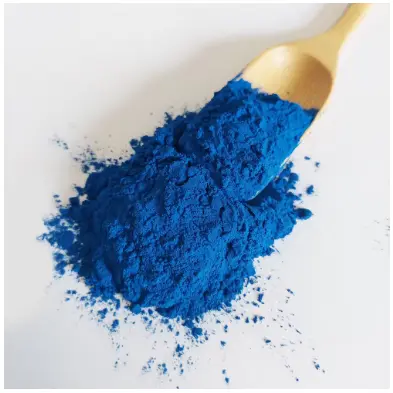
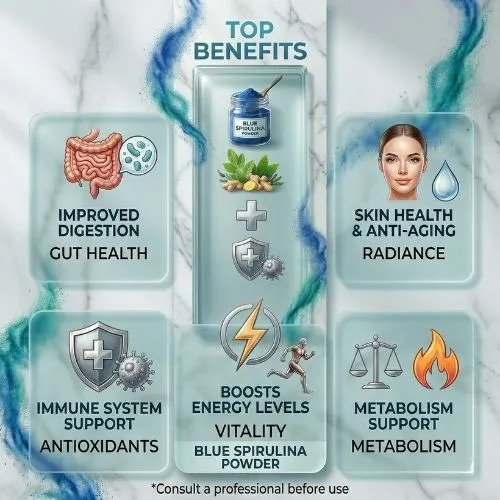
The Top Benefits
Aids In Cholesterol Management
Blue spirulina aids in cholesterol management in several ways: (1)
Reduces LDL (Bad) Cholesterol:
Phycocyanin in blue spirulina inhibits the absorption of dietary cholesterol
Decreases LDL cholesterol production in the liver
Increases HDL (Good) Cholesterol:
Blue spirulina's antioxidants and fatty acids support HDL production
Helps remove excess cholesterol from bloodstream
Triglyceride Reduction:
Blue spirulina's omega-3 fatty acids and antioxidants decrease triglyceride levels
Reduces risk of heart disease
Inhibits Cholesterol Absorption:
Phycocyanin binds to bile acids, reducing cholesterol absorption
Increases excretion of bile acids, lowering cholesterol levels
Anti-Inflammatory Effects:
Reduces inflammation in blood vessels, improving cholesterol transport
Decreases cardiovascular risk
Improves Lipid Profiles:
Balances lipid metabolism
Supports healthy cholesterol ratios
Helps Reduce Blood Pressure Levels
Blue spirulina can also be an incredible tool in helping to reduce elevated blood pressure levels. The mechanism of action is several-fold (2)
Vasodilation:
Phycocyanin relaxes blood vessels, improving blood flow
Increases nitric oxide production, dilating blood vessels
Endothelial Function Improvement:
Enhances endothelial cells' ability to regulate blood flow
Increases production of vasodilators (nitric oxide, prostacyclin)
Anti-Inflammatory Effects:
Reduces inflammation in blood vessels
Decreases endothelial dysfunction, a key factor in hypertension
Antioxidant Protection:
Neutralizes free radicals, reducing oxidative stress
Protects blood vessels from damage, promoting healthy function
Potassium Content:
Helps lower blood pressure by:
Balancing sodium levels
Relaxing blood vessels
Improving kidney function
Calcium Channel Blockade:
Phycocyanin inhibits calcium influx into vascular smooth muscle
Relaxes blood vessels, reducing blood pressure
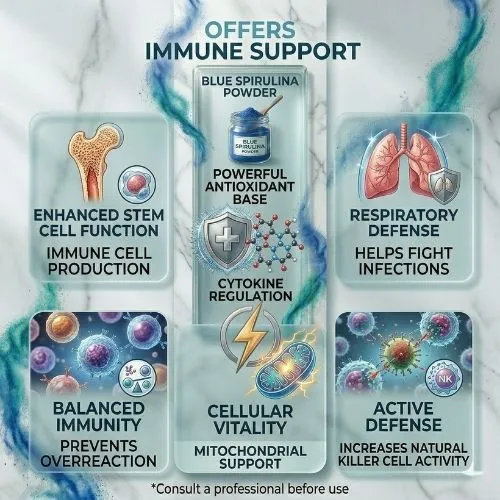
Offers Immune Support
Blue spirulina supports immune function by directly stimulating the production of antibodies and immune cells, such as macrophages and natural killer cells, to fight off pathogens and foreign substances (germs!). (3) It also activates the body's natural killer cells and enhances the activity of cytokines, which coordinate the immune response. Blue spirulina can also provide antioxidants and anti-inflammatory compounds to protect immune cells from damage and supports the health of the gut-associated lymphoid tissue (GALT), a key component of the immune system.
This multi-pronged support helps to boost overall immune defense, increase resistance to infections and diseases, enhance recovery from illness, and support autoimmune disease management.
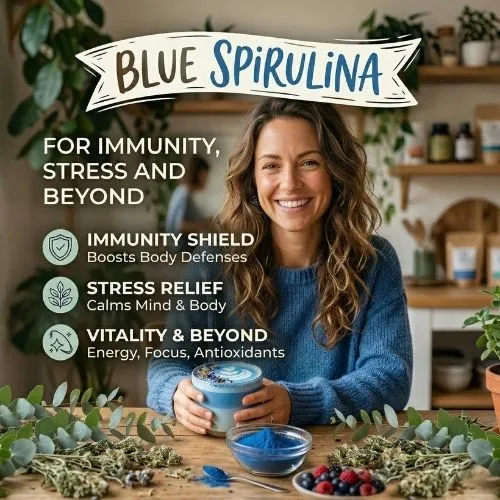
Blue Spirulina for Immunity, Stress and Beyond
The benefits of spirulina don’t stop at protein. This algae is a nutritional powerhouse, offering a wide range of health advantages that make it an ideal addition to a wellness routine focused on holistic balance.
Rich in Antioxidants: Blue spirulina contains phycocyanin, a potent antioxidant that helps combat oxidative stress and inflammation in the body, protecting cells from damage and reducing the risk of chronic diseases.
Boosts Energy and Endurance: High in protein, vitamins, and minerals, blue spirulina can improve energy levels, support muscle recovery, and enhance endurance, making it popular among athletes and fitness enthusiasts.
Supports Immune Health: The nutrients in blue spirulina, such as B vitamins, iron, and other trace minerals, help strengthen the immune system by promoting the production of white blood cells and antibodies.
But spirulina’s appeal isn’t limited to modern wellness enthusiasts. This superfood has been used for centuries by ancient cultures. For instance, the Aztecs harvested spirulina from lakes and incorporated it into their diets, recognizing its energizing and endurance-enhancing properties. Talk about a superfood that’s stood the test of time!
How to Use/Dosage
Blue spirulina has a relatively mild taste, which has been described as slightly earthy or grassy, with subtle hints of seaweed. Compared to green spirulina, the taste is much more subdued but can vary depending on the concentration and the other ingredients it’s mixed with.
Blue spirulina can be used in various ways to add a vibrant blue or turquoise color to food and beverages. Here are some common methods of using blue spirulina:
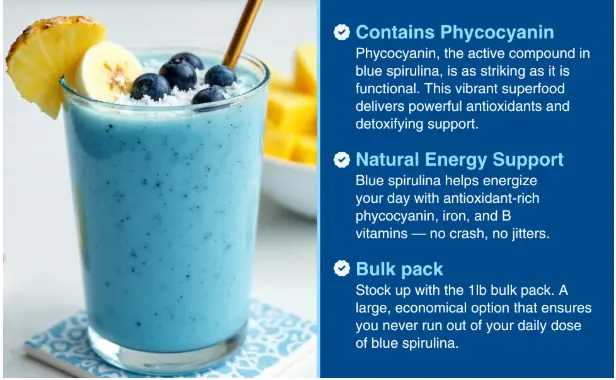
Smoothies and beverages: Add a small amount of blue spirulina powder to your smoothies, shakes or juices to give them a vibrant blue color. Start with a small quantity, and adjust according to your desired shade of blue.
Desserts and baked goods: Incorporate blue spirulina powder into desserts like puddings, ice creams, yogurt bowls or chia seed puddings to add a visually appealing blue tone, while boosting the nutrient content. It can also be used in cakes, muffins or cookies for a unique color twist.
Sauces and dressings: Mix blue spirulina powder into creamy sauces, salad dressings or dips to create eye-catching blue variations. Be mindful of the flavor compatibility, and adjust the quantity to avoid overpowering the taste.
Smoothie bowls: Blue spirulina can be used to create visually appealing smoothie bowls. Blend it with frozen fruits and a liquid base of your choice, and then top with your favorite toppings like granola, fresh fruits, coconut flakes or nuts.
Other creative uses: Blue spirulina is a natural food coloring that can be used in various creative culinary applications, such as making blue-hued pancakes, waffles or pasta. Use your imagination, and experiment with different recipes.
When using blue spirulina powder, it’s important to start with a small quantity and gradually increase to achieve the desired color. The intensity of the blue shade may vary depending on the amount used and the ingredients it is mixed with.
Risks and Side Effects
Blue spirulina is generally considered safe for consumption when used in appropriate amounts. However, as with any food or dietary supplement, there are a few potential risks and side effects to be aware of, including the risk of an allergic reaction and potential digestive issues, such as stomach cramps, nausea or diarrhea.
It’s also important to be aware that if blue spirulina is not sourced from reputable suppliers or processed under proper conditions, there is a risk of contamination with harmful substances such as heavy metals or microorganisms. To minimize this risk, it’s important to purchase blue spirulina from trusted sources.
Blue spirulina may interact with certain medications, such as immunosuppressants or anticoagulants. If you’re taking any medications or have underlying health conditions, consult with a health care professional before incorporating blue spirulina into your diet.
Also, exercise caution before using it if you are pregnant or breastfeeding.
Conclusion
Blue spirulina is a natural extract derived from certain species of blue-green algae, particularly Arthrospira platensis. It’s a vibrant blue color, making it a popular ingredient in the food and beverage industry, as well as in health and wellness products.
Blue spirulina is rich in antioxidants and some immune-boosting micronutrients, including vitamin C and vitamin E. It may also promote muscle recovery, and some studies suggest it may have anti-cancer properties.
The colorant is largely used in the culinary world to add a bright blue color to baked goods, desserts and other dishes. When using it, start with a small amount (about ¼ teaspoon), and increase as needed.
You can purchase pure blue spirulina powder at yanggebiotech company is an industry-leading manufacturer and distributor for pure dietary supplements. yanggebiotech.com is not just a consumer brand. It also supplies pure ingredients to other brands that distribute food and other supplement products. Contact yanggebiotech.com to place an order today.

Send Inquiry
Related Industry Knowledge
- glutatión beneficios
- Magnesium Complex: The Natural Vitamin
- Benefits and Advantages of Flour Gluten Free
- The Power of Taro Powder: Nutritional, Culinary, and Cultural Benefits
- Introducing, Natural blues from Spirulina
- Can Melatonin Expire?
- Can I Drink Kombucha While Pregnant?
- benefits of tongkat ali for women
- The Health Benefits of Plant-Based Food Colors
- Discover the Power of Purple Carrot Red: A Natural Color Revolution
Recommended Products
_1785904663460.webp "Blue spirulina extract E30")