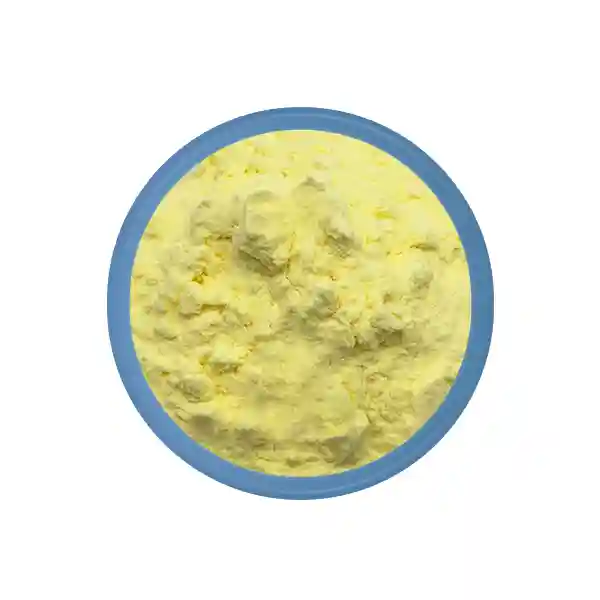
Formulating the Perfect Face Oil: The Benefits of 10% Astaxanthin Oil Concentration
In the world of high-end skincare, face oils have transitioned from simple moisturizers to sophisticated "treatment" products. Today’s consumers are no longer satisfied with basic hydration; they demand products that fight aging, repair sun damage, and protect against environmental pollution.
To meet these demands, formulators are turning to the most powerful antioxidant known to science: Natural Astaxanthin. Specifically, the 10% Oil concentration (often called oleoresin) has become the "Red Diamond" of the beauty industry. This guide will explore why this specific concentration is the secret to creating the perfect face oil and how it transforms a standard skincare routine into a professional-grade treatment.
What is Natural Astaxanthin 10% Oil?
Before we talk about formulation, we must understand the ingredient. Natural Astaxanthin is a vibrant red pigment harvested from the microalgae Haematococcus pluvialis. The "10% Oil" refers to a highly concentrated extract where the Astaxanthin molecule is suspended in a carrier oil (like high-quality sunflower or safflower oil). This concentration is the "sweet spot" for formulators. It is potent enough to provide massive antioxidant benefits, yet stable enough to be blended into a variety of skincare recipes without losing its strength.
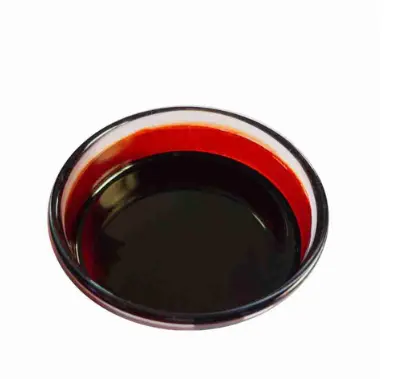
The Science of Why 10% Astaxanthin Works
Skincare scientists love working with the 10% oil format for three main reasons: Potency, Absorption, and Stability.
1. Unmatched Potency
You may have seen Vitamin C marketed as the ultimate brightener. While Vitamin C is good, Astaxanthin is statistically superior. Research shows it is:
-
6,000 times stronger than Vitamin C.
-
800 times stronger than CoQ10.
-
550 times stronger than Vitamin E.
When you start with a 10% concentration, you are using a raw material that has an incredible "quenching" power, meaning it can neutralize free radicals (the molecules that cause aging) far more effectively than almost any other ingredient on the market.
2. The Lipid-Solubility Advantage
Our skin’s outer layer is made of oils (lipids). Because Astaxanthin 10% is an oil-based ingredient, it "speaks the same language" as our skin. Unlike water-based serums that sometimes struggle to penetrate the skin barrier, this oil-based antioxidant can slide deep into the skin layers where it is needed most to protect collagen and elastin.
3. Superior Stability
One of the biggest problems with Vitamin C is that it "oxidizes" (turns brown and useless) very quickly when exposed to air or light. Natural Astaxanthin 10% Oil is much more resilient. The oil suspension protects the Astaxanthin molecule, ensuring that the face oil stays effective from the first drop to the last.
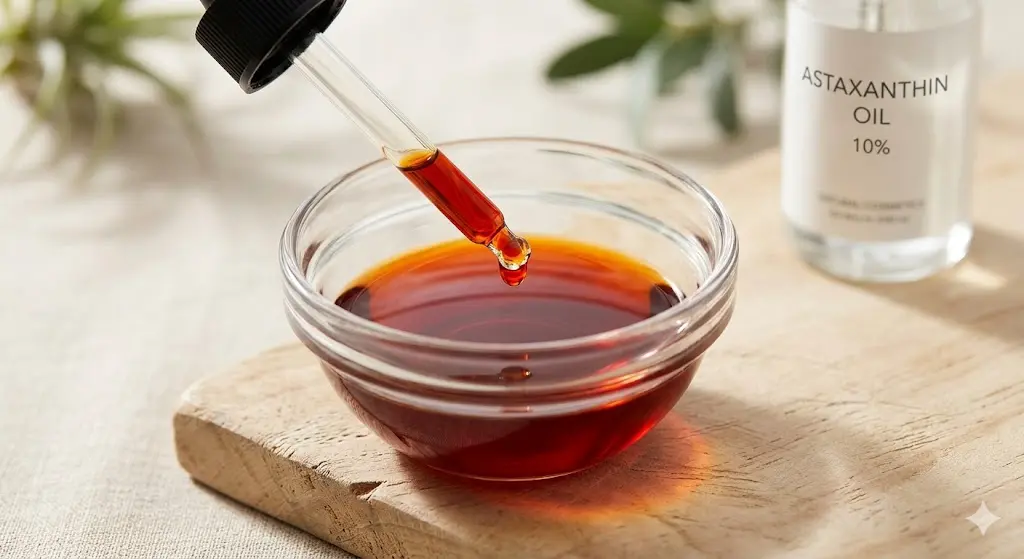
Key Benefits for the Skin
When you formulate a face oil using this red super-ingredient, you are offering three major "wins" for the skin:
A. The "Anti-Wrinkle" Shield
Astaxanthin is famous for its ability to protect the "extracellular matrix"—the scaffolding that keeps skin firm. By stopping the enzymes that break down collagen, it helps prevent the fine lines and sagging that come with age.
B. Biological Sun Protection
While it doesn't replace a daily SPF, Astaxanthin acts as an internal repair kit. It helps the skin recover from UV exposure and reduces the redness (inflammation) that happens after a day in the sun.
C. The "Astaxanthin Glow"
Because of its deep red color, using a face oil with a small amount of 10% Astaxanthin gives the skin an immediate, healthy, sun-kissed glow. It makes the skin look vibrant and "alive" without the need for heavy makeup.
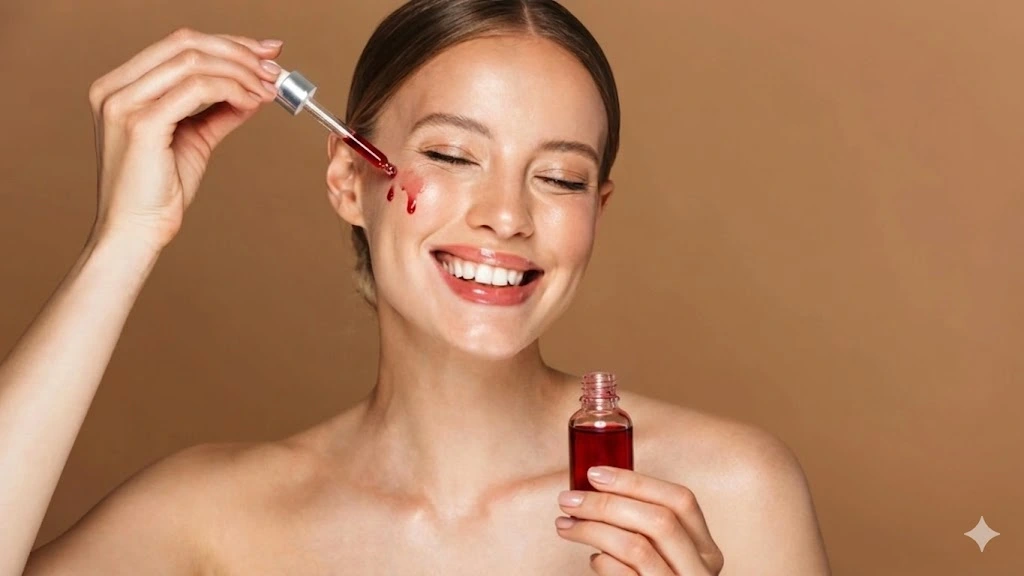
Formulator’s Guide: How to Blend the Perfect Oil
If you are creating your own face oil or looking for the best product to buy, here is what makes a "Perfect Formula":
-
The Base (Carrier Oils): Start with lightweight, "dry" oils like Squalane, Jojoba, or Rosehip oil. These help the Astaxanthin absorb quickly without feeling greasy.
-
The Active (10% Astaxanthin): Because the 10% concentration is so strong, you only need a small amount (usually 0.1% to 1.0% of the total formula) to turn the oil a beautiful sunset orange and provide full antioxidant protection.
-
The Synergy (Vitamin E): Adding Vitamin E (Tocopherol) creates a "synergistic effect." This means the two antioxidants work together, making each other stronger and more stable.
-
The Scent: Natural Astaxanthin has a mild, "earthy" or "sea-like" scent. Formulators often add a drop of Geranium or Frankincense essential oil to create a spa-like experience.
Why "Natural" Beats "Synthetic"
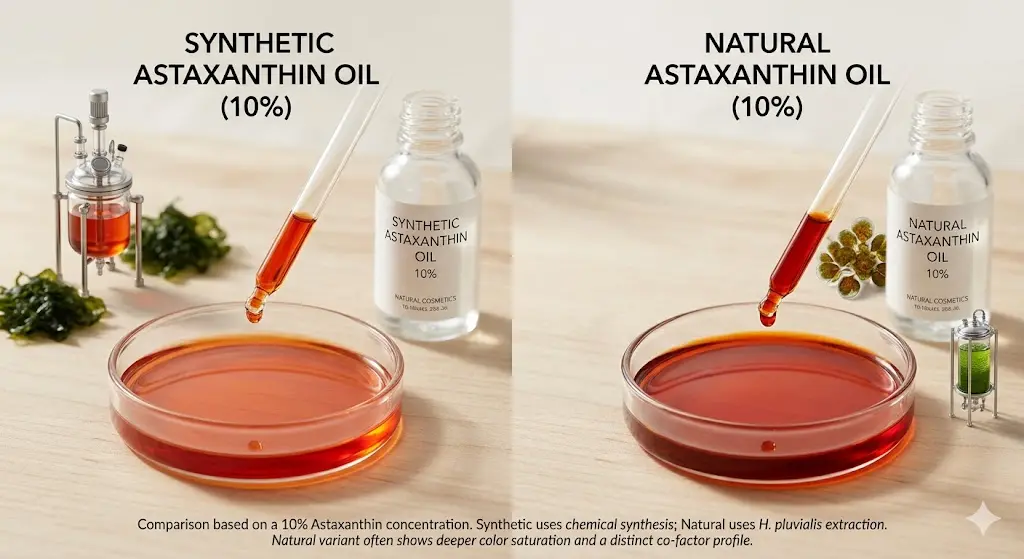
In the laboratory, scientists can create a synthetic version of Astaxanthin. However, for a high-end face oil, Natural is the only choice.
The natural version from algae is 20 to 50 times stronger in antioxidant power than the synthetic version. Furthermore, natural Astaxanthin 10% Oil contains other "co-factors" (like small amounts of Beta-carotene) that help the skin recognize and use the nutrient more effectively.
Conclusion
Natural Astaxanthin 10% Oil is more than just a trend; it is a scientific breakthrough for skin health. By combining the legendary strength of this algae-derived antioxidant with the deep-penetrating power of an oil, you create a product that doesn't just sit on the surface—it actually changes the skin's resilience.
Whether you are a formulator looking for the best raw materials or a skincare enthusiast looking for the next "holy grail" product, 10% Astaxanthin Oil is the key to achieving firm, glowing, and protected skin. Adding astaxanthin 10% oil to your product line is fantastic and we're here to provide you high quality extract's, contact us here to know more and for your inquiry email us now! Email:info@yanggebiotech.com
References
-
Tominaga, K., et al. (2012). Cosmetic benefits of astaxanthin on humans subjects. Acta Biochimica Polonica. This landmark study showed that topical application of astaxanthin improved skin texture, reduced age spots, and helped maintain skin moisture.
-
Kerenidi, T., et al. (2007). The antioxidant effect of astaxanthin in human skin cells. Journal of Dermatological Science. This research highlights how astaxanthin spans the cell membrane to provide total protection against oxidative stress.
-
Yamashita, E. (2002). Cosmetic benefit of dietary supplements containing astaxanthin and tocotrienol on human skin. Food Style 21. A study focusing on how the lipid-soluble nature of astaxanthin makes it the ideal partner for Vitamin E in skincare.
-
Lyons, N. M., & O’Brien, N. M. (2002). Modulatory effects of an algal extract containing astaxanthin on UVA-irradiated cells in culture. Journal of Dermatological Science. This paper explains why the 10% algal extract is significantly more effective than synthetic alternatives.
-
Guerin, M., et al. (2003). Haematococcus pluvialis astaxanthin: health-promoting properties and applications. Trends in Biotechnology. A comprehensive look at the stability and extraction processes of the 10% oleoresin format.

Send Inquiry
Related Industry Knowledge
Recommended Products