
Natural Sun Protection? How Astaxanthin Oil Acts as an Internal and External Shield.
In the pursuit of cutaneous longevity, the scientific community has traditionally relied upon exogenous barriers—topical SPF formulations—to mitigate the deleterious effects of solar radiation. However, contemporary research is illuminating a more sophisticated frontier: biological photoprotection. At the vanguard of this movement is Natural Astaxanthin 10% Oil, a high-potency xanthophyll carotenoid derived from the microalgae Haematococcus pluvialis.
By harnessing the evolutionary adaptations of microalgae—which synthesize this pigment to survive extreme solar insult—modern science has unlocked a dual-action mechanism. Natural Astaxanthin 10% Oil acts as both an internal systemic fortifier and a topical oxidative shield, providing a comprehensive defense against the full spectrum of UV-induced degradation.
The Molecular Architecture of a Superior Antioxidant
The efficacy of Astaxanthin 10% Oil is predicated on its unique molecular geometry. Unlike other antioxidants such as Vitamin C or Beta-carotene, Astaxanthin is a polar carotenoid with the capacity to span the entire cellular lipid bilayer. This transmembrane orientation allows the molecule to protect the cell from both lipid peroxidation at the surface and oxidative stress within the intracellular environment.
In its 10% oil format, the compound maintains peak stability and bioavailability. This concentration ensures that the lipid-soluble molecules are readily integrated into the skin’s cellular matrices, providing a "built-in" resilience that remains active even when topical sunscreens are depleted or compromised.
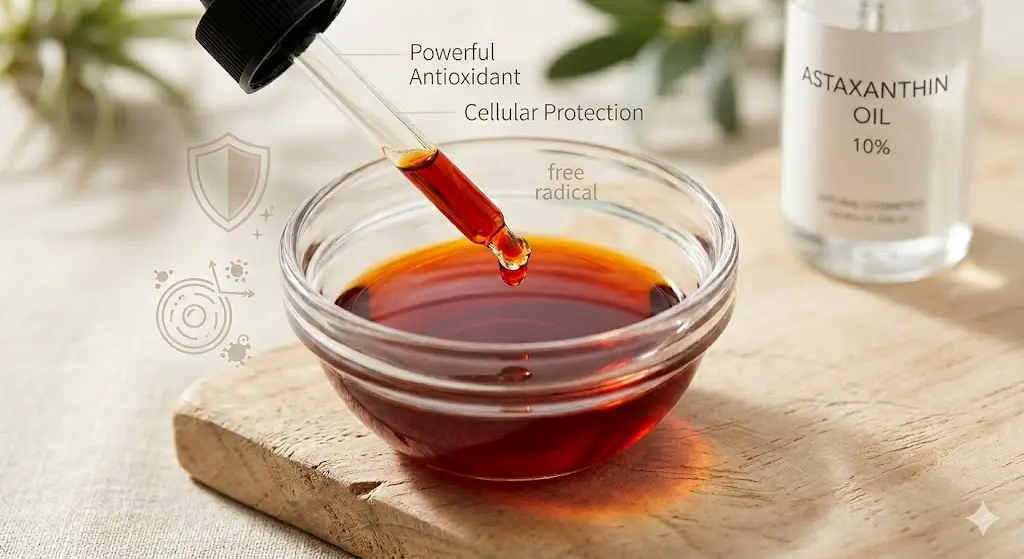
The Internal Shield: Systemic Resilience and Erythema Suppression
When ingested as a high-tier nutraceutical, Astaxanthin 10% Oil undergoes systemic distribution, eventually accumulating in the dermal and epidermal layers. This process establishes what clinicians refer to as a "Biological Sunscreen."
Research indicates that chronic supplementation of Astaxanthin modulates the skin’s sensitivity to ultraviolet radiation by increasing the Minimal Erythemal Dose (MED). This metric defines the threshold of UV exposure required to induce visible redness (erythema). By neutralizing Reactive Oxygen Species (ROS) at the nascent stage of formation, Astaxanthin prevents the inflammatory cascade that leads to DNA fragmentation and cellular apoptosis. This systemic defense offers a layer of protection that is impervious to environmental factors like perspiration, mechanical abrasion, or water immersion.
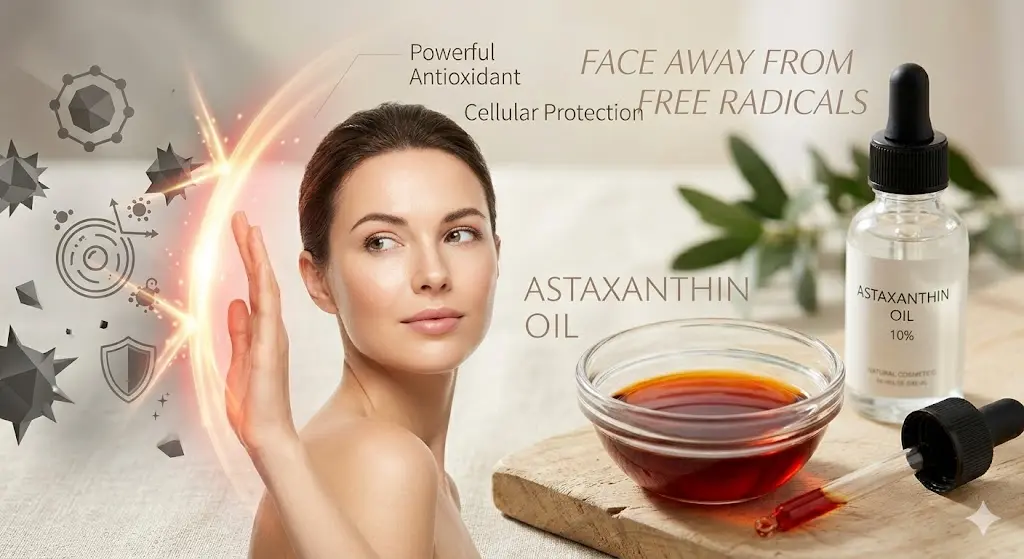
The External Shield: Topical Quenching and Extracellular Matrix Preservation
When utilized topically within cosmeceutical formulations, Natural Astaxanthin 10% Oil functions as a potent interceptor of environmental stressors. Its primary roles include:
- Inhibition of Matrix Metalloproteinases (MMPs): UV exposure triggers the expression of MMP-1, an enzyme responsible for the degradation of Type I collagen. Astaxanthin suppresses this enzymatic activity, thereby preserving the structural integrity of the extracellular matrix and preventing "photo-aging" rhytids.
- Quenching of Singlet Oxygen: Astaxanthin is remarkably efficient at quenching singlet oxygen, a particularly aggressive form of ROS generated by UVA rays. Its quenching constant is significantly higher than that of Alpha-tocopherol (Vitamin E), making it an essential component for neutralizing the deep-penetrating radiation that causes long-term dermal damage.
Melanogenesis Regulation: By mitigating the inflammatory signals that trigger melanocyte overactivity, the 10% oil helps prevent the formation of solar lentigines (age spots) and post-inflammatory hyperpigmentation.

The Synergy of the "Inside-Out" Protocol
The most profound dermatological outcomes are observed through a synergistic "Inside-Out" approach. By combining the systemic accumulation provided by oral 10% oil capsules with the localized antioxidant reservoir of a 10% oil-infused serum, the body achieves a state of "total photoprotective saturation."
This dual-delivery system addresses the limitations of traditional sun care. While topical SPF blocks the arrival of photons, Astaxanthin addresses the biological fallout of the photons that inevitably bypass those barriers. This ensures that the skin’s regenerative processes are not overwhelmed by oxidative debt, allowing for faster repair and sustained aesthetic vitality.
Conclusion
Natural Astaxanthin 10% Oil represents a significant advancement in the field of preventative dermatology. It moves beyond the superficial to offer a scientifically validated, multi-layered defense system. By integrating this "King of Carotenoids" into daily health and beauty regimens, individuals can fortify their biological infrastructure against the relentless challenges of photo-exposure, ensuring that the skin remains not only protected but structurally resilient.
References
Tominaga, K., et al. (2012). "Cosmetic benefits of astaxanthin on humans subjects." Acta Biochimica Polonica, 59(1), 43-47. (Study on the improvement of skin wrinkles, elasticity, and texture through combined oral and topical astaxanthin use).
Ito, N., et al. (2018). "The Protective Role of Astaxanthin for UV-Induced Skin Deterioration in Healthy People—A Randomized, Double-Blind, Placebo-Controlled Trial." Nutrients, 10(7), 817. (Focusing on the increase of MED and reduction of moisture loss).
Camera, E., et al. (2009). "Astaxanthin, canthaxanthin and β-carotene differently affect UVA-induced oxidative damage and expression of oxidative stress-responsive enzymes." Experimental Dermatology, 18(3), 222-231. (Comparing the superior quenching capacity of astaxanthin against other carotenoids).
Davinelli, S., et al. (2018). "Astaxanthin in Skin Health, Repair, and Disease: A Comprehensive Review." Nutrients, 10(4), 522. (A detailed overview of the biological pathways and "inside-out" efficacy of algal-derived astaxanthin).
Lim, B. P., et al. (1992). "Antioxidant activity of xanthophylls on peroxyl radical-mediated lipid peroxidation." Free Radical Biology and Medicine, 13(1), 65-70. (Technical analysis of astaxanthin’s effect on lipid bilayers).

Send Inquiry
Related Industry Knowledge
Recommended Products
_1783498394912_1786527728757.webp "Sorghum Red Powder")