How NMN and Hair Growth Works: New Evidence in Androgenetic Alopecia (AGA)
NMN (β-Nicotinamide Mononucleotide) has recently attracted attention for its potential role in hair growth, particularly in androgenetic alopecia (AGA). While NMN is widely studied for its involvement in cellular energy metabolism and healthy aging, emerging research suggests it may also support hair follicle activity by improving the follicular microenvironment.
Androgenetic alopecia is primarily associated with dihydrotestosterone (DHT), which gradually leads to hair follicle miniaturization and shortened growth cycles. Conventional topical solutions are commonly used, but interest is growing in multi-pathway functional ingredients that act at the cellular level.
Animal Study: NMN Reactivates Dormant Hair Follicles
A study published in the journal Molecules evaluated the hair growth potential of NMN using a DHT-induced AGA mouse model. This model allowed researchers to observe changes in hair follicle cycling under androgen stress.
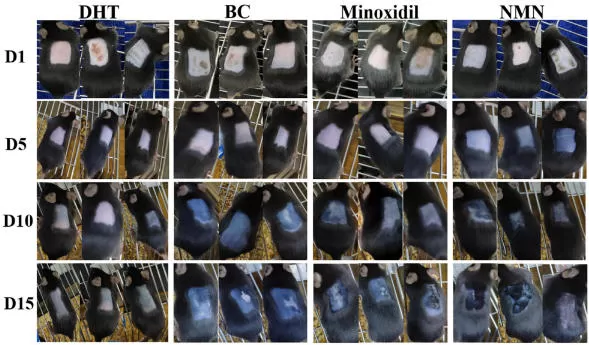
After topical application of 1% NMN for only 5 days, visible skin darkening was observed on the treated area—an early indicator that hair follicles were transitioning from the telogen (resting) phase into the anagen (growth) phase.
By day 15, the NMN-treated group showed significant hair regrowth, with the previously shaved area largely covered by new hair. The overall regrowth performance was comparable to that observed in the 5% minoxidil group, while the DHT-only control group showed limited recovery.
Histological and Cellular Evidence
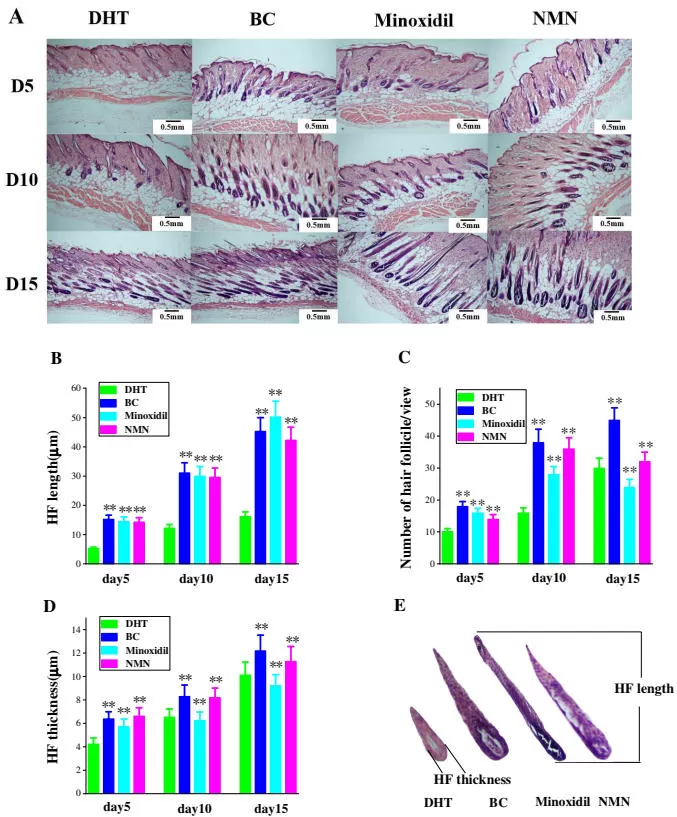
Histological analysis using H&E staining revealed that NMN effectively improved DHT-induced hair follicle miniaturization. Treated samples demonstrated increased hair follicle density, improved follicle length, and healthier follicular structure.
At the cellular level, researchers focused on human dermal papilla cells (HDPCs), which play a central role in regulating hair growth. In vitro studies showed that NMN:
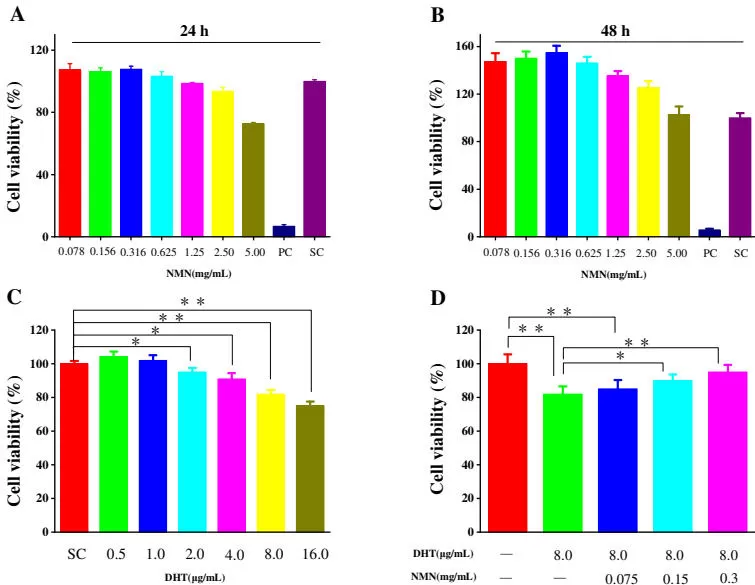
Exhibited low cytotoxicity at concentrations ≤2.5 mg/mL, with cell viability above 93%
l Promoted HDPC proliferation, with optimal activity observed around 0.316 mg/mL
l Helped restore HDPC activity under DHT-induced stress conditions in a dose-dependent manner
These findings suggest that NMN supports hair growth by maintaining cellular energy balance and protecting key follicular cells.
Implications for Hair Health Formulations
Current evidence indicates that NMN may serve as a functional ingredient for hair health applications, supporting hair follicle activation and cellular vitality. Its mechanism differs from single-target approaches, making it suitable for integration into dietary supplements, scalp-care products, and advanced cosmetic formulations.
Does NMN reduce DHT?
It was found that NMN can significantly lower the release of inflammatory factors induced by DHT in HDPCs. HDPCs cells are protected from oxidative stress damage by NMN, which inhibits the NF-κB p65 inflammatory signaling pathway.
Can NMN reverse baldness?
The effects of NMN on the growth of mouse hair were observed after hair removal. The results indicated that NMN can reverse the state of hair follicle atrophy, hair thinning, and hair sparsity induced by dihydrotestosterone (DHT), compared to that of minoxidil.
Where to Buy NMN raw materials?
Yangge Biotech is a professional supplier of NMN raw materials, offering high-purity NMN powder designed for use in nutraceuticals, functional foods, and formulation-based products.
For applications requiring enhanced stability and delivery efficiency, we also provide liposomal NMN, utilizing lipid-based encapsulation technology to improve ingredient performance—particularly suitable for anti-aging and hair health formulations. Contact us here: info@yanggebiotech.com