Why Creatine Is Becoming Part of Daily Nutrition Formulas
Yangge Biotech's Creatine powder has long been associated with sports nutrition, strength training, bodybuilding, and athletic performance. Today, however, creatine is increasingly being considered for a broader range of daily nutrition and functional supplement formulations.
This shift is important for supplement brands and ingredient manufacturers. Instead of positioning creatine only as a standalone sports supplement, product developers can incorporate it into multi-ingredient powders, stick packs, functional beverages, protein products, and other convenient daily-use formats.
Looking for the latest Creatine Powder 25 Ton price or a reliable bulk supplier? Contact Yangge Biotech today to request current pricing, COA, product specifications, samples, or OEM/ODM manufacturing solutions.
Email: info@yanggebiotech.com
What Is Creatine?
Creatine is a naturally occurring compound found in the human body and obtained in smaller amounts through foods such as meat and fish. A large proportion of the body's creatine is stored in skeletal muscle, where it participates in the system used to rapidly regenerate adenosine triphosphate (ATP), the body's immediate energy currency.
During short-duration, high-intensity activity, the phosphocreatine system helps regenerate ATP to support repeated muscular contractions. This is one reason creatine has become one of the most extensively studied ingredients in sports nutrition. The U.S. National Institutes of Health Office of Dietary Supplements notes that creatine supplementation can improve performance in repeated, high-intensity, intermittent activities and can support strength and power development in appropriate training contexts.
Among available creatine forms, creatine monohydrate remains the most widely studied. The NIH notes that other forms have not been demonstrated to provide superior effects compared with creatine monohydrate for increasing muscle creatine levels or improving performance.
This established research foundation helps explain why creatine is attractive to product developers looking for a recognizable and well-researched ingredient.
Creatine: From Sports Supplement to Daily Nutrition Ingredient
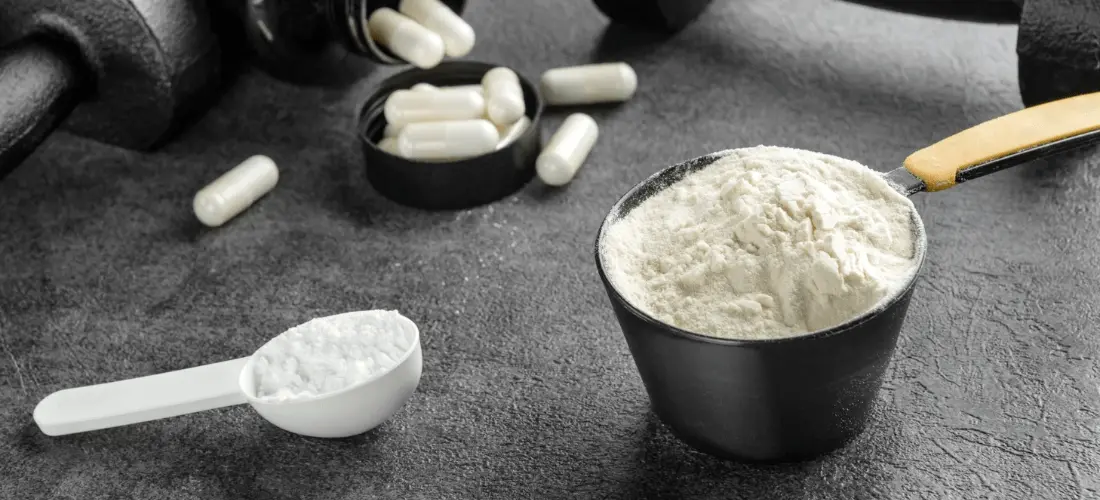
Traditional creatine products are often associated with pre-workout routines, gym users, athletes, and bodybuilding products.
But modern supplement development is moving toward products that fit more naturally into consumers' everyday routines.
Instead of asking consumers to take several separate products, brands are developing combination formulas that may bring multiple nutritional ingredients together in one serving.
This can include:
Creatine + protein
Creatine + HMB
Creatine + magnesium
Creatine + electrolytes
Creatine + fiber
Creatine + other active nutrition ingredients
Creatine in functional beverage powders
Creatine in single-serve stick packs
The goal is not necessarily to make creatine a "wellness ingredient" for every type of product. Rather, its established role in exercise and muscle-related nutrition gives formulators a versatile ingredient that can be incorporated into products targeting specific consumer groups and nutritional occasions.
The NIH also notes that dietary supplements are increasingly available in different formats, including powders, capsules, liquids, and combination products. At the same time, it cautions that combinations of ingredients are not automatically supported by the same evidence as the individual ingredients because many combinations have not been studied directly.
This distinction is important for responsible product development.
Why Are Brands Exploring Daily Creatine Formulas?
Several factors make creatine interesting for modern nutritional product development.
1. Creatine Has a Strong Research Foundation
One of the biggest advantages of creatine is the amount of scientific research surrounding it.
The NIH describes creatine as one of the most thoroughly studied dietary supplements used for exercise and sports performance. Research has generally found benefits for activities involving repeated short bursts of high-intensity effort, including improvements in strength, power, and the ability to perform repeated maximal-effort contractions.
For product developers, a well-researched ingredient can provide a more established foundation than an emerging ingredient with limited human research.
However, evidence for creatine should still be considered according to the specific population, formulation, dosage, intended use, and product claims.
2. Consumers Want Convenient Combination Products
Convenience is an important consideration in modern supplement formulation.
Consumers may already use protein powders, minerals, electrolytes, fiber products, and other nutritional supplements. A combination product can provide an alternative to taking multiple products separately.
For example, a manufacturer could develop a single-serve powder containing:
Protein + Creatine + Electrolytes + Fiber
This type of formula can be designed as a daily nutritional beverage rather than being limited to a traditional gym-focused product.
Potential delivery formats include:
Powder sticks
Sachets
Tub powders
Ready-to-drink beverages
Café-style drink mixes
Capsules for suitable formulations
Customized powdered beverage blends
The choice of format depends on ingredient compatibility, serving size, solubility, flavor, stability, manufacturing requirements, and target market.
3. Creatine Can Fit Different Consumer Segments
Another reason creatine is attracting attention is its potential use across multiple segments of the nutrition market.
Sports and Active Nutrition
This remains one of the most established applications.
Creatine is commonly included in products designed for people participating in resistance training, sprinting, high-intensity exercise, and other activities involving repeated muscular effort.
Women's Nutrition
Research into creatine supplementation in women is growing.
A 2026 systematic review and meta-analysis of randomized trials in postmenopausal women found that creatine monohydrate supplementation, particularly when combined with resistance training, was associated with small improvements in lean mass and leg-press strength. The researchers did not find an overall improvement in bone mineral density and noted limitations in the available evidence.
This does not mean that every creatine product should be marketed specifically to women or that creatine independently produces all of these outcomes. Instead, it indicates an area of ongoing research that may be relevant to product developers creating midlife and healthy-aging nutrition concepts.
Active Adults and Healthy Aging
Research is also examining creatine combined with exercise in older adults.
A 2025 systematic review and meta-analysis involving 1,093 participants reported that creatine combined with exercise training had a significant effect on one-repetition maximum strength, while the analysis did not find a significant effect on total-body bone mineral density.
For manufacturers, this research supports continued interest in creatine-containing products for active-aging and muscle-focused nutrition, while also highlighting the importance of making claims that accurately reflect the evidence.
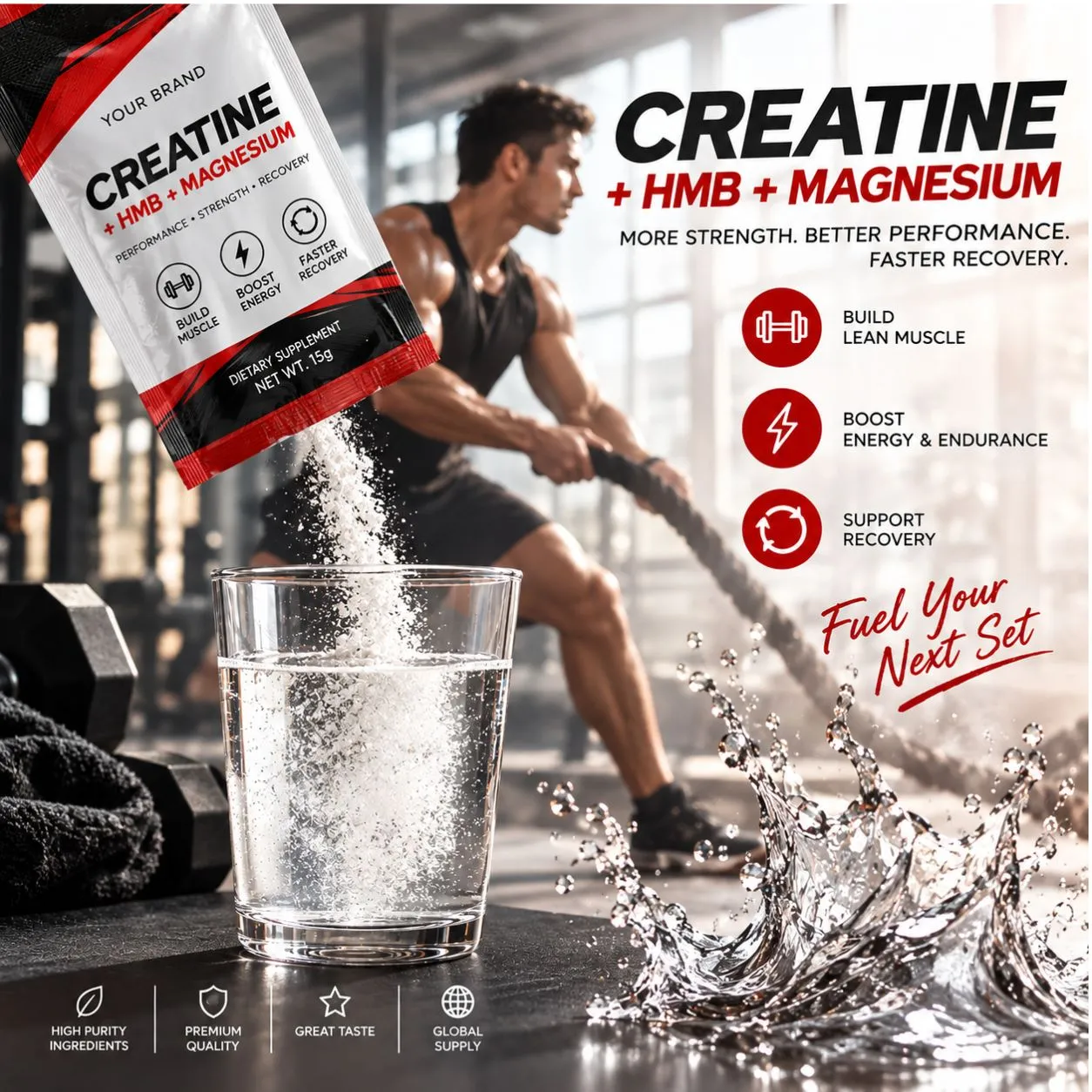
Creatine + HMB + Magnesium: A New Formulation Direction
One of the most interesting concepts in the Yangge Biotech trend report is Midlife Strength Daily.
The proposed combination is:
Creatine + Magnesium Glycinate + HMB
The concept is positioned toward:
Women 40+ / Muscle & Recovery
And the suggested formats include:
Powder sticks / café mix-ins
This is an example of how creatine can be integrated into a targeted multi-ingredient nutritional formula.
Creatine
Provides the creatine component of the formula and is extensively studied in relation to high-intensity exercise, strength, and muscle performance.
HMB
HMB, or beta-hydroxy-beta-methylbutyrate, is a metabolite of the essential amino acid leucine. It is commonly incorporated into muscle-focused nutritional products.
Magnesium Glycinate
Magnesium glycinate is a form of magnesium used in dietary supplement formulations. It can provide a mineral component to a daily nutrition formula.
Rather than marketing these ingredients independently, a manufacturer can develop a convenient formulation around a specific consumer occasion.
For example:
Morning Nutrition → Midday Café Mix → Post-Exercise Beverage → Daily Nutrition Routine
The formulation concept therefore becomes broader than a conventional creatine supplement.
Creatine + Protein: Another Major Opportunity
Protein and creatine are already familiar ingredients within sports and active nutrition.
Combining them creates another potential direction for product development.
A powder could contain:
Protein + Creatine
or a more comprehensive formulation could include:
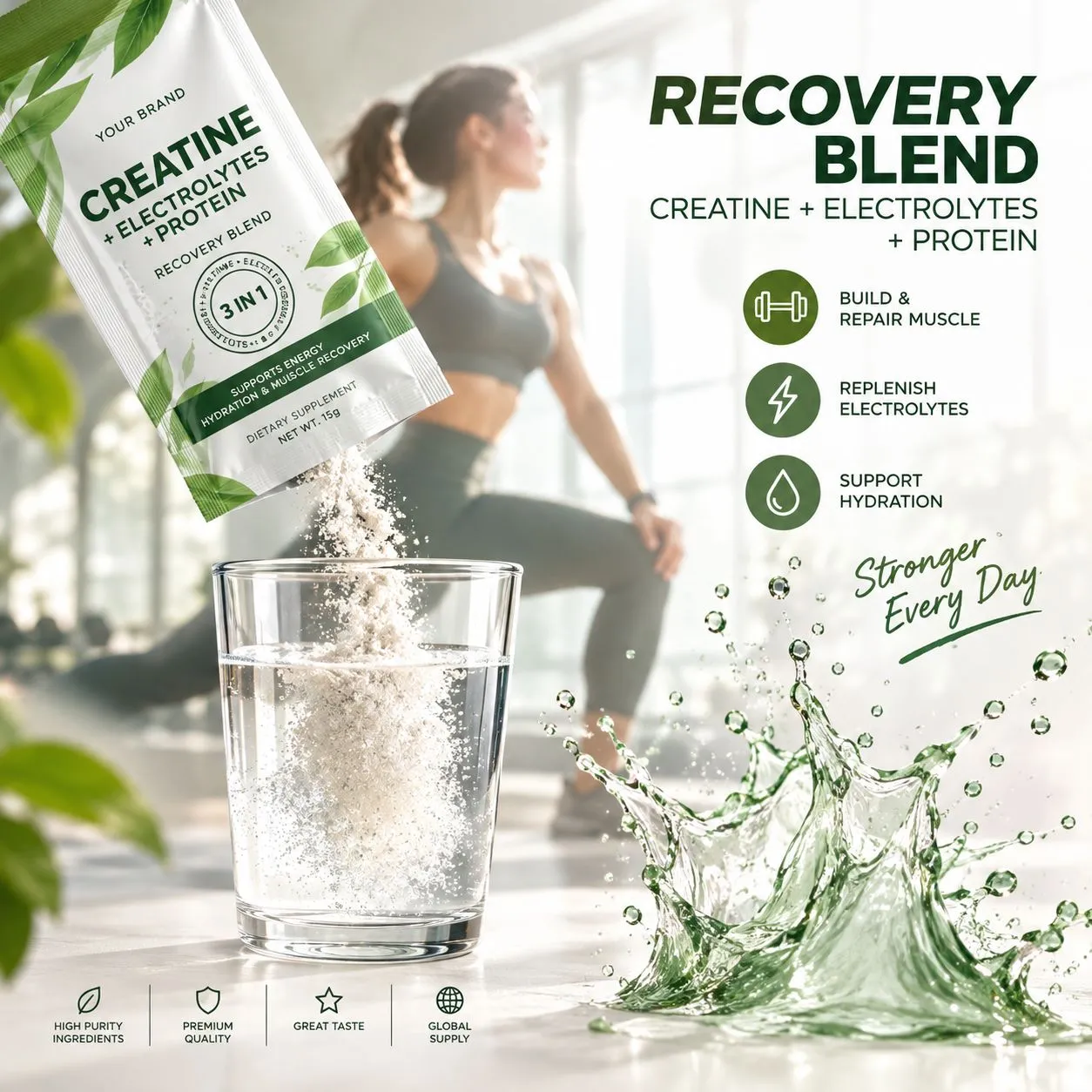
Protein + Creatine + Electrolytes + Fiber
The second concept is particularly relevant to the GLP-1 Companion Nutrition formulation identified in the Yangge report.
The concept is positioned around:
Lean-mass-focused nutrition
Hydration
Fiber intake
Convenient daily supplementation
It is important to distinguish formulation positioning from clinical claims. A product containing creatine, protein, electrolytes, and fiber should not automatically be described as treating, preventing, or counteracting the effects of GLP-1 medications.
Instead, manufacturers can focus on the nutritional characteristics of the formulation and ensure that any claims comply with the regulations of the intended market.
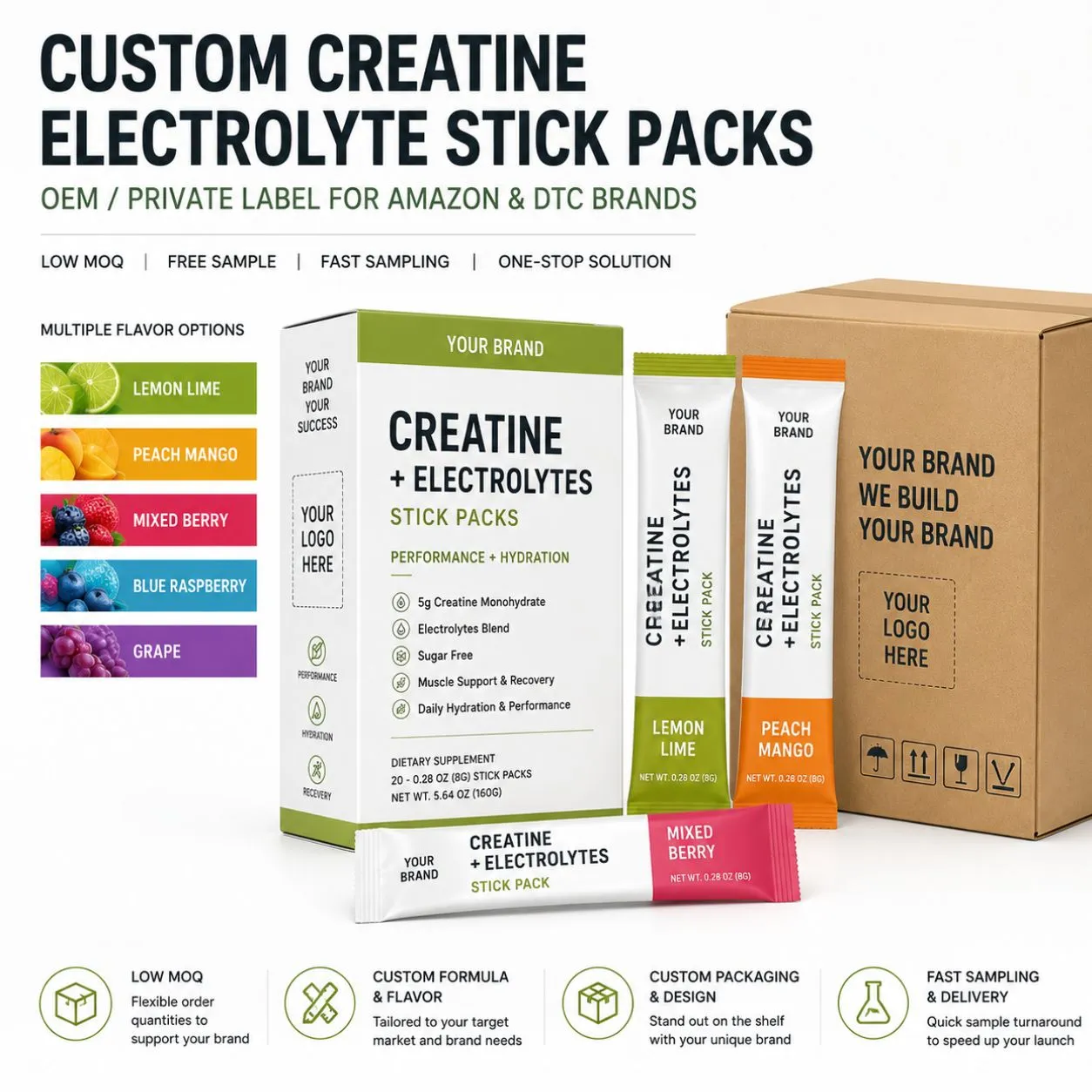
Why Powder Sticks Are Suitable for Creatine Products
The move toward daily nutrition also creates opportunities in single-serve formats.
Powder sticks can be particularly useful for creatine-based formulations because they provide a convenient way to deliver a measured amount of powdered ingredients.
Potential advantages include:
Convenience
A single serving can be carried in a bag, purse, gym kit, or travel case.
Portion control
Each stick can contain a defined serving of the finished formulation.
Flavor development
Creatine can be incorporated into flavored beverage concepts such as fruit, citrus, berry, or café-style products.
Brand differentiation
Customized packaging, flavor systems, ingredient combinations, and positioning can help brands develop products beyond traditional creatine tubs.
On-the-go consumption
The powder can be designed for mixing with water or another suitable beverage according to the finished product's formulation.
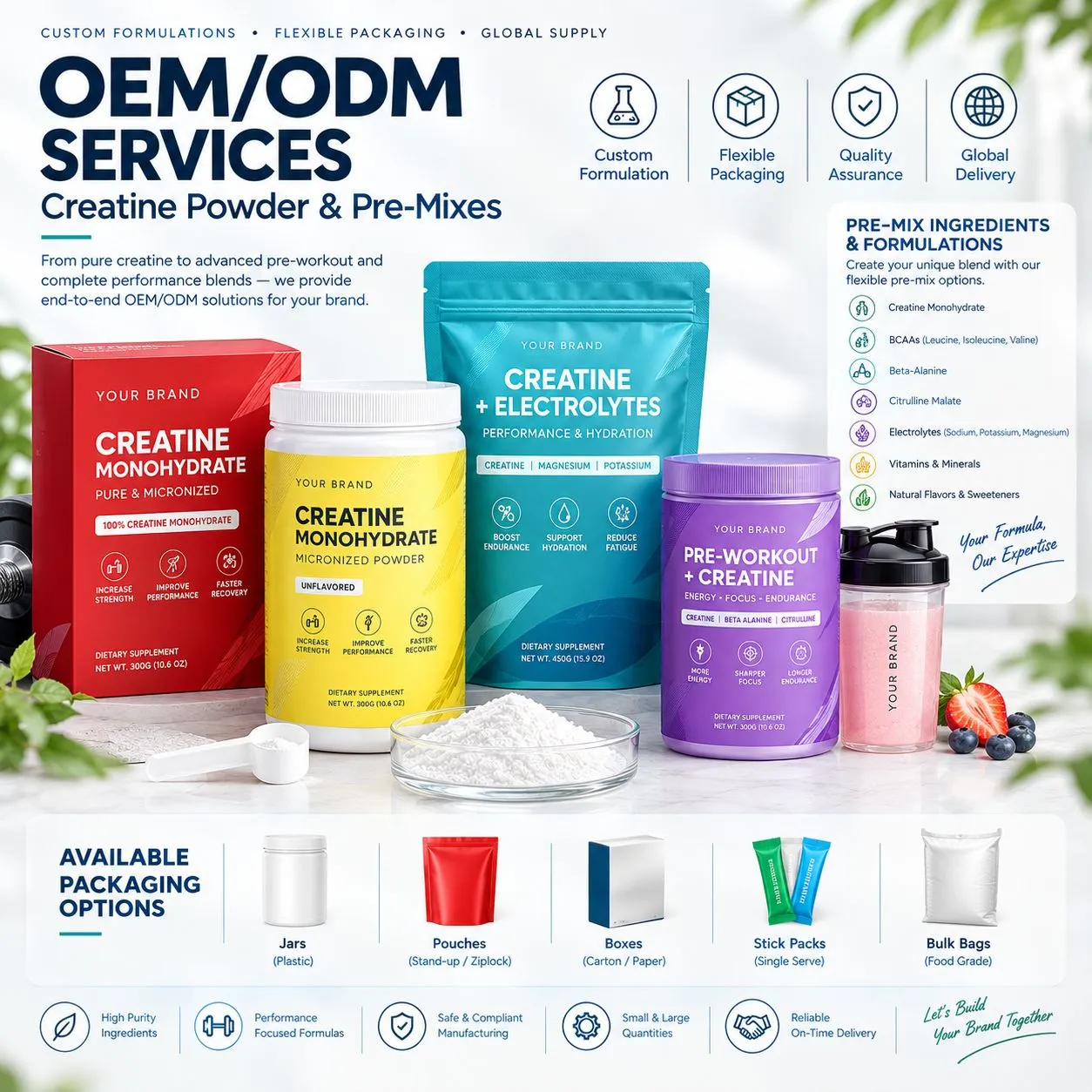
For B2B manufacturers, this makes creatine relevant to the development of OEM powder sticks, sachets, drink mixes, and private-label products.
Creatine in Functional Beverages
Functional beverages represent another potential application area.
Instead of selling creatine exclusively as a dry powder, manufacturers can explore formulations where creatine is incorporated into a beverage product.
Possible concepts include:
Creatine sports drinks
Protein beverages
Electrolyte drinks with creatine
Functional café beverages
Daily nutrition drinks
Ready-to-drink nutrition products
However, beverage formulation presents additional technical considerations.
Creatine's behavior can depend on factors such as:
pH
Temperature
Water content
Storage conditions
Processing conditions
Ingredient compatibility
Flavor system
Shelf-life requirements
Therefore, manufacturers should evaluate the complete formula rather than assuming that an ingredient will perform identically across powder and liquid formats.
Creatine and the Rise of Personalized Nutrition
Another reason combination formulas are becoming attractive is the movement toward more targeted nutrition products.
Rather than developing one product for everyone, brands can create formulas around particular consumer groups or usage occasions.
Examples include:
Women's Midlife Nutrition
Creatine + HMB + Magnesium
Active Nutrition
Protein + Creatine
Hydration and Active Lifestyle
Creatine + Electrolytes
Daily Functional Nutrition
Protein + Creatine + Fiber + Electrolytes
Sports Performance
Creatine + complementary sports-nutrition ingredients
This approach allows manufacturers to create more specific product concepts while using established ingredients as the foundation.
What Should Manufacturers Consider When Formulating with Creatine?
Adding creatine to a formula is not simply a matter of selecting a creatine ingredient and mixing it with other powders.
Product developers should evaluate several technical and commercial factors.
1. Creatine Form
Creatine monohydrate is the most widely studied form and remains a major option for nutritional supplement formulation. The NIH notes that alternative forms have not demonstrated clear superiority over creatine monohydrate.
2. Dosage and Serving Size
The intended serving size needs to be considered alongside the other active ingredients.
A formula containing protein, fiber, electrolytes, minerals, and creatine may require a larger serving size than a simple creatine product.
3. Solubility and Mixing
For powder sticks and beverages, formulators need to evaluate how the finished blend disperses and mixes.
Factors such as particle size, excipients, flavor systems, sweeteners, and other powdered ingredients can influence the consumer experience.
4. Stability
The finished formulation should be evaluated under appropriate stability conditions, particularly when developing ready-to-drink products or products exposed to moisture and heat.
5. Flavor
Creatine is commonly incorporated into flavored powders and beverages. A successful product needs to balance the taste of creatine and other active ingredients with the selected flavor system.
6. Packaging
Moisture protection is an important consideration for powdered nutritional ingredients.
Potential formats include:
Foil stick packs
Laminated sachets
HDPE bottles
Jars
Pouches
Customized OEM packaging
The packaging should be selected according to the complete formulation and intended shelf life.
7. Documentation and Quality
B2B buyers increasingly expect detailed ingredient documentation.
Depending on the product and market, manufacturers may request documents such as:
Certificate of Analysis (COA)
Technical Data Sheet (TDS)
Material Safety Data Sheet (MSDS/SDS)
Product specification
Microbiological testing
Heavy metal testing
Stability information
Allergen information
Manufacturing and quality certifications
These documents can help brands evaluate ingredients before moving into formulation and commercial production.
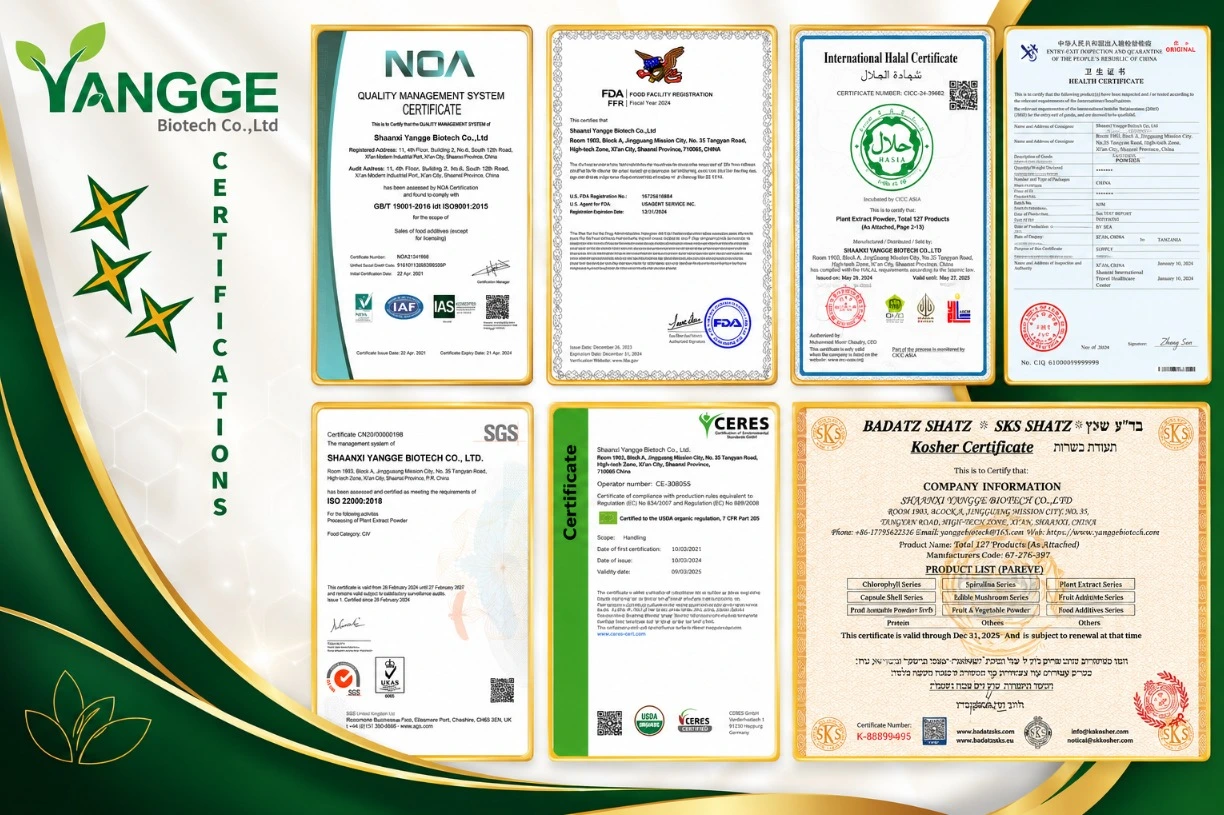
At Yangge Biotech, quality is at the core of everything we do. We are committed to continuous manufacturing improvement and strict quality management. Our Creatine Powder TON Price In Stock and manufactured ingredients are backed by internationally recognized certifications, including ISO, HACCP, GMP, Kosher, and other relevant industry certifications, demonstrating our commitment to quality, safety, and global compliance.
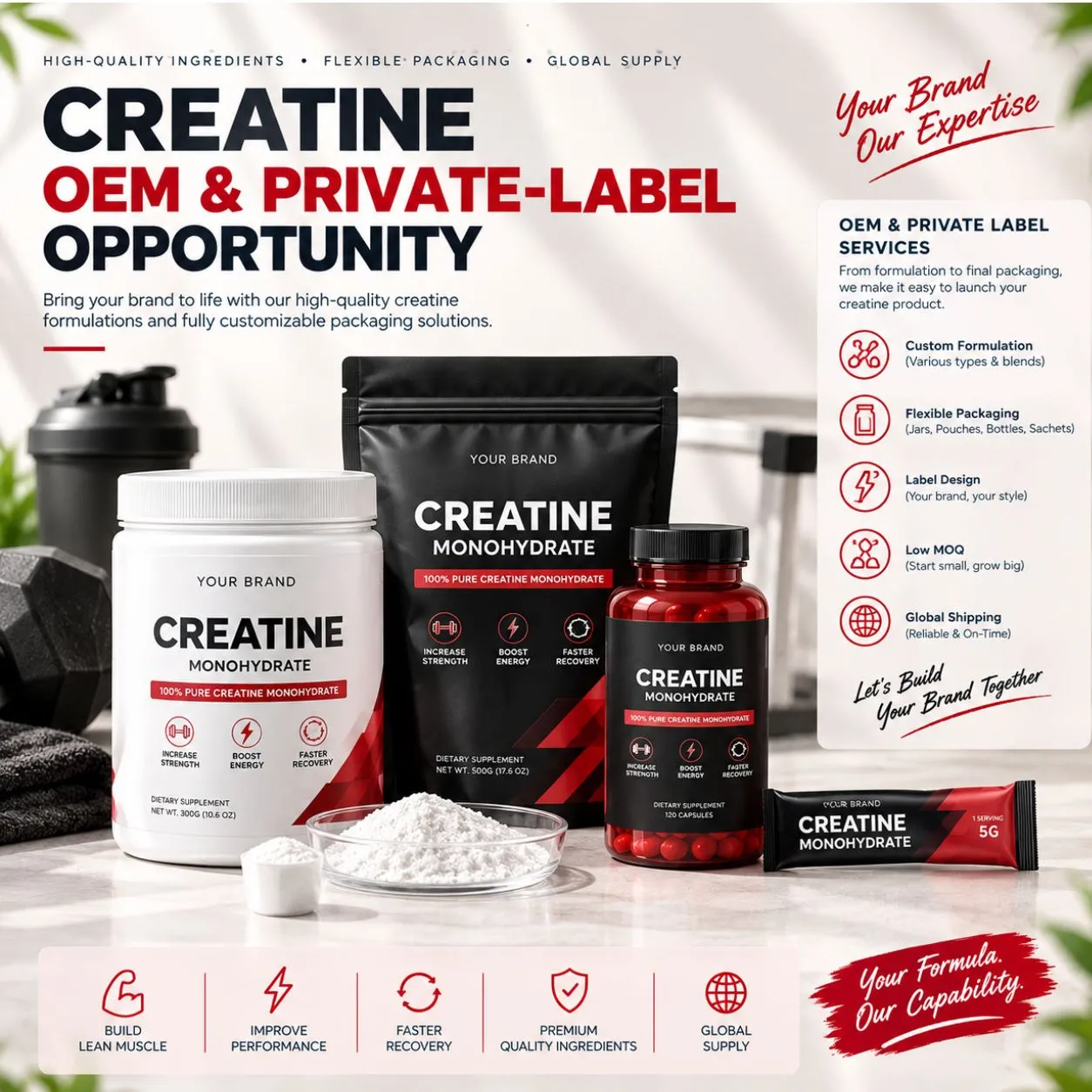
Creatine as an OEM and Private-Label Opportunity
For ingredient suppliers, the growth of combination nutrition creates opportunities beyond bulk ingredient sales.
A B2B supplier can support customers through different stages of product development, including:
Ingredient Supply → Formula Development → Flavor Selection → Packaging → OEM Manufacturing → Private Label → Finished Product
For example, a brand could request a custom formula containing:
Creatine + Protein + Electrolytes + Fiber
The supplier or manufacturer can then work with the brand to determine the appropriate formulation, flavor, serving size, packaging format, and product specifications.
Other potential concepts include:
Creatine + HMB Powder Stick
Creatine + Magnesium Daily Nutrition Powder
Creatine + Protein Functional Beverage
Creatine + Electrolyte Hydration Powder
Creatine Daily Nutrition Sachet
The exact formula should always be developed according to technical requirements, target market regulations, and the claims the finished product is permitted to make.
What Is the Future of Creatine in Daily Nutrition?
The future of creatine may not be limited to larger tubs of unflavored powder sold through sports-nutrition channels.
Instead, product development is moving toward more convenient and targeted formats.
The Yangge Biotech trend report illustrates this change through concepts such as:
Midlife Strength Daily
Creatine + Magnesium Glycinate + HMB
Target: Women 40+ / muscle and recovery
Format: Powder stick / café mix-in
GLP-1 Companion Nutrition
Protein + Creatine + Electrolytes + Fiber
Target: Lean-mass-focused nutrition / hydration / GI-focused formulation
Format: Powder stick / RTD
These concepts demonstrate how one ingredient can become part of multiple product architectures.
For manufacturers, this means creatine can potentially serve as a core ingredient within a broader formulation strategy, rather than being restricted to traditional sports products.
Conclusion
Creatine is becoming part of daily nutrition formulas because its role in nutrition is expanding beyond traditional sports supplementation.
Its established research base, familiarity among consumers, compatibility with powdered nutrition products, and potential for combination formulas make creatine an interesting ingredient for modern product development. The opportunity is particularly relevant to multi-ingredient formulations.
Creatine can be combined with protein for active nutrition, HMB and magnesium for targeted midlife nutrition concepts, or protein, electrolytes, and fiber for broader nutritional formulations. At the same time, successful product development requires more than simply combining popular ingredients. Manufacturers need to consider dosage, ingredient compatibility, stability, flavor, solubility, packaging, documentation, regulatory requirements, and evidence-based claims.
Yangge Biotech supports customers with nutraceutical ingredient supply and customized product development. If you are developing a creatine-based powder, stick pack, functional beverage, or private-label supplement, contact Yangge Biotech to discuss your formulation and OEM requirements.
Get in touch with our team today—we look forward to supporting your next successful product.
Email: info@yanggebiotech.com
Frequently Asked Questions
1. What is creatine used for?
Creatine is primarily used in sports and active-nutrition products. Research indicates that creatine supplementation can support performance during repeated, short-duration, high-intensity exercise and can contribute to improvements in strength and power when combined with appropriate training.
2. Why is creatine being added to daily nutrition formulas?
Creatine is being explored in daily nutrition formulas because it can be combined with ingredients such as protein, HMB, magnesium, electrolytes, and fiber to create targeted multi-ingredient products. New product concepts can also be delivered through convenient formats such as powder sticks and functional beverages.
3. What is the most studied form of creatine?
Creatine monohydrate is the most widely studied form of creatine. The NIH reports that other forms have not been demonstrated to be superior to creatine monohydrate for increasing muscle creatine levels or improving exercise performance.
4. Can creatine be used in powder sticks?
Yes. Creatine can be incorporated into powdered formulations and single-serve stick packs. The finished product should be evaluated for mixing characteristics, flavor, stability, moisture protection, and compatibility with other ingredients.
5. Can creatine be combined with protein?
Yes. Creatine and protein can be incorporated into the same nutritional formulation. This combination is already relevant to sports and active-nutrition product development.
6. Can creatine be used in functional beverages?
Creatine can be considered for powdered beverage mixes and liquid formulations. However, liquid products require additional evaluation of factors such as pH, stability, processing, storage, and shelf life.
7. Is creatine only for athletes?
Creatine is strongly established in sports and exercise nutrition, but research is also investigating applications in populations such as older adults and postmenopausal women. Evidence should be evaluated according to the specific population and outcome rather than assuming that results apply universally.
8. What documents should buyers request when sourcing creatine?
Depending on the market and application, B2B buyers may request a COA, TDS, SDS/MSDS, specification sheet, testing information, allergen information, and relevant quality or manufacturing certifications.
References
Kreider, R. B., et al. (2017). International Society of Sports Nutrition position stand: Safety and efficacy of creatine supplementation in exercise, sport, and medicine. Journal of the International Society of Sports Nutrition, 14, 18.
Read the full article
National Institutes of Health, Office of Dietary Supplements. Exercise and Athletic Performance: Fact Sheet for Health Professionals. This resource provides information on creatine and other dietary supplements used for exercise and athletic performance.
NIH Office of Dietary Supplements – Exercise and Athletic Performance
Naddafha, S., Antonio, J., Kreider, R. B., & Stout, J. R. (2026). Creatine monohydrate for lean mass, strength, and bone density in postmenopausal women: A systematic review and meta-analysis. Journal of the International Society of Sports Nutrition.
Sharifian, G., Aseminia, P., Heidary, D., & Esformes, J. I. (2025). Impact of creatine supplementation and exercise training in older adults: A systematic review and meta-analysis. European Review of Aging and Physical Activity, 22, 17.
Liu, S., Huang, N., Wu, W., et al. (2025). The impact of creatine supplementation associated with resistance training on muscular strength and lean tissue mass in the aged: A systematic review and meta-analysis. European Review of Aging and Physical Activity, 22, 26.
Candow, D. G., et al. (2017). Effect of creatine supplementation during resistance training on lean tissue mass and muscular strength in older adults: A meta-analysis. Journal of Sports Medicine and Physical Fitness.
Nieman, D. C., et al. Effects of creatine supplementation and resistance training on muscle strength gains in adults younger than 50 years: A systematic review and meta-analysis. This review evaluated creatine combined with resistance training and reported improvements in upper- and lower-body strength.
Nutritional Supplementation Combined with Exercise for Musculoskeletal Health in Women. (2026). A systematic review and meta-analysis evaluating proteins, amino acids, and creatine across reproductive stages. This is particularly relevant to the blog's discussion of women's and midlife nutrition.

Send Inquiry
Related Industry Knowledge
Recommended Products

_1785841135260.webp "Astaxanthin 10% Powder")