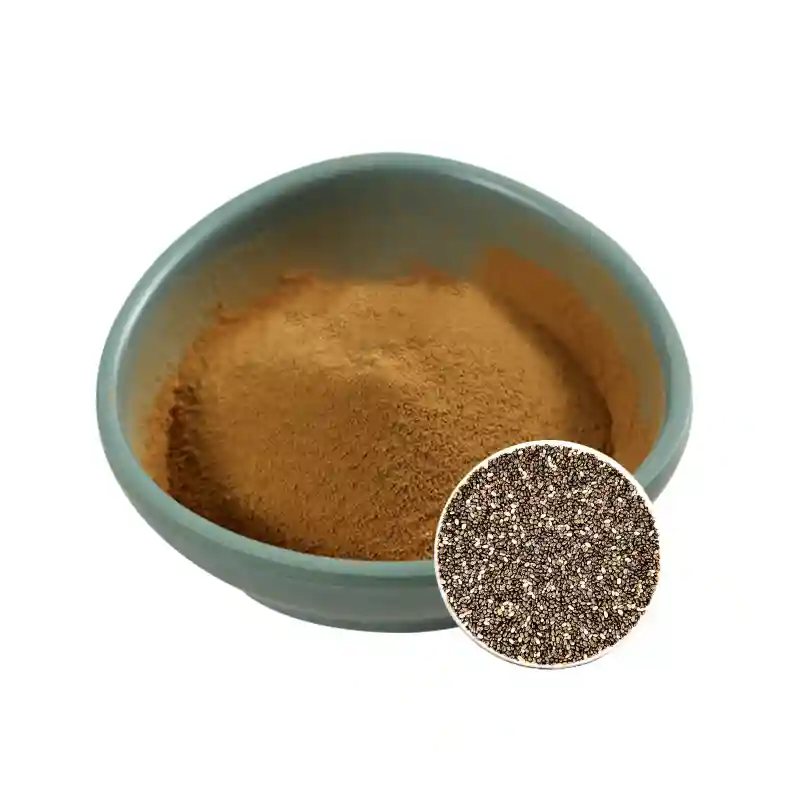
What is carbon black used for
It's the same question that pet food ingredient suppliers, candy makers making a new batch of licorice, and bakery chains expanding a signature charcoal product line all ask: what is Carbon Black E153 used for, and which supplier can be trusted to deliver it consistently? That question is answered by Yangge's Carbon Black E153, which has a very high tinting strength, a very low PAHs (polycyclic aromatic hydrocarbon) residue, and reliable dispersion stability across oil, water, and sugar-based systems. This is exactly what procurement teams look for before they commit to a wholesale supply relationship.
What is carbon black (E153) used for in food industry?
Vegetable carbon, or Carbon Black E153, is a fine black powder made by carbonizing bamboo or coconut shell at high temperatures and then controlling the extraction process to make it smoother. As it has no smell, no taste, and doesn't dissolve in water, it gives food a true black color without adding any other flavors or changing the texture. This is why it's used in so many types of food and not just one niche use.
A single pigment, multiple production lines
Carbon Black E153 works the same way in doughs, syrups, coatings, and frozen mixes, so companies that make a lot of different products can use just one colorant instead of making sure that each one works well in its own area. This lowers the costs of managing suppliers and makes it easier to keep track of the paperwork that is needed for checks and store partner approval.
Category-level regulatory recognition
Major regulatory systems already recognize E153 as a food colorant, and allowable use amounts have been set for certain types of food, like sweets, baked goods, and frozen desserts. Before finalizing a formulation, buyers who are sending goods to more than one region should make sure they know the exact dosage that is allowed in each market.
Why buyers default to vegetable carbon over alternatives
Unlike mineral-based blacks or synthetic dyes, Carbon Black E153 comes from plants, which is in line with clean-label packaging claims. It still gives buyers the color intensity they want or more. This makes it a sensible first choice instead of one that has to choose between performance and name appeal.
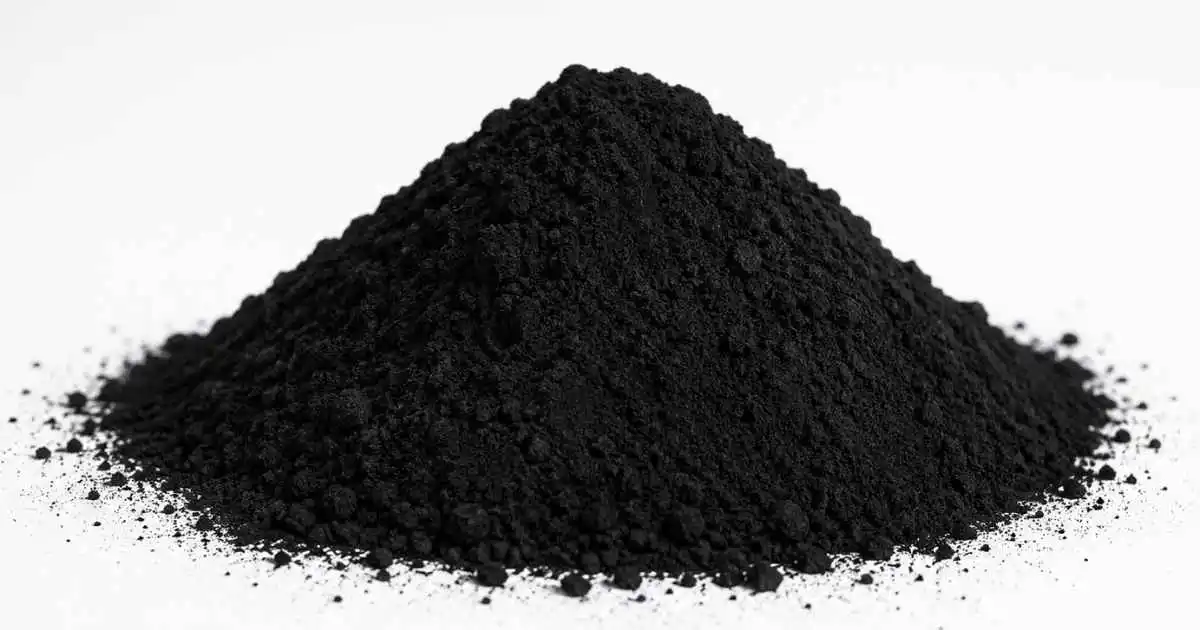
What applications benefit most from Carbon Black E153?
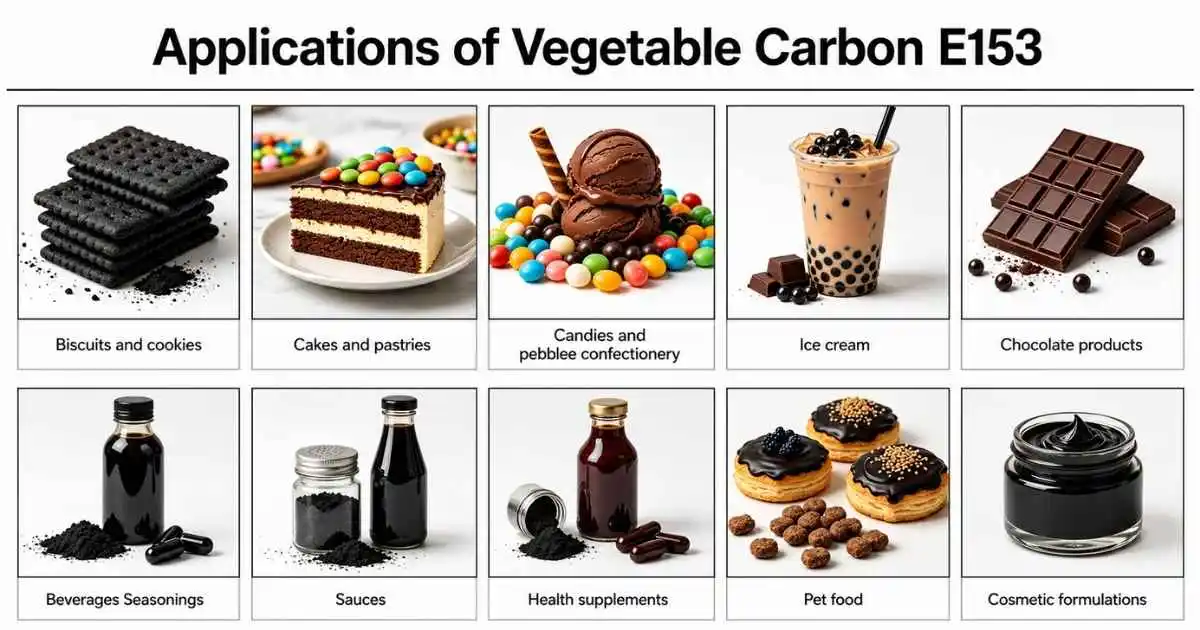
Carbon Black E153 is used more in some product groups than others because a deep, uniform black color is an important part of the personality of those products. Bakery goods, candies, specialty cheese, black ice cream, and pet food all use the pigment in slightly different ways, depending on whether it is stable at high temperatures during baking or doesn't move around in coating systems. However, all of these uses benefit from the same level of tinting strength and purity.
Bakery and pastry lines
Charcoal breads, black bagels, and squid-ink-style buns need a color that doesn't fade in the oven and mixes into the dough without leaving any visible spots. The small size of Carbon Black E153 particles makes it easy to mix into dry mixes. This gives baking chains a consistent black color in every batch and location.
Confectionery and candy production
Candy like licorice, jelly crystals, and black sweets need a colorant that doesn't change when the syrup boils and cools. Carbon Black E153 keeps its color even when the temperature changes. This means that there aren't many rework jobs and the color matches are always the same across production runs.
Cheese coatings and black ice cream
Specialty cheese rinds finished in black wax, along with charcoal-based frozen desserts, both depend on a pigment that resists migration and holds its appearance through very different storage conditions — ambient for cheese, sub-zero for ice cream. Carbon Black E153's insolubility in water supports both use cases without requiring separate formulation adjustments.
Pet food coloring applications
Pet food ingredient makers who make colored kibble or tooth treats need a pigment that can withstand the heat and cooling process without bleeding into other materials. Carbon Black E153's ability to stay put and handle heat makes it a useful ingredient for formulators working in both human food and pet food.
|
Application |
Key Requirement |
How Carbon Black E153 Performs |
|
Bakery (bread, pastry) |
Heat stability, no specks |
Withstands baking temperatures |
|
Confectionery (candy, licorice) |
Stability through boiling syrup |
Holds shade through thermal processing |
|
Cheese coatings |
Surface adhesion, no migration |
Insoluble, stays on coated surface |
|
Black ice cream |
Stable through freeze cycles |
Maintains shade in frozen storage |
|
Pet food |
Withstands extrusion heat |
Non-migrating in kibble and treats |
How is E153 carbon black used in baking and confectionery?
Carbon Black E153 is usually used as a concentrated master ingredient in bakeries and candy shops instead of being added directly to large batches at full strength. Before mixing it into dough, syrup, or icing, technical teams spread it out in a small carrier, like oil, glycerin, or water, depending on the application. This makes the final color more even and lowers the risk of streaking that can happen when a highly concentrated powder is added directly to a large mixing batch.
Dough and batter mixing sequence
Adding Carbon Black E153 during the dry-mix or early hydration stage lets it spread out before the gluten structure forms. This makes the crumb color more uniform than when it is added later in the process. Because the pigment is so strong, bakery R&D teams usually start with a low dose and slowly increase it. This way, even small changes can be seen in the color.
Syrup-stage incorporation for candy
Carbon Black E153 is added during the cooking process for cooked candies, licorice, and jelly-based sweets. It needs to stay stable at high temperatures for a long time without turning brown. One of the main reasons candy makers like it over dyes that break down or change color after long cooking is that it doesn't change when heated.
Decorative finishing on cakes and biscuits
Carbon Black E153 is used to make black macarons, charcoal biscuits, and one-color dessert decorations because it gives a clean, true black color instead of the muddy tone that some cocoa-based or mineral alternatives give. This color accuracy is often the deciding factor in colorant choice for chains that are making visually distinct product lines.
Is carbon black (E153) safe for food applications?
Vegetable carbon black has an established regulatory history as a food colorant, recognized in major markets subject to defined permitted usage levels within specific product categories. For procurement teams, the practical safety question centers less on regulatory approval in general and more on supplier-level purity control — specifically, how well a given manufacturer controls PAHs formation during the carbonization process that produces the pigment.
Purity and low PAHs residue control
Poorly controlled carbonization can generate elevated PAHs levels, a known concern regulators monitor closely in carbon-based food ingredients. Yangge's Carbon Black E153 is produced under tightly managed carbonization parameters specifically to minimize PAHs formation, giving buyers a colorant that meets strict purity thresholds rather than only baseline regulatory compliance.
Certification and documentation
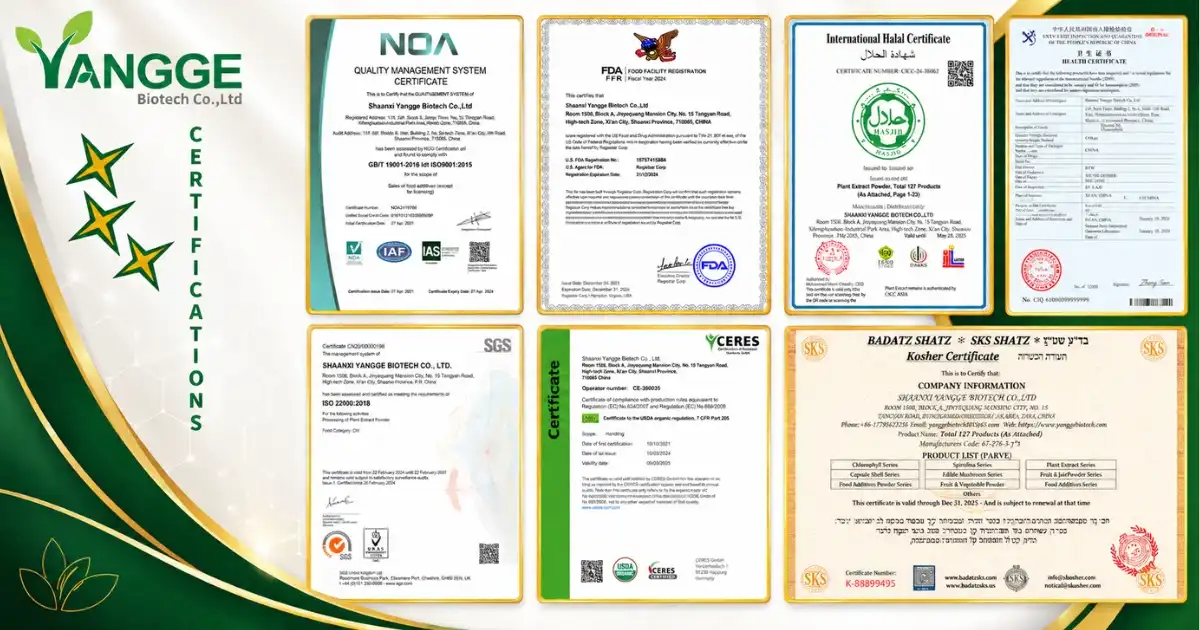
Natural plant extracts from Yangge Biotech Co., Ltd. are used in food and drinks, dietary supplements, and superfoods. The company is ISO, HACCP, Kosher, and Halal certified, and production follows GMP guidelines. A certificate of analysis is sent with every batch of Carbon Black E153. This gives buyers the proof they need for both internal quality control and checks by retail partners.
Working within permitted dosage limits
Due to its high concentration, Carbon Black E153 is usually recommended for use at low doses that stay well within the allowed limits in each area, rather than in large amounts. The best way to be sure of the right dosage for a certain product matrix and target market is to ask for a technical sample before finalizing a formulation.
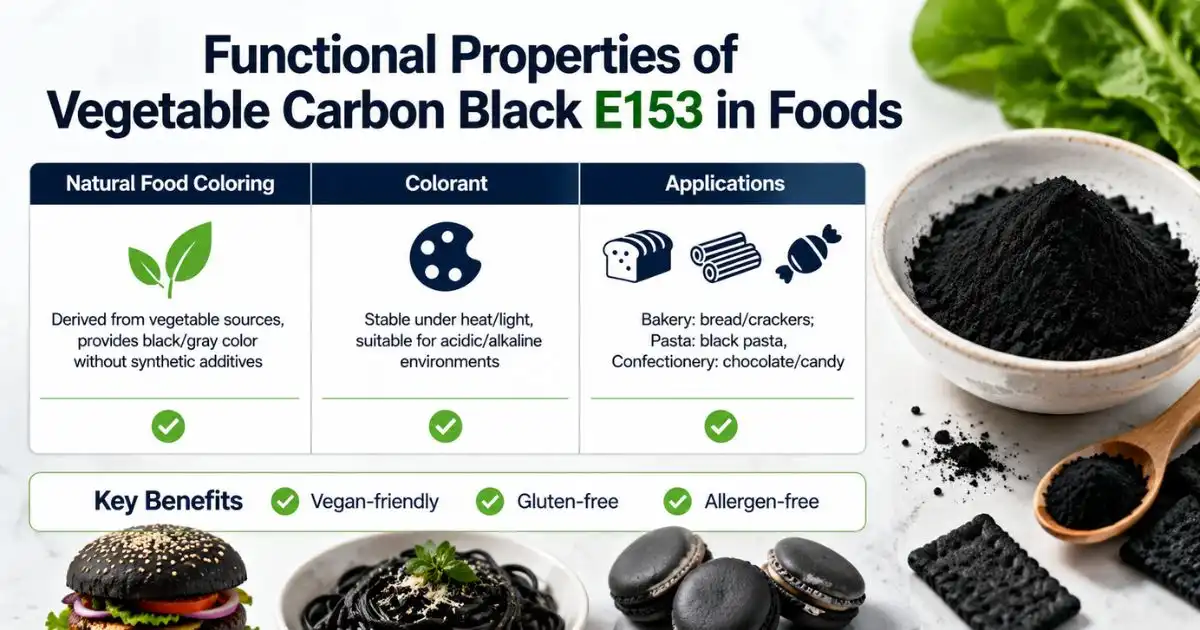
What functional properties does E153 provide in foods?
Beyond visual impact, Carbon Black E153 brings functional characteristics that directly affect production efficiency. Its tinting strength allows formulators to reach full black shade at a lower inclusion rate than many alternative colorants, which reduces material cost per batch, while its dispersion behavior determines whether a production run finishes with a clean, uniform color or with visible streaking that triggers rework.
High tinting strength per gram
When compared to larger carbon-based pigments, Carbon Black E153's small particle structure results in a higher surface area-to-volume ratio, which increases its coloring power per unit of material. This lets manufacturers meet shade requirements with less raw material, which is especially important for businesses that make a lot of products and have to keep their per-unit costs low.
Dispersion stability across formulation types
Single-matrix colorants are limited in the range of applications they can serve. A pigment that spreads evenly in oil, water, and sugar-based systems is much more useful. Because Carbon Black E153 stays stable in doughs, syrups, coatings, and frozen mixes, different types of products don't need to be colored separately in the same facility.
Resistance to heat, light, and pH shifts
Carbon Black E153 keeps its color even when heated to baking temperatures, left out on store shelves for a long time, and exposed to the pH range that is common in bread, candy, and dairy products. It doesn't fade or turn brown or gray. Because of this, chains with many SKUs usually use the same black colorant instead of trying out different ones for each new product.
|
Property |
Performance Detail |
Procurement Relevance |
|
Tinting strength |
High coloring power at low dosage |
Lower material cost per batch |
|
PAHs residue |
Controlled during carbonization |
Simplifies regulatory compliance |
|
Dispersion |
Stable across oil/water/sugar systems |
Fewer streaking and rework issues |
|
Thermal stability |
Holds shade through baking |
Consistent finished appearance |
|
Water solubility |
Insoluble |
Stays put in surface coatings |
Third-Party Test Report
Yangge Biotech provides a third-party test report for every batch of Vegetable Carbon E153. Each production lot is independently tested by accredited laboratories to verify purity, food safety, heavy metals, microbiological limits, and overall product quality. This additional verification ensures customers receive consistent, safe, and reliable ingredients that meet international quality requirements and support global food manufacturing standards.
R&D Capacity
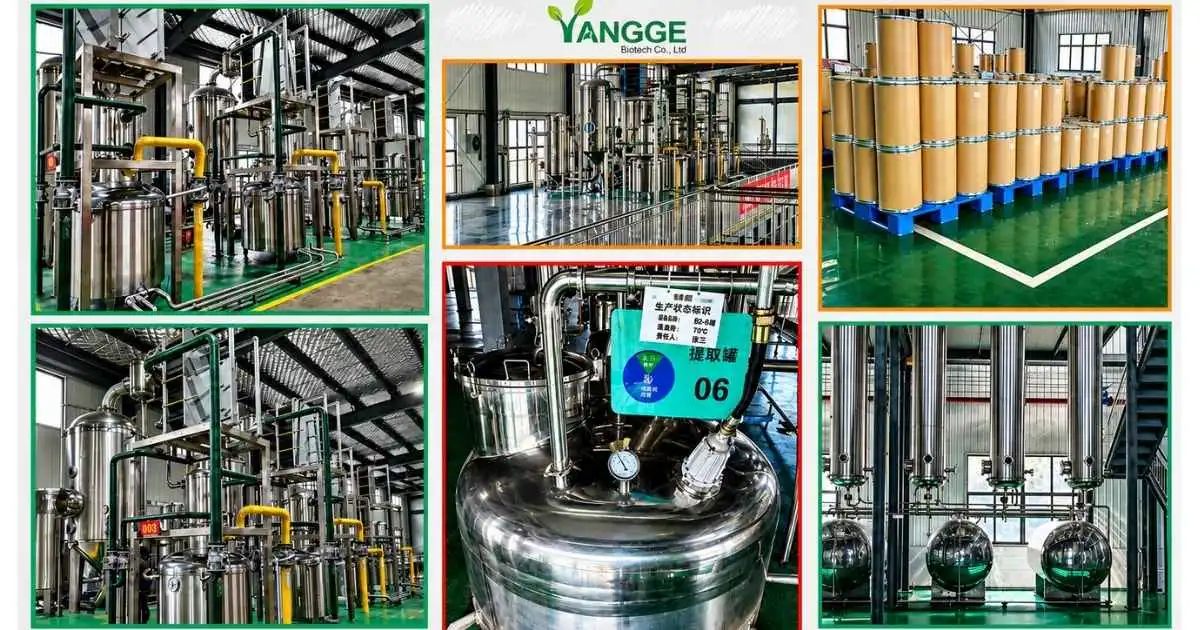
Yangge Biotech continuously invests in advanced research and development to improve product quality and manufacturing efficiency. Our experienced R&D team works with modern analytical instruments to optimize production processes, develop customized formulations, and support customers with technical solutions for food, beverage, and nutraceutical applications. This strong innovation capability enables us to meet diverse customer requirements while maintaining consistent quality.

Certificates
Yangge Biotech follows internationally recognized quality management systems to ensure reliable product quality and food safety. Our manufacturing processes comply with strict production standards, and our products are supported by relevant certifications to satisfy the requirements of customers worldwide.
Our certifications may include:
ISO 9001
HACCP
GMP
Halal
Kosher
FDA Registration (where applicable)
OEM Packing
Yangge Biotech offers flexible OEM and private label packaging services to meet different market demands. We provide customized packaging solutions, including retail bags, aluminum foil pouches, bottles, and industrial drums. Our professional packaging team ensures secure packing, clear labeling, and efficient shipping for customers worldwide.
OEM services include:
Private Label
Custom Logo Printing
Customized Packaging Design
Bulk Packaging
Retail Packaging
Export Packaging

Why Choose Yangge Biotech?
Yangge Biotech is committed to delivering premium-quality ingredients with dependable service and comprehensive technical support. We focus on long-term partnerships by providing stable supply, strict quality control, and customized solutions for customers around the world.
Why customers choose us:
Customers choose Yangge Biotech because we are committed to providing high-quality ingredients, reliable service, and consistent product performance. Every batch of our products is manufactured under strict quality control procedures and supported by a Certificate of Analysis (COA) and third-party test report to ensure purity, safety, and compliance with international standards. Our experienced R&D team continuously develops innovative solutions and provides technical support to help customers optimize their formulations and product applications.
High-quality food-grade ingredients
Competitive factory pricing
Strict quality control
Third-party test report for every batch
Modern production facilities
Professional R&D team
OEM & ODM services
Fast global shipping
Responsive technical support
Reliable long-term supply
Conclusion
Bakery chains, candy makers, and people who buy pet food ingredients can use Carbon Black E153 to make black products that are the same color in doughs, syrups, coatings, and frozen foods. It has the strength, purity, and stability needed for consistent black products. Yangge's Carbon Black E153 is a well-known and reliable choice for procurement teams that want to stick with a single black colorant supplier for bulk production. It has ISO, HACCP, Kosher, and Halal certifications, as well as strict PAHs controls.
FAQs
Q1: What raw materials is Carbon Black E153 derived from?
It is produced by carbonizing bamboo or coconut shell at high temperature, then refined to food-grade purity.
Q2: Does Carbon Black E153 need special handling during baking?
No special handling is required; it withstands standard baking temperatures without fading or shifting color.
Q3: How does Carbon Black E153 compare in cost to synthetic black dyes?
Its higher tinting strength usually lowers the required dosage, narrowing the effective cost difference despite a higher unit price.
Q4: Is Carbon Black E153 suitable for pet food coloring?
Yes, its non-migrating, heat-stable profile makes it compatible with extruded kibble and baked treats.
Q5: What documentation should buyers request before a wholesale order?
A certificate of analysis covering PAHs residue, particle size, and tinting strength for the specific batch quoted.
Sourcing Carbon Black E153 for Your Next Production Run
If your team needs a dependable vegetable carbon black e153 wholesale partner, Yangge Biotech Co., Ltd. is ready to support your bakery, confectionery, or pet food production with a low-PAHs, high-strength, dispersion-stable Carbon Black E153, backed by full ISO, HACCP, Kosher, and Halal certification. Our dedicated R&D and production teams, 24-hour online service, and farm-to-table traceable sourcing model mean every shipment arrives with consistent quality and complete documentation. Whether you need a technical sample to validate dosage or a long-term wholesale supply partner, the Yangge team is ready to help. Request your certificate of analysis, specification sheet, or free sample today by contacting us at info@yanggebiotech.com let's build your next black-colored product line together.
References
1. Patel, A. K. & Nguyen, T. — Natural Black Pigments in Bakery and Confectionery Formulation
2. Rossi, F. & Becker, M. — Regulatory Frameworks for Vegetable Carbon as a Food Additive
3. Sato, H. & Kim, D. — Assessing PAHs Residue Risk in Carbon-Based Food Colorants
4. Alvarez, C. & Fischer, R. — Clean Label Colorant Trends in Global Confectionery Markets
5. O'Brien, L. — Thermal and pH Stability of Plant-Derived Black Pigments
6. Zhang, Q. & Morrison, D. — Supply Chain Considerations for Natural Food Colorant Sourcing

Send Inquiry
Related Industry Knowledge
Recommended Products