10mg vs 20mg Lutein Daily for Blue Light Protection
More and more, formulators working on eye health, baby nutrition, and senior fitness are asking the same question: how much Lutein does a finished product really need to protect against blue light? The answer affects everything, from what the label says to how much the raw materials cost. It all starts with how good the ingredient is. Yangge Biotech's Lutein, which is made from carefully grown marigold extract, is made for this kind of formulation choice. There is full industry-chain traceability from the farm to the finished powder for every batch, a microencapsulation process designed for high bioavailability, and FDA GRAS certification, which gives buyers peace of mind as they move from R&D to commercial launch. It doesn't matter if a manufacturer claims a dosage of 10 mg for a daily maintenance capsule or 20 mg for a therapeutic-positioned gummy; what matters is the quality of the raw materials used to make the product. For companies that make eye supplements, baby food, and mid- to high-end health products, this piece breaks down the dose science, recipe consequences, and source issues that mean the most.
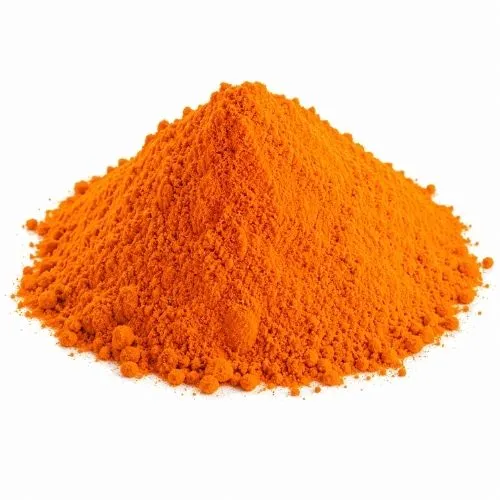
How much lutein is needed for effective blue light protection?
A daily dose of 10 mg to 20 mg of Lutein, often with zeaxanthin, has been the focus of most clinical studies on macular pigment and screen-related eye strain. Over the course of 3 to 6 months of treatment, this range regularly shows rises in retinal pigment optical density (MPOD). MPOD is the biological measure most closely linked to blocking high-energy blue wavelengths before they reach the retina. Formulators who use Yangge's marigold extract-derived Lutein can confidently compare finished dose products to this published range. This is because the ingredient's uniform strength and proven tracking make dose estimation consistent across production runs.
Clinical dosage thresholds referenced in eye health research
Peer-reviewed studies on blue light and screen fatigue generally use either a 10mg or 20mg daily lutein arm, rarely lower, because sub-10mg doses have shown inconsistent MPOD response in shorter trials.
Why blue light specifically requires targeted lutein intake
Blue light in the 400–460nm range penetrates deeper into ocular tissue than other visible wavelengths, and lutein's molecular structure is uniquely suited to absorbing that specific band before oxidative stress reaches photoreceptor cells.
How daily screen exposure changes the dosage conversation
Populations with high digital device use, including office workers and adolescents, are increasingly cited in formulation briefs as the target consumer for 20mg-positioned products, while general wellness users are typically served well by 10mg maintenance formats.
Translating research dosage into finished product formats
Once a brand decides on a research-backed dosage, the next step is translating that milligram target into a stable delivery format, whether capsule, gummy, or functional beverage, without losing potency during processing.
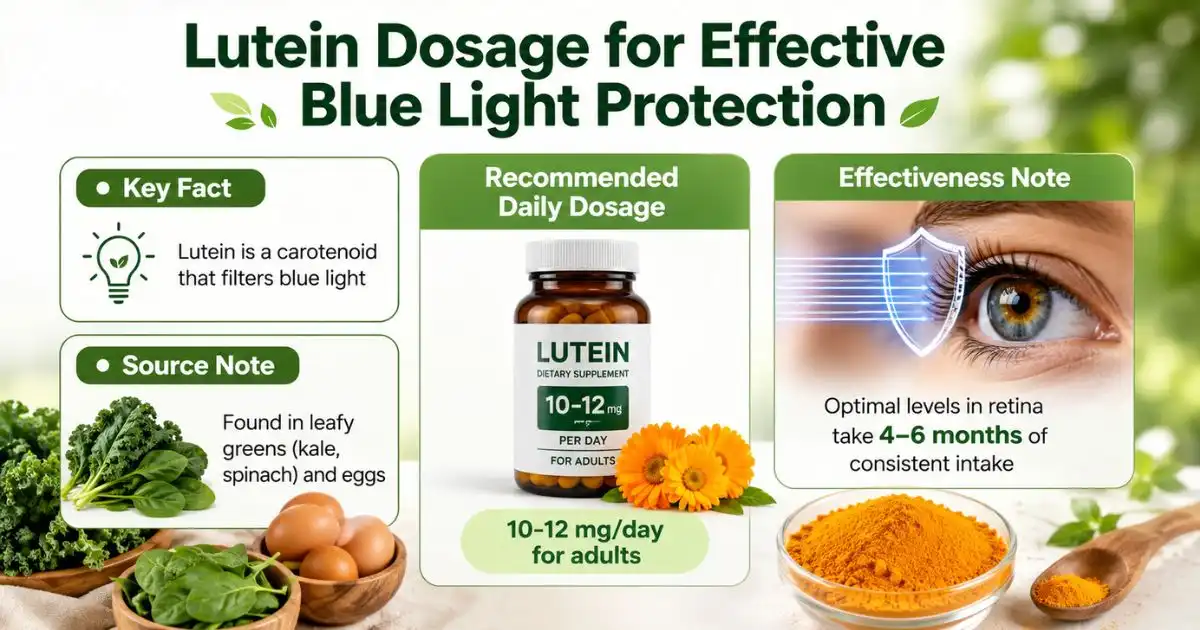
What is the difference between 10mg and 20mg lutein intake for eye health benefits?
The practical difference between a 10mg and a 20mg daily Lutein dose is less about whether benefits occur and more about the speed and magnitude of macular pigment accumulation. Both doses are supported by clinical literature, but 20mg formulations are generally positioned for consumers with elevated blue light exposure or existing eye strain complaints, while 10mg products fit general maintenance and prevention positioning. Yangge's high-bioavailability marigold extract allows both dosage tiers to be formulated with confidence, since consistent absorption data means brands are not compensating for ingredient variability when setting their label claims.
|
Parameter |
10mg Daily Lutein |
20mg Daily Lutein |
|
Typical positioning |
General maintenance, prevention |
Targeted relief, high screen exposure |
|
MPOD increase timeline (published ranges) |
Gradual, 4–6 months |
Faster onset, often 3–4 months |
|
Common product formats |
Softgel, tablet, general wellness gummy |
Concentrated capsule, functional beverage |
|
Target consumer |
General adult population |
Digital device-heavy users, aging eyes |
Comparing absorption and saturation curves at each dose
Lutein absorption is not strictly linear; at higher intakes the body's saturation point plateaus, which is why 20mg is often chosen for faster clinical response rather than proportionally double the benefit of 10mg.
Matching dosage tier to target consumer demographics
Infant nutrition companies and senior-focused brands tend to gravitate toward different tiers, with early-life formulas favoring lower, well-tolerated amounts and mature-adult products often justifying the 20mg tier.
Label claim implications of each dosage choice
Regulatory and marketing teams should note that a 20mg claim generally requires more robust clinical substantiation files than a 10mg maintenance claim, which affects both R&D timeline and cost of goods.
Cost-per-serving considerations across dosage tiers
Raw material cost scales with dosage, so brands modeling a 20mg SKU need a supplier offering transparent, traceable pricing to keep finished-product margins predictable at scale.
Does a higher lutein dosage provide better protection against blue light exposure?
Higher Lutein dosage does correlate with greater macular pigment accumulation up to a point, but the relationship is not simply "more is better" in a linear sense. Research suggests diminishing returns beyond a certain threshold, meaning a well-formulated 20mg product built on high-bioavailability marigold extract can outperform a poorly absorbed higher-dose product using a lower-quality raw material. This is precisely where sourcing decisions matter as much as the milligram number on the label, since Yangge's microencapsulated Lutein is designed to maximize the proportion of the ingredient that actually reaches systemic circulation rather than being lost to degradation during digestion or processing.
Why absorption efficiency matters more than raw milligram count
A 10mg dose of a highly bioavailable, well-encapsulated lutein can deliver comparable systemic exposure to a poorly formulated 20mg product, which is why ingredient quality should be evaluated alongside dosage.
The role of fat-soluble delivery systems in dosage effectiveness
Because lutein dissolves in fat, the way it is delivered and the lipids that are mixed with it have a big effect on how much of each dosage level is actually used by the eye tissue.
Diminishing returns above certain intake thresholds
According to some published data, the benefits stop being meaningful above 20 mg per day for most people. This means that amount is more of a realistic upper limit for most market versions than a way to get to even higher doses.
How ingredient purity influences perceived dosage efficacy
Batch-to-batch inconsistency is lower when the marigold extract source can be tracked. This makes clinical and consumer-reported results more predictable across both the 10mg and 20mg product lines.
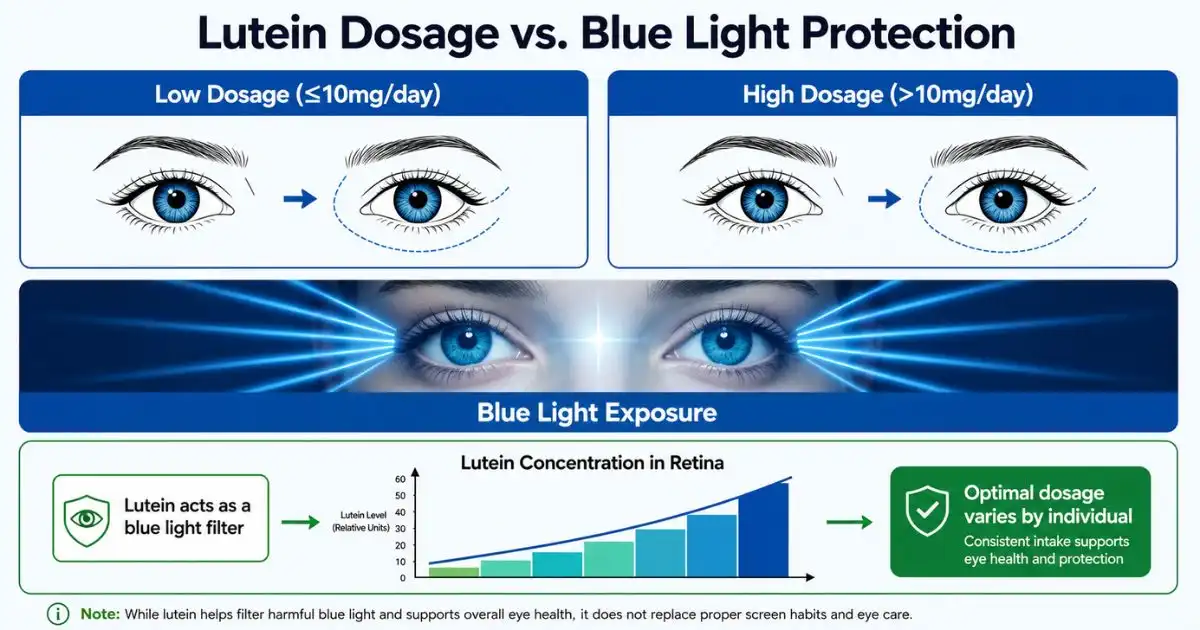
How does lutein dosage affect macular pigment density and visual performance?
The most common biomarker linking Lutein intake to real-world visual performance is macular pigment optical density. This includes glare recovery, contrast sensitivity, and how comfortable people feel using a screen for long periods of time. Studies that track changes in MPOD over time while supplementing usually find a dose-dependent trend between 10 mg and 20 mg. Higher doses are linked to faster pigment buildup in the first few months before the curve starts to smooth. This dose-response relationship is a big selling point for companies that are making clinical dossiers. Having a raw material partner like Yangge that offers full industry-chain traceability makes it much easier to match testing of the finished product with the same standard marigold extract batch data that is used in formulation documentation.
Understanding MPOD as a functional biomarker
MPOD is measured non-invasively and correlates with the density of lutein and zeaxanthin concentrated in the central retina, making it the standard reference point for dosage studies.
Dose-response patterns observed across supplementation periods
Published trials generally show the steepest MPOD increase in the first 8 to 12 weeks, regardless of whether the daily dose is 10mg or 20mg, followed by a slower accumulation phase.
Visual performance markers beyond pigment density alone
Contrast sensitivity, glare recovery time, and reported visual comfort during prolonged screen exposure are frequently used alongside MPOD to build a fuller clinical picture of lutein's functional benefit.
Long-term maintenance versus short-term loading strategies
Some formulators design a higher initial dose followed by a lower maintenance dose, a strategy that depends heavily on consistent, traceable raw material supply to keep formulation ratios accurate over time.
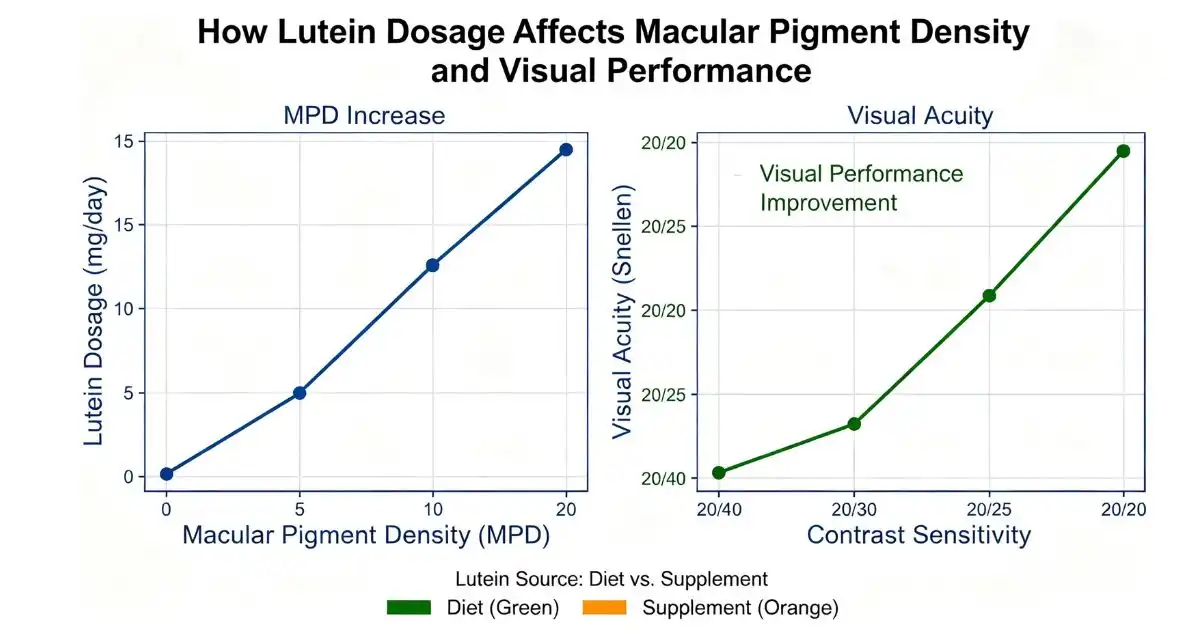
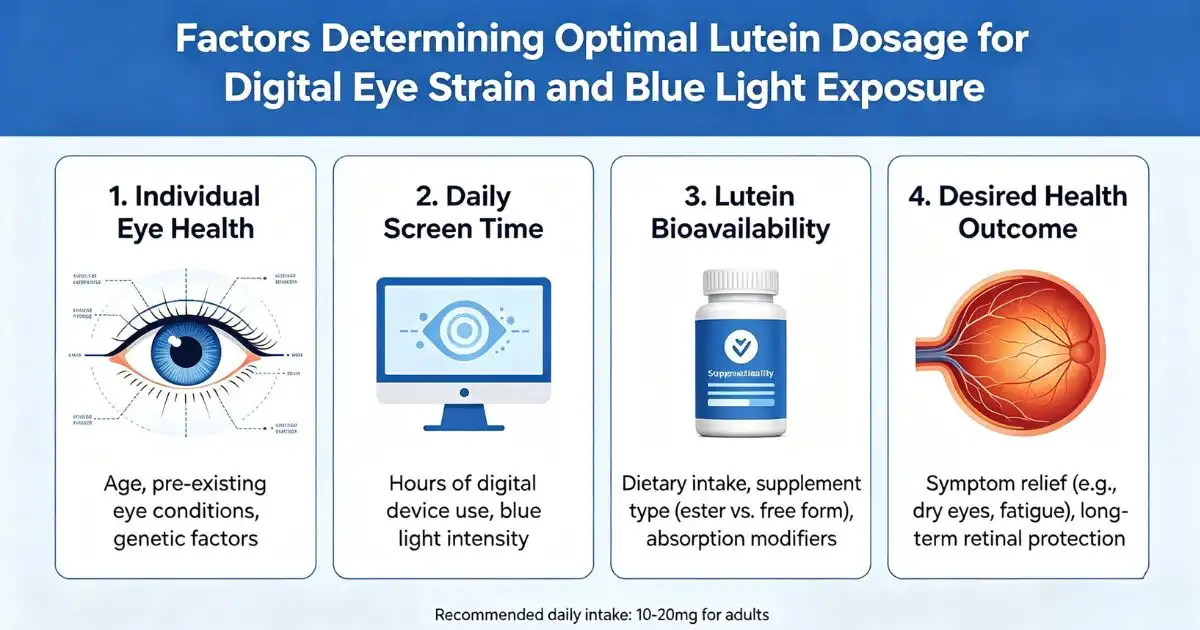
What factors determine the optimal lutein dosage for digital eye strain and blue light exposure?
Choosing between 10mg and 20mg of Lutein for a digital eye strain product depends on several converging factors: the target consumer's screen exposure level, the delivery format's absorption efficiency, regulatory positioning, and the raw material's documented bioavailability profile. Brands formulating for heavy device users, such as office workers or gamers, often lean toward the 20mg tier to support a stronger clinical claim, while general wellness and preventative products more commonly use 10mg. Yangge's marigold extract-based Lutein, backed by FDA GRAS status and full supply chain traceability, gives formulators the documentation needed to justify either dosage choice to regulatory reviewers and retail partners alike.
Target consumer screen time and lifestyle exposure levels
Formulation briefs increasingly segment consumers by daily screen hours, with 6+ hours of device use often used as a threshold for recommending the higher 20mg tier.
Regulatory and label claim substantiation requirements
Different markets have varying thresholds for what dosage-specific claims require in terms of clinical evidence, which directly affects which dosage tier is commercially practical for a given region.
Co-formulation with zeaxanthin and other synergistic nutrients
Many finished products pair lutein with zeaxanthin at a ratio informed by published research, and the optimal total antioxidant dose often shapes the final lutein number chosen.
Ingredient stability across manufacturing and shelf life
Because lutein degrades under heat, light, and oxidation, microencapsulation technology plays a direct role in whether a labeled 10mg or 20mg dose is still accurate at the end of shelf life.
Which application formats deliver 10mg and 20mg lutein doses most effectively?
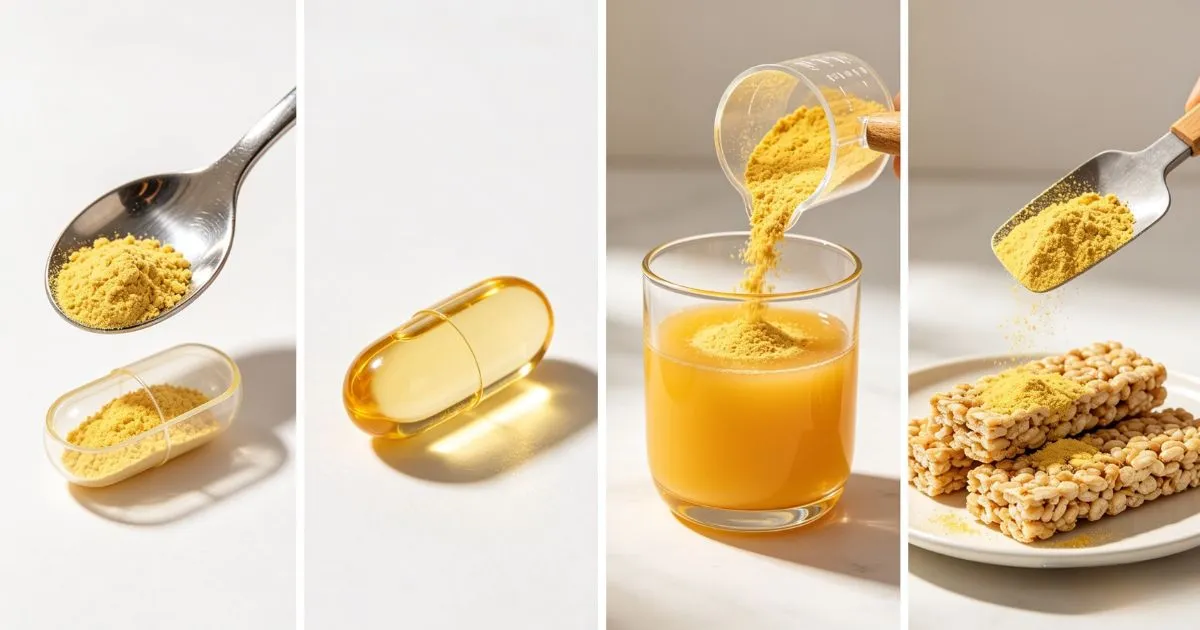
Application format has a direct impact on how reliably a finished product delivers its stated Lutein dosage, which is why manufacturers across eye health capsules, gummies, ophthalmic functional beverages, and infant formula each approach formulation differently. Yangge's microencapsulated marigold extract Lutein is designed for compatibility across these diverse matrices, maintaining stability through the heat and moisture exposure common in gummy and beverage processing, while also meeting the stringent purity requirements expected in infant nutrition formulation.
|
Application Format |
Common Dosage Tier |
Key Formulation Consideration |
|
Eye health capsules/softgels |
10mg or 20mg |
Fat-soluble carrier needed for absorption |
|
Functional gummies |
10mg |
Heat stability during gummy processing |
|
Ophthalmic functional beverages |
10mg |
Water-dispersible microencapsulation required |
|
Infant formula |
Lower, pediatric-specific dosing |
Strict purity and allergen-free sourcing |
Capsule and softgel formulation considerations
Capsules remain the most straightforward format for precise 10mg or 20mg dosing since they avoid the thermal processing challenges seen in gummies or beverages.
Gummy and chewable format stability challenges
Gummies expose lutein to heat and moisture during production, making microencapsulation technology essential to preserve potency through to the finished, shelf-stable product.
Functional beverage formulation and dispersibility
Ophthalmic-positioned beverages require a water-dispersible lutein form, which is why encapsulation quality directly determines whether a beverage can carry an accurate blue-light-protection claim.
Infant formula purity and pediatric dosing requirements
Infant nutrition companies formulating with lutein must prioritize sourcing transparency and contaminant-free processing above all else, given the sensitivity of pediatric regulatory review.
OEM Packing
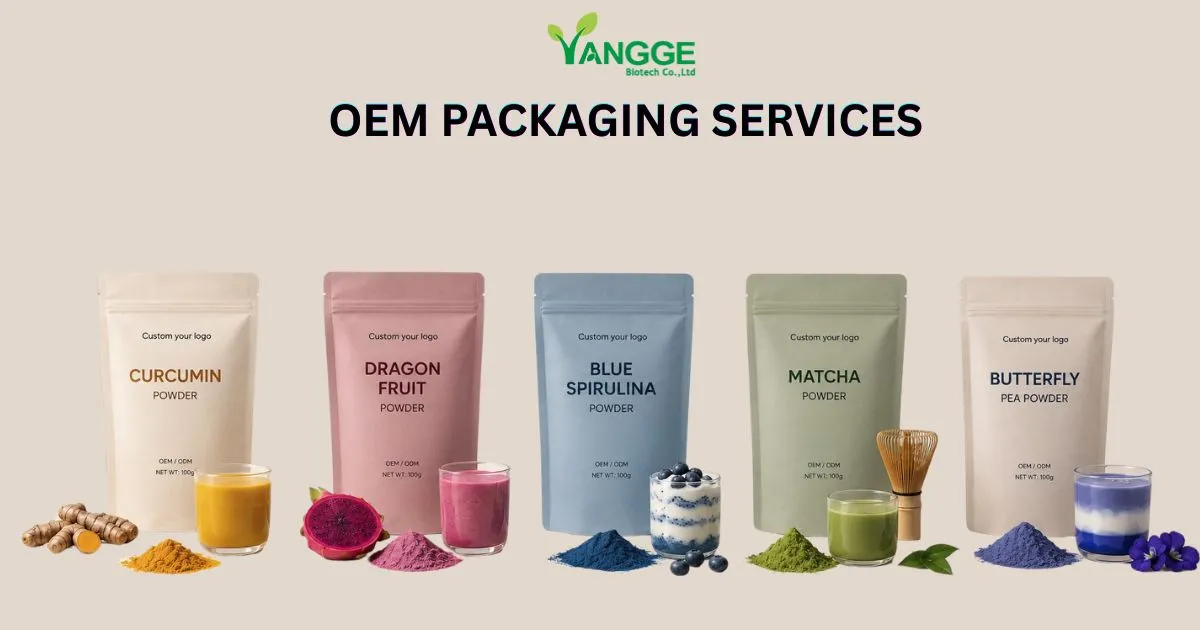
Yangge Biotech offers comprehensive OEM and private-label manufacturing services, including:
Private Label Packaging
Custom Logo Printing
Customized Labels
Capsule Filling
Tablet Manufacturing
Softgel Support
Sachet Packaging
Aluminum Foil Bag Packaging
Food-Grade Drum Packaging
Bulk Packaging
Customized Package Sizes
Our experienced OEM team supports customers from formulation development to finished retail packaging.
What should ingredient buyers verify when sourcing lutein from marigold extract?
Buyers across eye health, infant nutrition, and senior supplement categories consistently prioritize three things when evaluating a Lutein supplier: purity from the marigold extract source, stability delivered through microencapsulation, and demonstrated bioavailability. Yangge Biotech addresses all three through a fully traceable supply chain that follows the marigold crop from cultivation through extraction and encapsulation, backed by FDA GRAS certification and documented quality control at every stage.
Verifying purity through full supply chain traceability
Buyers should request documentation tracing the marigold extract from farm origin through processing, which is the clearest way to confirm consistent purity across production lots.
Assessing microencapsulation technology and stability data
Stability testing under real-world storage and processing conditions reveals whether a supplier's encapsulation technology genuinely protects potency through the finished product's shelf life.
Confirming bioavailability through third-party or clinical data
Bioavailability claims should be backed by absorption data rather than marketing language alone, since this is the factor most directly tied to whether a labeled dose delivers its intended benefit.
Reviewing certification and regulatory documentation
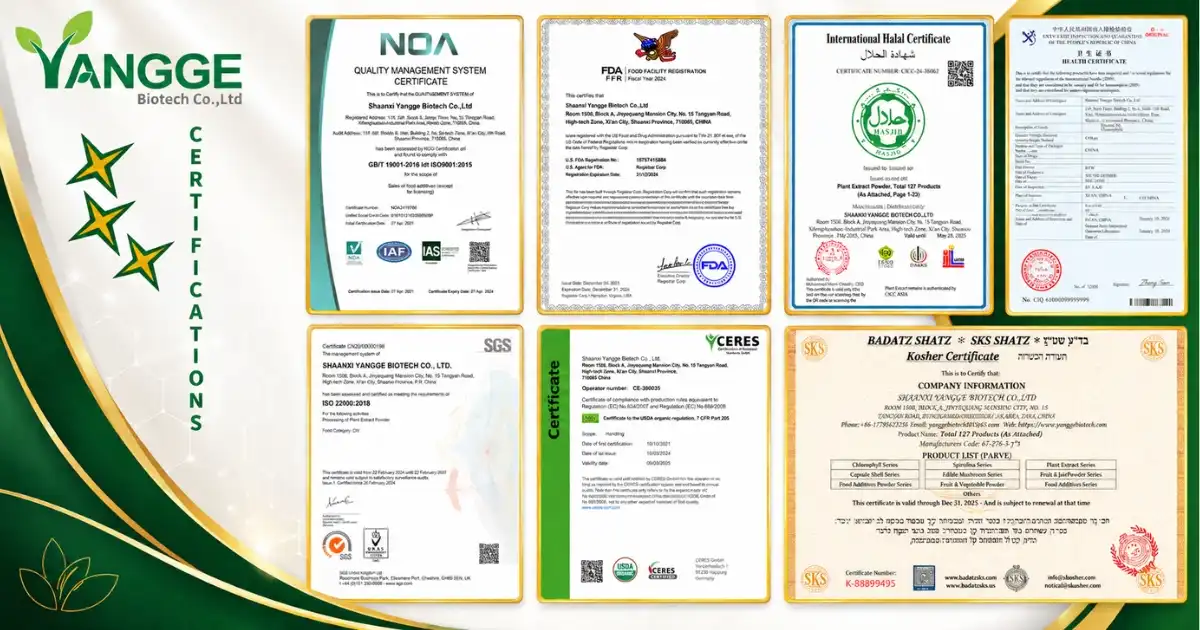
FDA GRAS status, along with ISO, HACCP, Kosher, and Halal certifications, gives procurement teams the compliance documentation needed to move quickly through their own internal supplier approval processes.
Why Choose Us?
Yangge Biotech is committed to supplying premium-quality natural ingredients with reliable manufacturing and global service.
Why customers choose Yangge Biotech:
Premium marigold raw materials
Advanced extraction technology
Strict quality management system
Third-party tested every batch
Competitive factory-direct pricing
Stable global supply chain
Fast worldwide shipping
Professional OEM & ODM services
Experienced technical support
Customized ingredient solutions
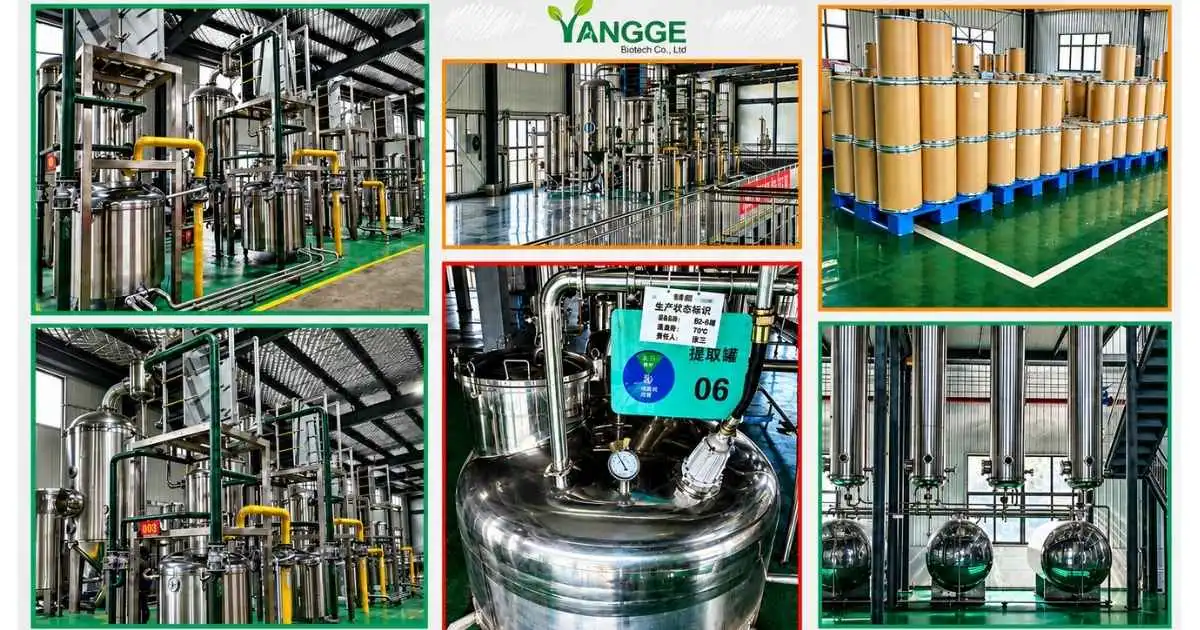
Conclusion
Choosing between 10mg and 20mg of Lutein ultimately depends on consumer profile, delivery format, and regulatory positioning, but the outcome only holds up if the raw material itself is pure, stable, and bioavailable. Yangge Biotech's traceable, microencapsulated, FDA GRAS-certified marigold extract Lutein gives eye health, infant nutrition, and senior wellness manufacturers a dependable foundation for formulating confidently at either dosage tier.
FAQ
Q1: Is 20mg of lutein safe for daily long-term use?
Published research commonly uses 20mg daily lutein in trial settings without significant tolerability concerns, though formulators should reference current regulatory guidance for their target market.
Q2: Can 10mg lutein products still support a blue light protection claim?
Yes, 10mg is within the commonly studied research range and is frequently used for maintenance-positioned blue light and eye comfort products.
Q3: Why is marigold extract the preferred source for lutein?
Marigold flowers naturally concentrate lutein at levels suitable for efficient commercial extraction, making them the standard source across the supplement industry.
Q4: Does microencapsulation actually improve lutein absorption?
Microencapsulation protects the fat-soluble lutein molecule from degradation and can improve dispersibility, supporting more consistent bioavailability across formats.
Q5: What documentation should buyers request before sourcing lutein at scale?
Buyers should request traceability records, stability data, bioavailability documentation, and relevant certifications such as FDA GRAS, ISO, HACCP, Kosher, and Halal.
Partner With Yangge for Your Next Lutein Formulation
If your team is weighing a 10mg versus 20mg Lutein formulation strategy, the ingredient behind that decision matters as much as the number on the label. Yangge Biotech Co., Ltd. focuses on natural plant extracts for food and beverages, dietary supplements, and super food, and we are proud to be ISO, HACCP, Kosher, and Halal certified. Our dedicated R&D and production teams, combined with 24-hour online service, mean your formulation questions get answered quickly, not days later. From farm to finished powder, our marigold extract Lutein is backed by full traceability, sustainable sourcing practices developed alongside our farming community partners, and a microencapsulation process built specifically for high bioavailability across capsules, gummies, functional beverages, and pediatric-grade formulations.
Whether you're building an eye health capsule line, a blue-light-protection gummy, an ophthalmic functional beverage, or an infant nutrition formula, our team can help you match the right Lutein dosage and delivery format to your target consumer and regulatory market. We export to customers across many countries and work closely with each partner to provide personalized, high-quality raw material solutions built around strict purity, potency, and quality standards. Good health starts with good ingredients, and we'd love to help you bring that to your next product launch. Contact us today or email at info@yanggebiotech.com to request samples, technical documentation, or a formulation consultation, and let's build your next Lutein-powered product together with Yangge.
References
1. Age-Related Eye Disease Study Research Group (AREDS2), National Eye Institute, National Institutes of Health.
2. Ma, L., et al., "Lutein and Zeaxanthin Intake and the Risk of Age-Related Macular Degeneration: A Systematic Review and Meta-Analysis," British Journal of Nutrition.
3. Stringham, J.M., and Hammond, B.R., "Macular Pigment and Visual Performance Under Glare Conditions," Optometry and Vision Science.
4. Sabour-Pickett, S., et al., "Supplementation with Macular Carotenoids and Visual Function," Journal of Ophthalmology.
5. Bernstein, P.S., et al., "Lutein, Zeaxanthin, and Meso-Zeaxanthin: The Basic and Clinical Science Underlying Carotenoid-Based Nutritional Interventions Against Ocular Disease," Progress in Retinal and Eye Research.
6. Wu, J., et al., "Intakes of Lutein, Zeaxanthin, and Other Carotenoids and Age-Related Macular Degeneration During 2 Decades of Prospective Follow-Up," JAMA Ophthalmology.

Send Inquiry
Related Industry Knowledge
Recommended Products