HMB in Muscle Nutrition: Combining Creatine and EAA for Healthy Aging
Muscle nutrition is becoming an increasingly important part of healthy-aging product development. As people look beyond basic supplementation, there is growing interest in formulas designed around maintaining muscle strength, supporting physical function, and helping active adults stay independent as they age.
One ingredient receiving attention in this area is β-Hydroxy-β-Methylbutyrate (HMB). HMB is a metabolite of the essential amino acid leucine and has been studied for its potential role in muscle protein metabolism, exercise recovery, muscle preservation, and physical function.
For supplement brands and ingredient developers, HMB can also be considered as part of a broader muscle-nutrition formulation. Combining HMB with creatine monohydrate and essential amino acids (EAA) creates an interesting formulation concept that approaches muscle nutrition from several nutritional directions: amino acid availability, muscle protein metabolism, and exercise-related energy support.
Looking for a reliable β-Hydroxy-β-Methylbutyrate (HMB) powder supplier? Contact Yangge Biotech today to request product specifications, COA, samples, pricing, or OEM/ODM manufacturing solutions.
Email: info@yanggebiotech.com
What Is HMB?
HMB, or β-Hydroxy-β-Methylbutyrate, is a metabolite produced from leucine, one of the branched-chain essential amino acids.
Leucine is involved in regulating muscle protein synthesis, while HMB represents one of the metabolic pathways through which leucine is processed. Research has investigated HMB in both sports nutrition and populations experiencing muscle loss or reduced physical capacity.
The interest in HMB comes partly from its proposed effects on both sides of muscle protein balance. Research has suggested that HMB may support muscle protein synthesis while reducing pathways associated with muscle protein breakdown. However, the size and consistency of benefits vary between populations and study designs.
This makes HMB particularly interesting for product developers working on formulas where muscle maintenance and recovery are more important than simply maximizing sports performance.

Why HMB Is Relevant to Muscle Nutrition
Muscle health depends on more than one nutritional pathway.
Adequate protein and amino acids provide the building blocks needed for muscle protein synthesis. Exercise provides the physical stimulus that encourages muscle adaptation. Other ingredients, such as creatine, can contribute to energy metabolism during high-intensity exercise.
HMB brings another potential role into the formulation.
Research has examined HMB in relation to:
Muscle protein metabolism
Exercise-related muscle damage
Recovery
Lean tissue
Muscle strength
Physical function
Muscle preservation during periods of stress or inactivity
The 2025 ISSN position stand on HMB notes that evidence supports potential benefits for recovery and muscle-related outcomes, while also emphasizing that results can differ according to age, training status, exercise program, and other conditions. (PubMed)
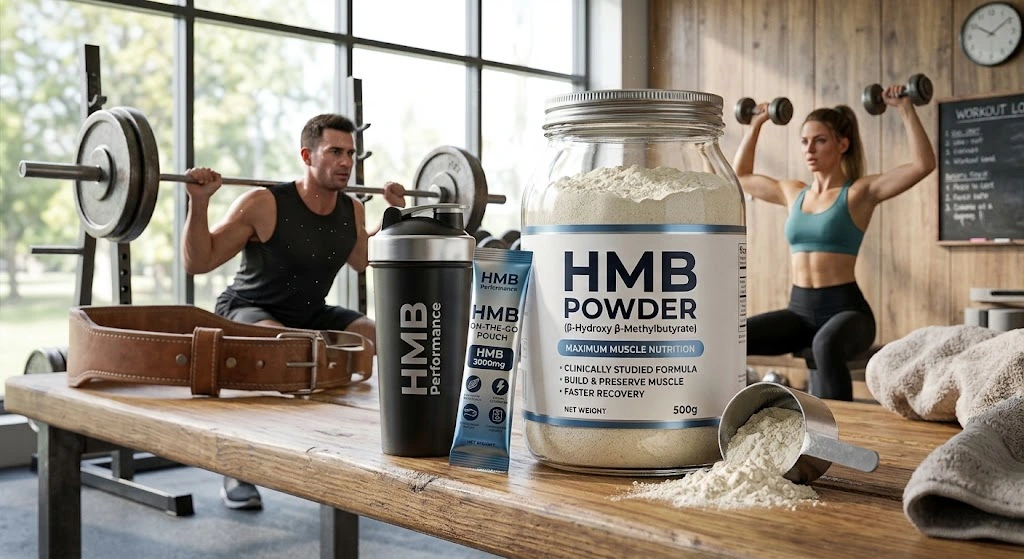
This makes HMB suitable for consideration in several product categories, including sports nutrition, active aging, women's nutrition, and healthy-aging formulations.
HMB and Healthy Aging
Healthy aging is increasingly moving beyond general wellness products toward nutrition strategies focused on maintaining physical capability.
With age, maintaining muscle mass and strength becomes an important part of staying active and performing everyday activities. Nutrition and resistance exercise are therefore often considered together when discussing strategies for maintaining muscle health.
HMB has been investigated in older populations because of its potential role in muscle preservation and physical function.
However, the current evidence is not completely consistent.
A 2025 systematic review and meta-analysis of 10 trials involving 596 older adults found that resistance training combined with HMB produced modest improvements in handgrip strength and Short Physical Performance Battery scores, but did not significantly improve appendicular lean mass, gait speed, muscle quality, fat mass, or body weight. The authors also noted that half of the included trials had a high risk of bias.
A separate 2026 meta-analysis of 13 randomized controlled trials involving 561 adults aged 50 and older reached a more conservative conclusion, finding no significant improvements in muscle mass or muscle strength from HMB combined with resistance training.
These findings are important for responsible product development. HMB can be positioned as an ingredient of interest for muscle-nutrition formulations, but claims should not imply that HMB alone prevents sarcopenia or guarantees muscle growth in older adults.
Why Combine HMB with Creatine?
Creatine monohydrate and HMB have different nutritional roles, which makes their combination interesting from a formulation perspective.
Creatine is involved in the phosphocreatine energy system and is widely studied in exercise and sports nutrition. When combined with resistance training, research in older adults has found improvements in some measures of strength and lean tissue, although results vary depending on the outcome measured.
HMB, meanwhile, is being studied for its relationship with muscle protein metabolism, recovery, and muscle preservation.
This creates a logical formulation framework:
Creatine → energy and training support
HMB → muscle protein metabolism and recovery support
Rather than suggesting that the two ingredients automatically work better together, product developers can use this complementary rationale to explore formulations targeting muscle-focused active aging and exercise nutrition.
Recent research on the combination
There is now direct research examining creatine + HMB in older adults.
A 2026 randomized crossover trial included 30 physically active adults aged 60 and older. Participants completed a six-week period of creatine + HMB supplementation alongside a supervised multicomponent exercise program. The combination was associated with improvements in several functional strength and endurance measures, while changes in muscle mass were relatively small. (PubMed)
Another randomized controlled crossover study reported improvements in gait speed, sit-to-stand performance, Timed Up and Go, and 400-meter walking performance after six weeks of creatine + HMB combined with supervised multicomponent exercise. (PubMed)
These results are interesting for formulation development, but they should not be interpreted as proof that creatine + HMB alone produces the same outcomes without exercise. In these studies, supplementation was used together with structured exercise.

Where EAA Fits Into the Formula
Essential amino acids, or EAA, provide another important component of a muscle-nutrition formulation.
The nine essential amino acids cannot be produced by the human body in sufficient quantities and therefore need to come from the diet.
Among them, leucine is particularly important because of its role in stimulating pathways involved in muscle protein synthesis.
As people age, muscle may become less responsive to the anabolic effects of amino acids, a phenomenon often described as anabolic resistance. This has led researchers to investigate whether sufficient protein and EAA intake can help support muscle protein synthesis in older adults.
A review of EAA supplementation in older adults noted that EAA supplements, particularly those containing adequate leucine, may provide an alternative way to increase amino acid availability when whole-protein intake is insufficient. The review also highlighted the potential importance of combining EAA intake with resistance exercise.
This provides a useful nutritional rationale for including EAA in a broader muscle-focused formulation.
HMB + Creatine + EAA: A Three-Part Formulation Concept
When considered together, the three ingredients offer different nutritional functions.
HMB
Provides a leucine-derived metabolite that has been studied in relation to muscle protein metabolism, recovery, and muscle preservation.
Creatine Monohydrate
Supports the phosphocreatine energy system and is widely used in exercise and sports nutrition formulations.
Essential Amino Acids
Supply the amino acids required for protein synthesis, including leucine, which plays an important role in anabolic signaling.
The formulation concept can therefore be represented as:
HMB + Creatine + EAA
Muscle metabolism + energy support + amino acid availability
This does not mean that the three ingredients have been clinically established as a synergistic combination. Rather, the concept provides a basis for product developers to explore a multi-pathway muscle nutrition formula.
Why This Combination May Fit Healthy-Aging Products
Healthy-aging consumers are not necessarily looking for traditional bodybuilding supplements.
Many products in this category are designed around broader concepts such as:
Maintaining an active lifestyle
Supporting strength-focused exercise
Daily muscle nutrition
Recovery after physical activity
Convenient protein and amino acid intake
Supporting physical function
Healthy aging and independence
This creates room for a different type of creatine or HMB product.
Instead of using aggressive sports positioning, a brand could develop a daily powder designed for adults who participate in walking, resistance training, functional fitness, or other forms of regular activity.
The formula could be positioned around daily muscle nutrition and active aging, while avoiding disease-treatment or guaranteed anti-aging claims.
HMB + Creatine + EAA Applications
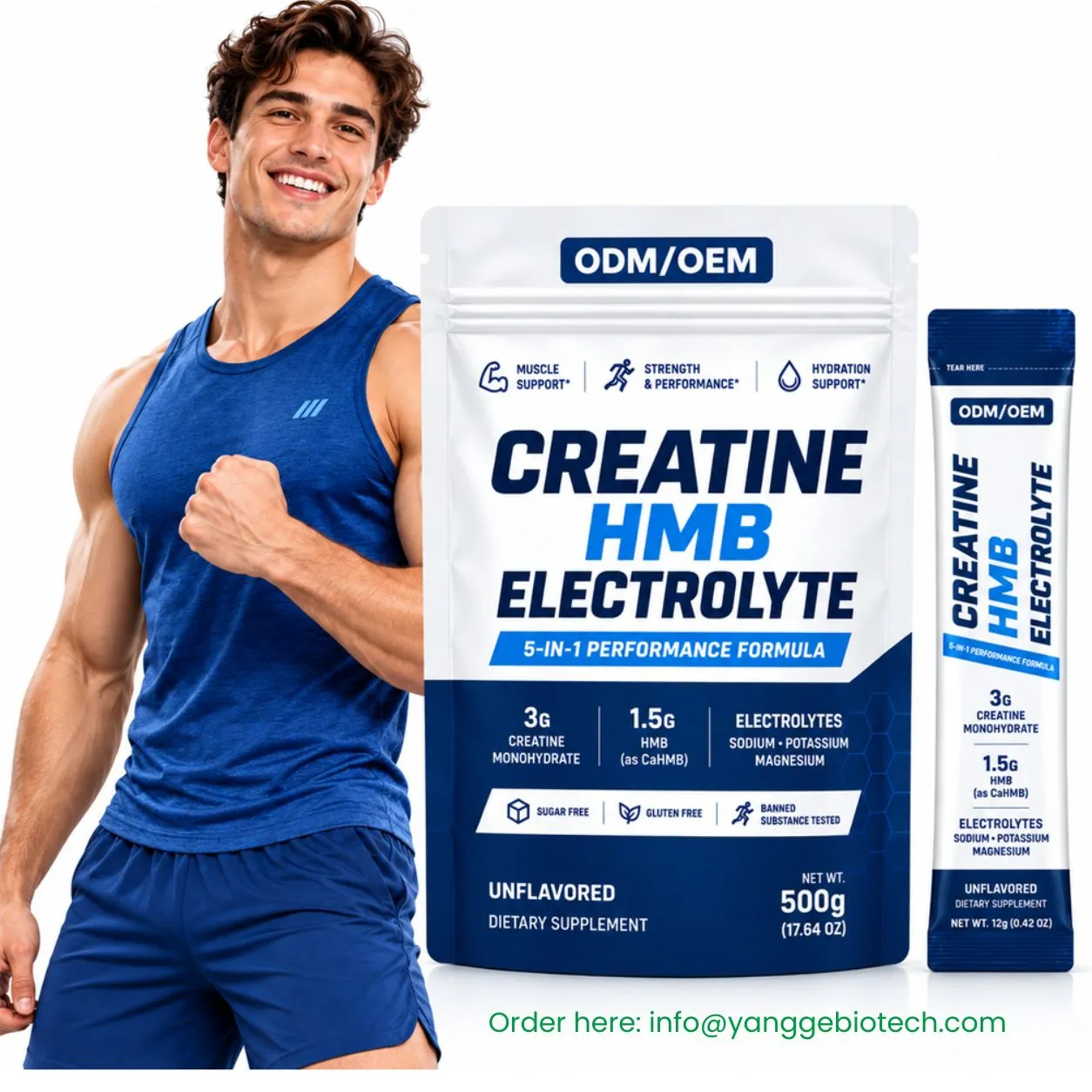
The combination can be explored in several delivery formats.
Powder Stick Applications
A single-serving powder stick can provide a convenient format for a multi-ingredient muscle-nutrition formula.
A concept could include:
HMB + Creatine + EAA
with flavoring and other supporting ingredients selected according to the target market.
Powder sticks are particularly suitable for products intended for portability, gym use, travel, or daily consumption.
Daily Muscle Nutrition Powder
A larger tub or pouch format could be developed as a daily muscle-focused nutrition product.
The formulation could combine:
HMB + Creatine + EAA + Protein
Adding protein creates another potential formulation direction, particularly for consumers who want a more complete nutrition product rather than an amino-acid-focused supplement.
Active Aging Formula
For healthy-aging products, the formula could focus on:
HMB + Creatine + EAA
with additional ingredients selected based on the intended product positioning.
The product could be developed as a daily drink mix for active adults rather than as a traditional sports supplement.
Recovery Formula
A sports-oriented concept could explore:
HMB + Creatine + EAA + Electrolytes
This formulation could be designed around post-exercise nutrition and recovery.
Again, the final product claims should be based on the evidence available for the finished formula and the applicable regulatory requirements.
HMB + Creatine vs. HMB + EAA
These combinations can serve different formulation strategies.
HMB + Creatine
This pairing focuses on combining HMB's muscle-nutrition role with creatine's established role in energy metabolism and exercise performance.
It may be particularly interesting for:
Strength products
Active-aging powders
Muscle-focused daily formulas
Recovery products
Healthy-aging formulations
HMB + EAA
This approach focuses more directly on amino acid availability and muscle protein nutrition.
It may be considered for:
Protein-support formulas
EAA powders
Healthy-aging nutrition
Muscle maintenance products
Products for consumers with lower protein intake
HMB + Creatine + EAA
The three-ingredient approach provides a broader formulation platform.
Rather than relying on one ingredient, the formula addresses several aspects of muscle nutrition:
HMB → muscle protein metabolism
Creatine → cellular energy and exercise support
EAA → essential amino acid availability
This is why the combination may be interesting for B2B product developers exploring the next generation of muscle-nutrition products.
The Importance of Resistance Training
A key point in developing healthy-aging muscle products is that supplementation should not be separated from physical activity.
Resistance training is one of the most established strategies for maintaining muscle strength and physical function with age.
Current creatine research in older adults supports this relationship. A 2025 meta-analysis of eight randomized controlled trials involving 482 older adults found that creatine combined with resistance training improved lower-limb strength and lean tissue mass compared with resistance training alone.
A newer 2026 meta-analysis of 11 randomized controlled trials found a small but statistically significant improvement in muscle strength with creatine plus resistance training, while the pooled effects on muscle mass and physical function were not statistically significant.
This suggests an important direction for product communication:
The goal is not to position HMB, creatine, or EAA as replacements for exercise.
Instead, they can be developed as nutritional components within a broader active-aging strategy.
Formulation Considerations for HMB, Creatine, and EAA
Developing a three-ingredient formula requires attention to the complete product rather than simply adding ingredients together.
Ingredient Ratio
The relative amount of HMB, creatine, and EAA needs to be determined according to the intended population, serving size, product format, and supporting ingredients.
A sports product may use a different formulation strategy from a healthy-aging daily powder.
Flavor and Taste
EAA formulas can have a noticeable taste profile, particularly depending on the amino acid composition.
Flavor development is therefore important when creating a consumer-friendly powder.
Solubility and Dispersion
Creatine, HMB, amino acids, flavoring systems, minerals, and other ingredients can behave differently in water.
Testing the final blend is important to evaluate:
Dispersion
Sedimentation
Texture
Mouthfeel
Stability
Flavor
Appearance
Powder Flow
For stick packs and automated filling, powder flowability and particle characteristics become important manufacturing considerations.
Stability
The complete formulation should be evaluated for moisture sensitivity, storage conditions, packaging compatibility, and shelf life.
Documentation
Buyers may also require:
COA
TDS
MSDS
Product specifications
Microbiological testing
Heavy-metal testing
Stability information
Sample quantities
Packaging information
The exact documentation available depends on the ingredient and project.

Potential Product Concepts for Brands
The HMB + Creatine + EAA concept can be adapted into several product directions.
Active Aging Daily
HMB + Creatine + EAA
A daily powder focused on muscle nutrition for active adults.
Strength & Recovery
HMB + Creatine + EAA + Electrolytes
A formulation concept for consumers combining resistance training with regular physical activity.
Muscle Nutrition Plus
HMB + Creatine + EAA + Protein
A more comprehensive nutrition powder combining amino acids with a protein source.
Healthy Aging Performance
HMB + Creatine + EAA
A healthy-aging concept positioned around maintaining an active lifestyle and supporting exercise nutrition.
Convenient Daily Stick
HMB + Creatine + EAA
A single-serving powder stick designed for portability and convenient daily use.
These are formulation concepts rather than finished clinical formulas. Product developers should determine the final composition based on scientific evidence, local regulations, serving requirements, and the intended consumer.
HMB as a Manufacturer Ingredient Opportunity
For ingredient suppliers, HMB is interesting because it can be positioned across multiple categories.
Traditionally, HMB has been associated with sports and exercise products. However, its research in aging and muscle preservation allows ingredient developers to explore additional applications.
Potential categories include:
Sports Nutrition
HMB can be incorporated into muscle, strength, recovery, and training-support formulas.
Healthy Aging
HMB can be explored in formulations designed around active aging and muscle nutrition.
Women's Nutrition
Brands can consider HMB in muscle-focused products for active women and midlife nutrition, subject to appropriate evidence and claims.
Protein and Amino Acid Products
HMB can be combined with EAA, protein, or other amino acid ingredients.
Creatine Formulations
HMB + creatine provides a particularly interesting direction for muscle-focused product development.
Opportunities for OEM, ODM, and Private-Label Development
The growing interest in muscle longevity creates opportunities for brands to move beyond conventional single-ingredient products.
Instead of developing only a standard creatine powder, brands can explore complete formulations built around different consumer needs.
For example:
HMB + Creatine Powder
A simple two-ingredient muscle-nutrition concept.
HMB + Creatine + EAA Powder
A broader amino acid and muscle-nutrition formula.
HMB + Creatine + EAA Stick Pack
A convenient single-serving format.
HMB + Creatine + Protein
A protein-based daily nutrition concept.
HMB + Creatine + EAA + Electrolytes
A broader active-lifestyle and recovery formulation.
These formats can potentially be developed for OEM, ODM, and private-label products, depending on the manufacturer's capabilities and the target market.

Yangge Biotech: HMB, Creatine, EAA and Other Powder Ingredients
For supplement manufacturers, developing a multi-ingredient product requires reliable access to individual ingredients as well as appropriate technical documentation.
Yangge Biotech supplies powder ingredients for dietary supplements, functional foods, beverages, sports nutrition, and nutraceutical formulations, including ingredients such as creatine and other functional powders.
For brands exploring HMB-centered formulations, the combination with creatine, EAA, protein, electrolytes, or other ingredients can be considered according to the desired product concept.
Yangge can support ingredient sourcing for different powder-based applications, including daily nutrition powders, stick packs, sports nutrition products, healthy-aging formulations, and other functional supplement concepts.
Depending on the project and ingredient, technical materials can include COA, TDS, MSDS, specifications, samples, quotations, and other product documentation.
For brands planning finished products, OEM, ODM, and private-label development can also provide a pathway from ingredient selection to a market-ready product concept.
The Future of Muscle Nutrition and Healthy Aging
The muscle-nutrition category is moving toward more targeted and multi-ingredient formulations.
Instead of focusing only on protein or creatine, product developers are increasingly exploring how different ingredients can address different aspects of nutritional support.
HMB is particularly interesting because it sits between amino acid metabolism, exercise nutrition, recovery, and healthy aging.
Creatine brings a strong research base in exercise and resistance training, while EAA provides a direct source of essential amino acids needed for protein synthesis.
Together, HMB + Creatine + EAA provides a logical framework for exploring new muscle-nutrition products.
The scientific evidence, however, should remain the foundation of product development. Current research supports interest in these ingredients individually and, in the case of creatine + HMB, there are emerging studies directly investigating the combination in older adults. At the same time, evidence for HMB in older adults is mixed, and there is not yet strong clinical evidence establishing HMB + creatine + EAA as a single synergistic formula.
Conclusion
HMB is becoming an interesting ingredient for the expanding muscle-nutrition and healthy-aging categories.
Its relationship with leucine and muscle protein metabolism makes it relevant to formulations focused on muscle maintenance and recovery, while creatine and EAA provide complementary formulation directions.
The combination of HMB + Creatine + EAA can therefore be explored as a multi-ingredient concept for sports nutrition, active aging, women's nutrition, daily muscle-support powders, and convenient stick-pack products.
For product developers, the value of this concept lies not in claiming that three ingredients automatically produce a proven synergistic effect, but in understanding how each ingredient can contribute to a broader formulation strategy.
As research continues to develop, ingredient suppliers such as Yangge Biotech can support brands exploring HMB, creatine, EAA, and other powder ingredients for new OEM, ODM, and private-label nutrition products.
Contact Yangge Biotech today to request current pricing, COA, product specifications, samples, or OEM/ODM manufacturing solutions.
Email: info@yanggebiotech.com
Frequently Asked Questions
What is HMB?
HMB, or β-Hydroxy-β-Methylbutyrate, is a metabolite of the essential amino acid leucine. It has been studied for its potential effects on muscle protein metabolism, recovery, muscle strength, and physical function. (PubMed)
Why combine HMB with creatine?
HMB and creatine have different proposed roles in muscle nutrition. HMB is studied in relation to muscle protein metabolism and recovery, while creatine supports the phosphocreatine energy system and exercise performance. This makes them an interesting combination for muscle-focused formulations.
Why add EAA to HMB and creatine?
EAA provides all nine essential amino acids, including leucine. EAA supplementation has been studied as a way to increase amino acid availability and support muscle protein synthesis, particularly in older adults. (PubMed)
Is HMB + Creatine + EAA clinically proven to work synergistically?
Not yet. There is emerging research on combinations such as creatine + HMB in older adults, but the specific three-way combination of HMB + creatine + EAA requires more direct clinical research. (PubMed)
Is HMB suitable for healthy-aging products?
HMB is being investigated for healthy aging and muscle-related applications, but current research is mixed. Recent meta-analyses have reported modest or no significant benefits depending on the outcomes and population studied. (PubMed)
Can HMB and creatine be used in powder products?
Yes. HMB and creatine can be considered as powder ingredients for applications such as drink mixes, stick packs, sports nutrition powders, and healthy-aging formulations, subject to the requirements of the final formulation and target market.
Can Yangge supply ingredients for HMB + Creatine + EAA formulations?
Yangge Biotech provides powder ingredients for B2B dietary supplement, sports nutrition, functional food, beverage, and nutraceutical applications. Ingredient combinations can be developed according to the customer's formulation and product requirements.