Creatine Monohydrate: From Sports Nutrition to Women’s Nutrition and Healthy Aging
Creatine monohydrate has traditionally been associated with sports nutrition, strength training, and muscle-building products. However, research over the past several years has continued to expand the potential applications of creatine beyond traditional athletic performance.
Today, creatine monohydrate can be considered across several important nutrition categories, including sports nutrition, active women, and healthy aging. This broader application is creating new opportunities for supplement brands and product developers to use creatine powder in different formats and formulations.
Yangge Biotech's supplies Creatine monohydrate is a premium-quality sports nutrition ingredient developed using advanced liposomal delivery technology to enhance formulation performance and ingredient stability. Designed for dietary supplements, sports nutrition products, functional beverages, and performance formulations, liposomal creatine offers manufacturers an innovative solution for developing next-generation fitness and wellness products. It is an ideal ingredient for brands seeking a high-quality creatine with excellent dispersibility, stability, and premium market positioning.
Looking for a reliable Creatine supplier? Contact Yangge Biotech today to request product specifications, COA, samples, pricing, or OEM/ODM manufacturing solutions.
Email: info@yanggebiotech.com
What Is Creatine Monohydrate?
Creatine is a naturally occurring compound involved in the body's energy system. It is stored primarily in skeletal muscle and participates in the regeneration of adenosine triphosphate (ATP), which is particularly important during short-duration, high-intensity activities.
Creatine monohydrate is the most widely researched form of supplemental creatine. It has been extensively studied in sports nutrition and exercise science, with research examining its relationship with strength, power, lean tissue, exercise performance, and other outcomes. The International Society of Sports Nutrition has reviewed creatine's safety and efficacy across exercise, sport, and broader applications.
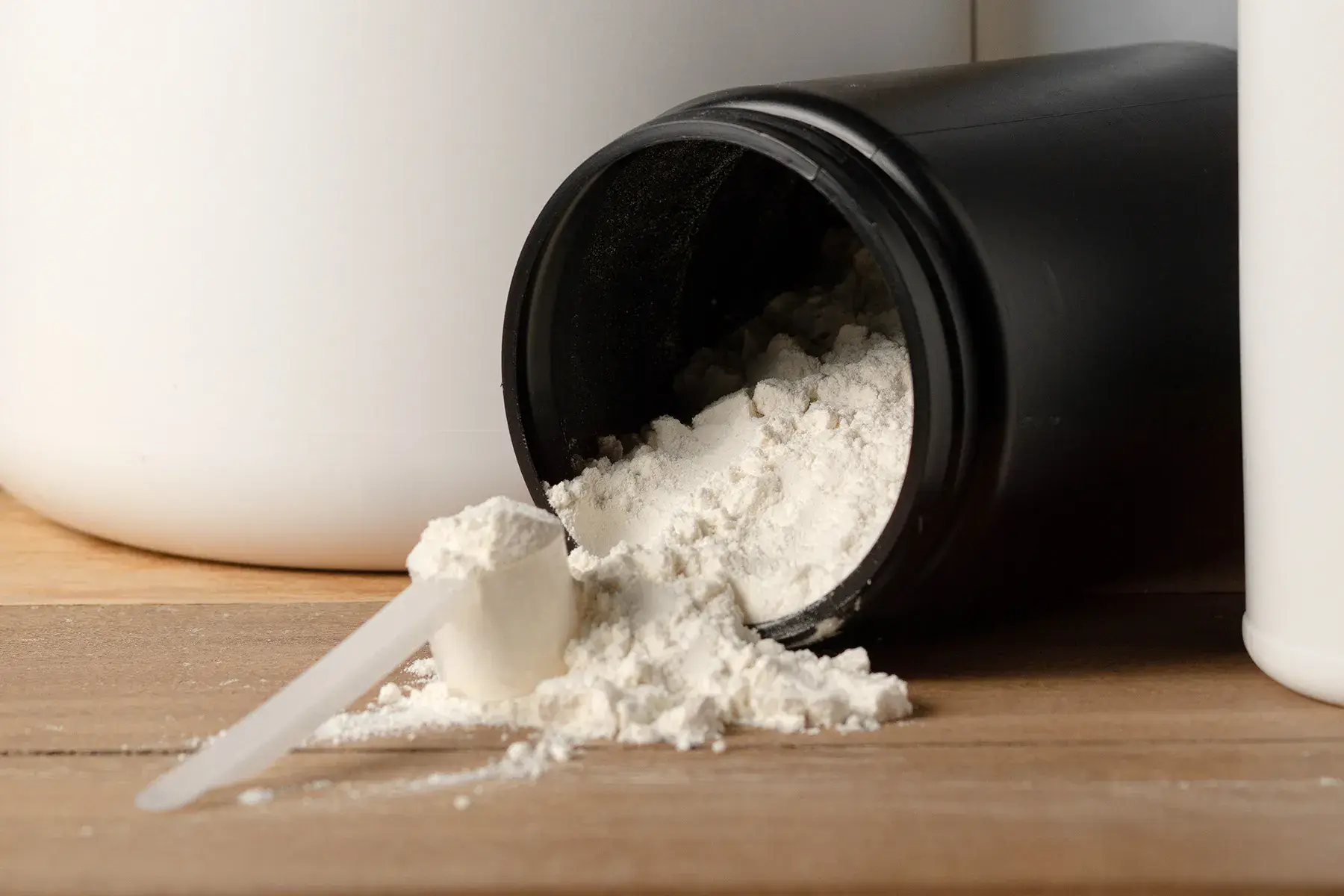
From a formulation perspective, creatine monohydrate is also attractive because it can be supplied as a powder and incorporated into a wide range of dry-mix products.
This makes it relevant not only to sports brands but also to companies developing products for women's nutrition, active lifestyle, healthy aging, and everyday functional nutrition.
Creatine Monohydrate Across Sports Nutrition
Sports nutrition remains one of the most established categories for creatine monohydrate.
Creatine is commonly used in products designed around strength training, resistance exercise, high-intensity training, performance, and recovery. Its role in cellular energy availability makes it particularly relevant to activities involving repeated, short-duration efforts.
Research supports the use of creatine alongside resistance training for improving measures of strength. A systematic review and meta-analysis of adults under 50 found that creatine supplementation combined with resistance training significantly increased upper- and lower-body strength compared with placebo and resistance training alone. (PubMed)
This broadens the potential positioning of creatine beyond traditional bodybuilding.
Strength and resistance training
Creatine can be incorporated into formulas targeting:
*Strength training
*Weight training
*Cross-training
*Functional fitness
*High-intensity interval training
*Athletic conditioning
*Muscle-focused nutrition
*Recovery and post-workout products
For these applications, creatine monohydrate may be supplied as a standalone powder or combined with other ingredients such as protein, amino acids, carbohydrates, electrolytes, or other sports nutrition ingredients.
Different sports, different formulation opportunities
Creatine is not limited to one type of athlete.
Sports involving repeated high-intensity efforts can create different formulation opportunities for creatine-containing products. Depending on the product concept, creatine can be included in powders designed for pre-training, post-training, daily use, or broader performance nutrition.
For example, a brand could develop:
Creatine + Electrolytes
A powder stick positioned around training and hydration.
Creatine + Protein
A recovery-oriented powder combining protein nutrition with creatine.
Creatine + Carbohydrates
A sports drink powder designed around training fuel and creatine supplementation.
Creatine + Amino Acids
A broader sports nutrition formulation for active consumers.
The appropriate combination depends on the intended product, target consumer, serving format, regulatory market, and desired nutritional profile.
Creatine for Women: A Growing Nutrition Category
Women's sports and active nutrition has become an increasingly important area for product development.
Historically, much of the creatine research was conducted in male populations. More recent research has specifically examined creatine supplementation in women, helping expand the discussion around how creatine may fit into female-focused nutrition products.
A 2025 systematic review examined 27 studies involving physically active females and found that some studies reported improvements in strength/power, anaerobic performance, or aerobic outcomes, although most studies did not show a significant performance improvement compared with placebo. The researchers also highlighted the relatively limited and heterogeneous evidence base in active women. (PubMed)
This is important for product developers.
Rather than presenting creatine as a guaranteed performance enhancer for every woman, brands can consider creatine as one ingredient within a broader nutrition strategy.
This creates room for more targeted formulations.
Women's sports nutrition
Creatine can be incorporated into products designed for women participating in:
Strength training
Running
Cross-training
Functional fitness
Recreational sports
Fitness classes
Resistance exercise
Active lifestyle programs
The formulation does not necessarily need to look like a traditional bodybuilding product.
For example, creatine can be included in flavored powder sticks, hydration mixes, protein beverages, or daily fitness powders designed around convenience and regular use.
Creatine and Women's Healthy Aging
Another area receiving increased research attention is creatine use among women during midlife and later life.
Women experience changes in muscle mass and strength throughout aging, with additional changes occurring around the menopausal transition. This has encouraged researchers to investigate nutritional strategies that may support muscle and physical function when combined with appropriate exercise.
A 2026 systematic review and meta-analysis specifically examined creatine monohydrate in postmenopausal women, evaluating outcomes including lean mass, strength, bone mineral density, physical function, and safety. (PubMed)
This research area is particularly relevant to the growing healthy-aging nutrition category.
Rather than positioning creatine only around athletic performance, product developers can consider it as an ingredient for formulations focused on maintaining an active lifestyle across adulthood.
Potential product concepts could include:
Daily Active Aging Powder
Creatine + protein + selected micronutrients.
Midlife Strength Formula
Creatine + magnesium + protein or other complementary ingredients.
Active Women Daily Mix
Creatine + electrolytes + protein or amino acids.
Healthy Aging Recovery Powder
Creatine + protein + other ingredients selected for an older active population.
The scientific evidence should still guide the claims made for these products. Healthy-aging positioning should not imply that creatine prevents aging-related diseases or replaces medical treatment.
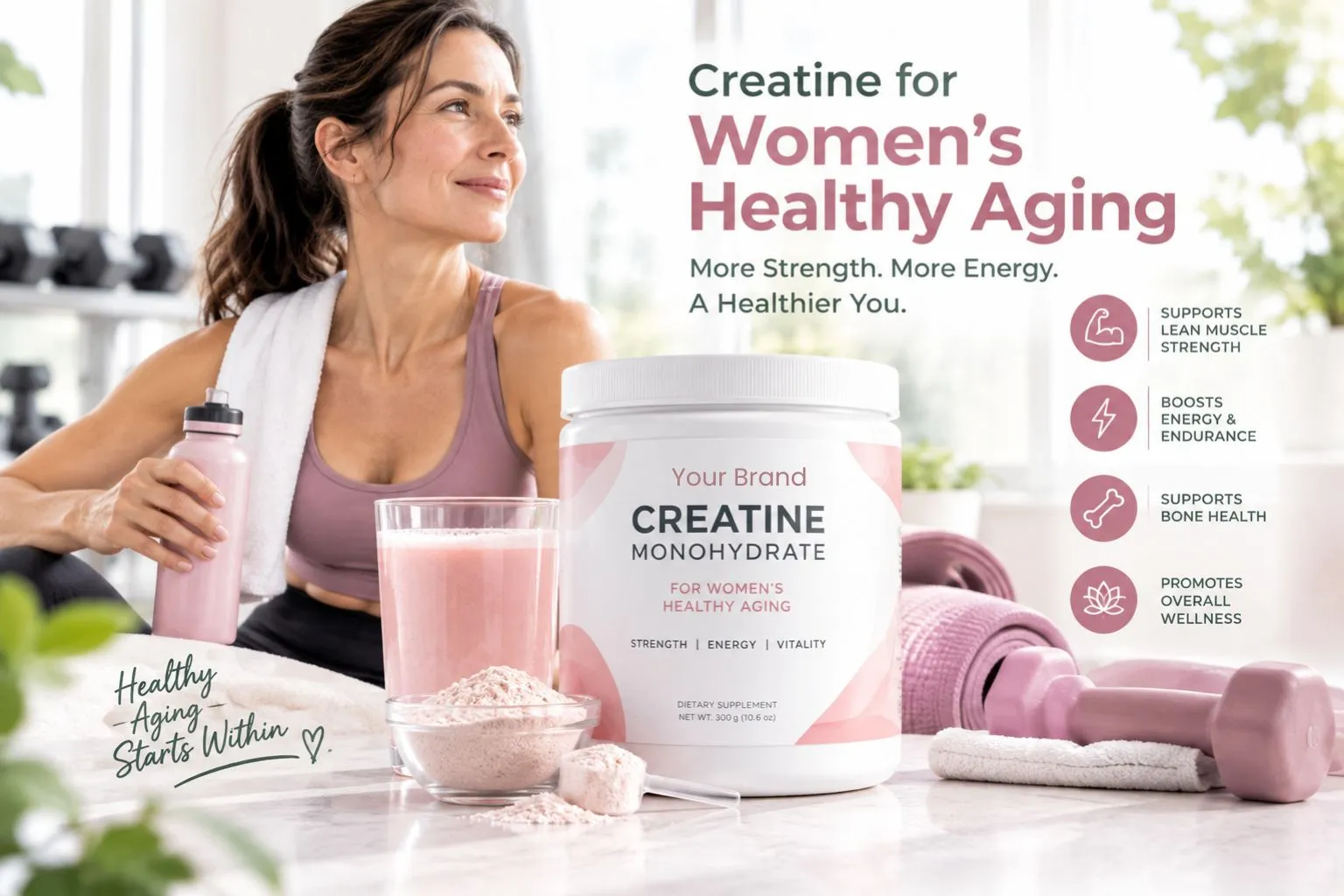
Creatine and Healthy Aging
Healthy aging is becoming a major category within functional nutrition.
As people live longer and remain physically active later in life, there is increasing interest in maintaining muscle strength, lean tissue, physical capacity, and independence.
Creatine has attracted attention in this area because it can be studied alongside resistance training.
A 2025 systematic review and meta-analysis of eight randomized controlled trials involving 482 older adults found that creatine combined with resistance training improved lower-limb strength and lean tissue mass compared with resistance training alone.
Another 2025 meta-analysis involving 20 studies and 1,093 older adults reported significant effects on one-repetition maximum strength and body-fat percentage when creatine supplementation was combined with exercise training. However, the analysis did not find a significant effect on total-body bone mineral density. (PubMed)
More recent evidence also adds an important qualification. A 2026 systematic review and three-level meta-analysis of 11 randomized controlled trials found that creatine combined with resistance training produced a small improvement in muscle strength in adults aged 60 and older, while the pooled effects on muscle mass and physical function were not statistically significant and had lower certainty.
Together, these studies show why creatine is attracting attention in healthy-aging nutrition while also demonstrating the importance of responsible formulation and marketing.
The strongest product concept is not simply "creatine for aging." Instead, it can be part of a broader strategy centered around adequate nutrition, regular physical activity, resistance training, and maintaining an active lifestyle.
Why Creatine Can Cross Multiple Nutrition Categories
One reason creatine monohydrate is interesting for ingredient companies is its ability to fit into different consumer categories without completely changing the underlying ingredient.
The same creatine powder can potentially be used in a sports product, women's fitness product, or healthy-aging formulation.
The difference comes from the formulation, supporting ingredients, format, serving experience, and product positioning.
For example:
| Category | Possible Formulation Direction | Common Format |
|---|---|---|
| Sports Nutrition | Creatine + electrolytes | Powder stick |
| Strength Training | Creatine + protein | Powder |
| Recovery | Creatine + protein + carbohydrates | Shake/powder |
| Women's Fitness | Creatine + electrolytes + selected nutrients | Stick pack |
| Midlife Nutrition | Creatine + magnesium + protein | Daily powder |
| Healthy Aging | Creatine + protein + selected nutrients | Powder or sachet |
| Active Aging | Creatine + electrolytes + protein | Daily drink mix |
These are formulation concepts rather than clinically established combination formulas. The final ingredient combination should be selected according to the target population, product requirements, serving size, sensory characteristics, and applicable regulations.
Creatine Monohydrate as a Powder Ingredient
For supplement manufacturers, creatine monohydrate is particularly relevant as a bulk powder ingredient.
Ingredient buyers may need to consider more than simply the name of the ingredient. Important specifications can include:
Creatine monohydrate identity and purity
Physical appearance
Particle characteristics
Solubility and dispersion behavior
Moisture
Microbiological specifications
Heavy-metal limits
Storage conditions
Shelf life
Packaging options
Batch documentation
COA and technical specifications
These details become especially important when creatine is incorporated into multi-ingredient powder formulations.
For example, a powder stick containing creatine, electrolytes, protein, and flavoring requires consideration of the physical properties of each ingredient. A different approach may be required for a creatine-containing RTD beverage or protein powder.
Powder Stick Applications
Powder sticks are an interesting format for creatine because they provide a convenient way to create single-serving products.
A brand could develop different concepts for different audiences without changing the fundamental creatine ingredient.
Sports Performance Stick
Creatine + Electrolytes
Designed around convenient daily use for active consumers and training occasions.
Women's Active Nutrition Stick
Creatine + Electrolytes + Selected Nutrients
A formulation concept designed for women who want a convenient daily fitness product.
Healthy Aging Stick
Creatine + Protein + Selected Nutrients
A broader nutrition concept focused on maintaining an active lifestyle.
Daily Creatine Stick
Creatine Monohydrate
A simple single-ingredient product for brands that want a straightforward creatine offering.
The stick format also provides opportunities for flavor development, portability, and private-label product design.
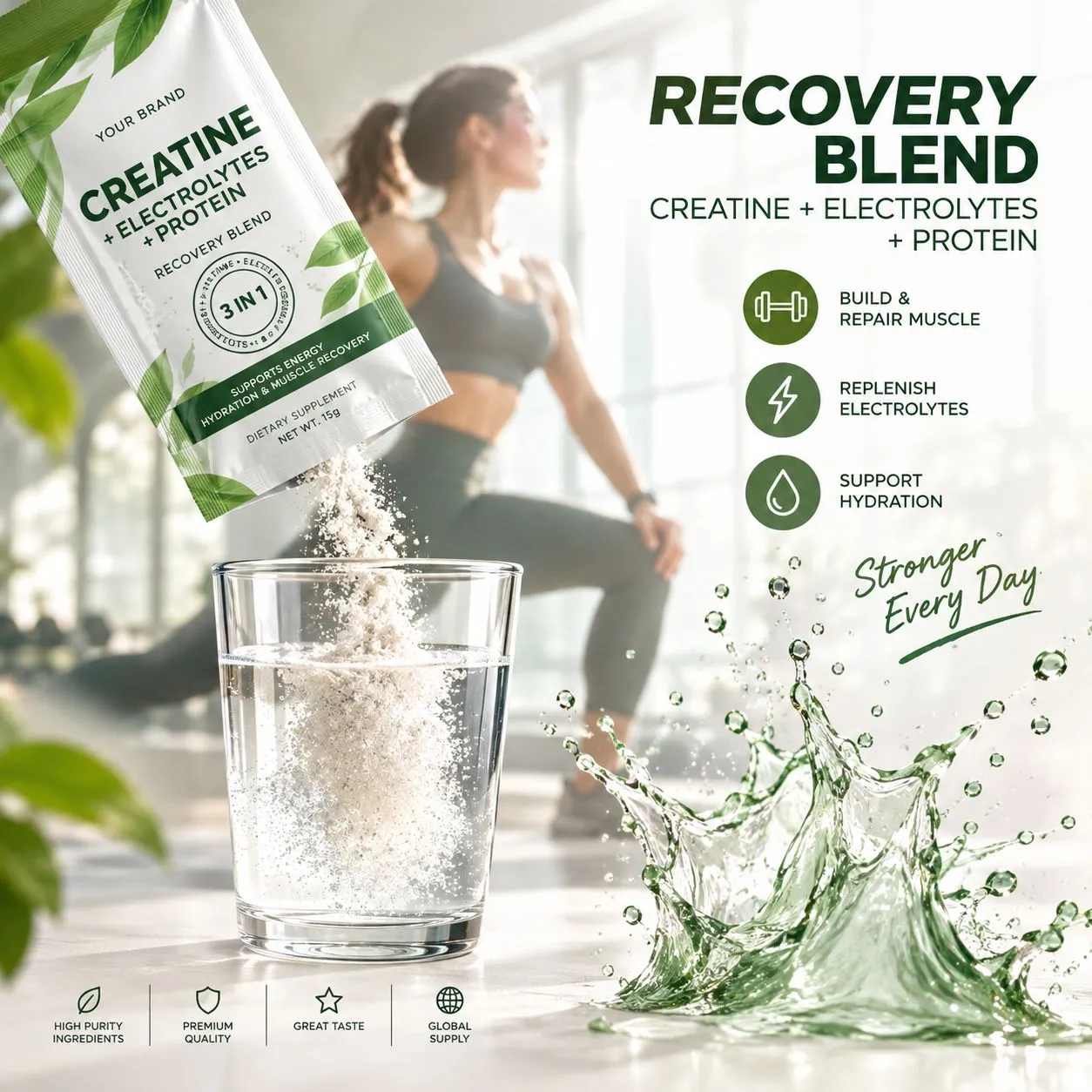
Creatine in Protein and Functional Nutrition
Creatine does not have to remain in the traditional sports supplement category.
The ingredient can also be incorporated into functional nutrition products where protein and other nutritional ingredients are already part of the formulation.
For example, a product developer may explore:
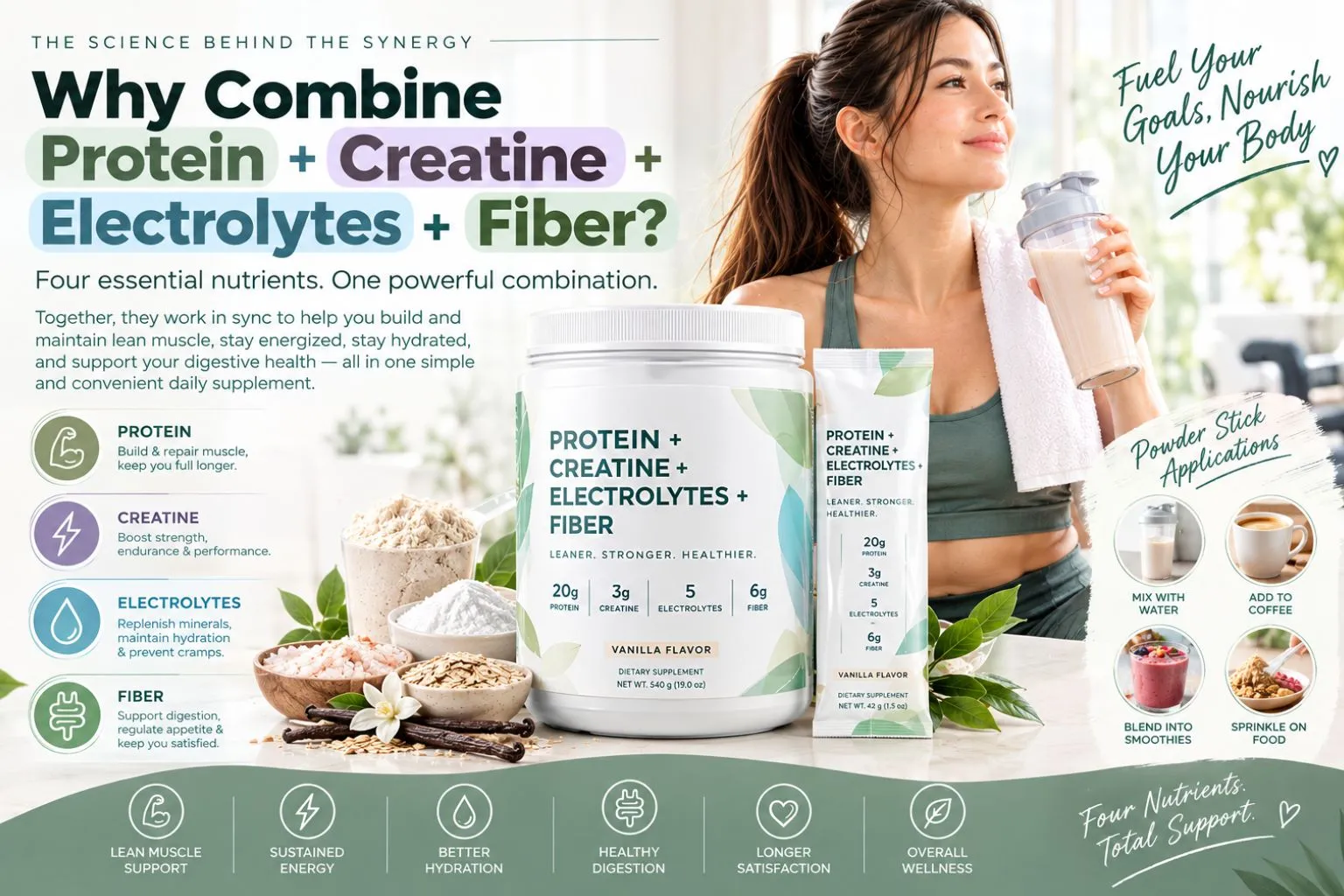
Protein + Creatine
This concept can fit both sports recovery and active-aging nutrition.
Protein + Creatine + Electrolytes
This can be developed as a broader daily active nutrition powder.
Protein + Creatine + Fiber
This combination could be considered for a more general functional nutrition concept.
Creatine + Magnesium
This combination may be explored in products targeting active adults and midlife nutrition.
The role of each ingredient should be clearly defined during formulation rather than adding ingredients simply because they are trending.
Formulation Considerations for Creatine Products
Developing a creatine product requires more than selecting the ingredient and adding it to a package.
Product developers need to consider the complete formulation.
1. Serving size
The intended serving size should be compatible with the target formulation and delivery format.
2. Powder characteristics
Particle size, flowability, moisture, and dispersion can affect manufacturing and consumer experience.
3. Flavor
Creatine itself can influence the sensory profile of a finished powder, especially when used at meaningful inclusion levels. Flavor systems may therefore need to be developed around the total formula.
4. Solubility and dispersion
The final formulation should be evaluated for how well the ingredients disperse in the intended liquid.
This is especially relevant for stick packs, hydration powders, and RTD concepts.
5. Ingredient compatibility
Creatine may be combined with proteins, carbohydrates, electrolytes, minerals, amino acids, botanical ingredients, and other functional ingredients. The full formulation should be tested for stability and physical compatibility.
6. Target consumer
A product for competitive athletes may require a different formulation and communication strategy from a product designed for women in midlife or healthy-aging consumers.
One Ingredient, Multiple Product Opportunities
The broader opportunity around creatine monohydrate is that brands do not necessarily need to create one product for one demographic.
Instead, creatine can become part of a larger ingredient platform.
A supplier can support different product development directions using the same core ingredient:
Sports Nutrition
Creatine powder for strength, training, performance, and recovery formulations.
Women's Nutrition
Creatine for active women and women's fitness product concepts.
Midlife Nutrition
Creatine-based formulations designed around active lifestyle and muscle-focused nutrition.
Healthy Aging
Creatine-containing formulations combined with exercise and broader nutritional strategies.
Functional Beverages
Creatine powders designed for drink mixes, sachets, and other convenient formats.
This cross-category potential makes creatine particularly relevant to brands looking to expand their product portfolios.
Opportunities for OEM, ODM, and Private-Label Development
The expansion of creatine into sports, women's nutrition, and healthy-aging categories also creates opportunities for OEM, ODM, and private-label development.
Instead of offering only a basic creatine powder, brands can develop differentiated products around different consumer needs.
For example:
Sports Creatine Series
Pure creatine powder
Creatine + electrolytes
Creatine + protein
Creatine recovery powder
Women's Nutrition Series
Creatine daily powder
Creatine + magnesium concept
Creatine + electrolytes
Creatine + protein
Healthy Aging Series
Creatine + protein
Creatine + magnesium
Creatine + selected vitamins/minerals
Creatine daily nutrition powder
Convenient Formats
Powder sticks
Sachets
Tub powders
Single-serve drink mixes
Functional beverage applications
The exact formula can be developed according to the brand's target market, regulatory requirements, preferred format, sensory requirements, and ingredient specifications.
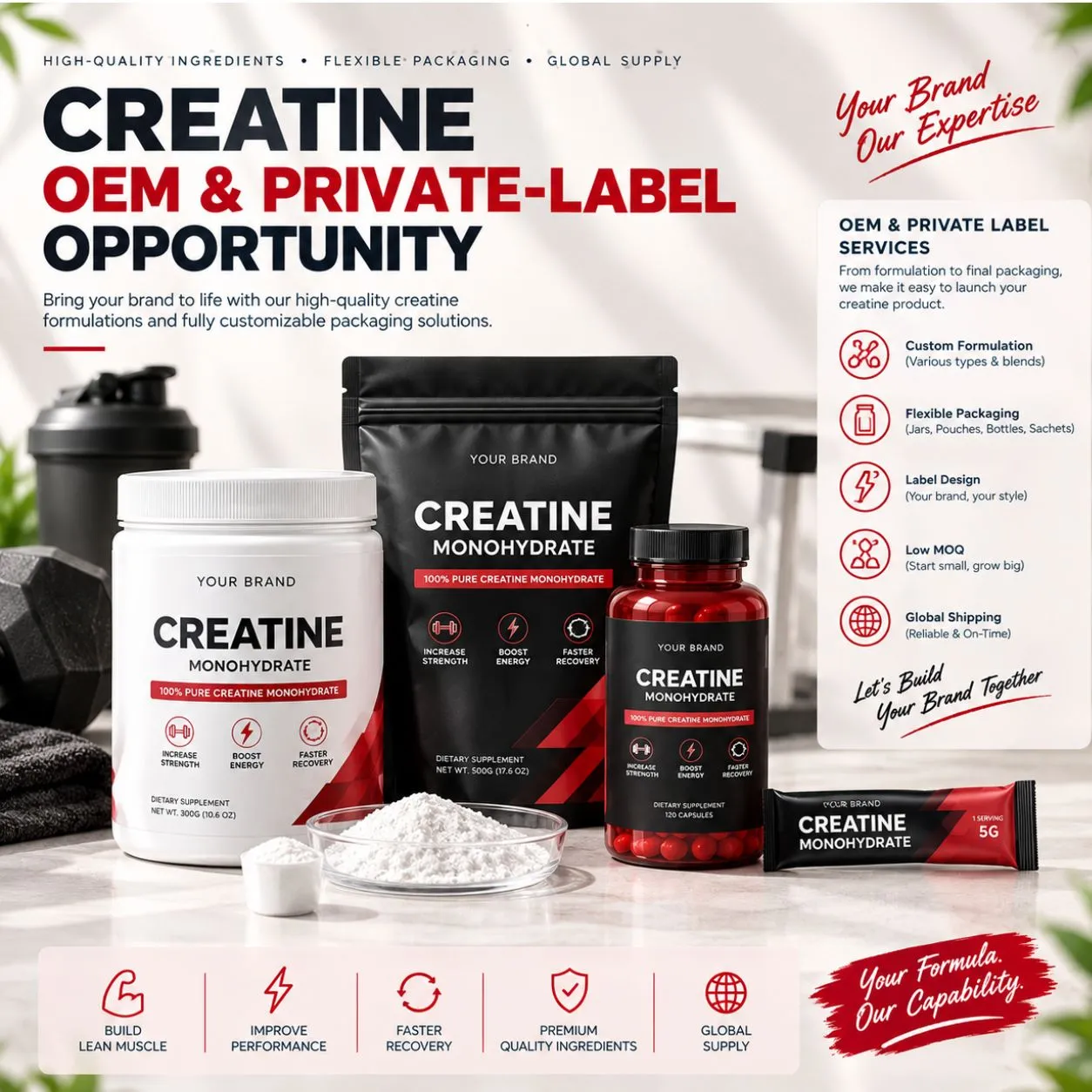
Yangge Biotech: Creatine and Powder Ingredients for Product Development
For brands and manufacturers developing creatine-based products, reliable ingredient sourcing is an important part of the formulation process.
Yangge Biotech supplies creatine monohydrate and a range of other powder ingredients for dietary supplements, functional foods, beverages, and nutraceutical formulations.
The focus is on providing ingredients that can be used by B2B customers developing their own products, including formulations for sports nutrition, women's nutrition, healthy aging, and other functional nutrition categories.
Depending on the ingredient and project requirements, documentation can include COA, TDS, MSDS, product specifications, samples, quotations, and other technical materials.
This allows brands to evaluate ingredients before moving into larger-scale formulation and production.
Yangge can also support product development directions involving OEM, ODM, and private-label opportunities, allowing customers to develop different finished product concepts around creatine and other powder ingredients.
The Future of Creatine Monohydrate
Creatine is no longer limited to the traditional bodybuilding market.
Its established position in sports nutrition, combined with growing research into women and healthy aging, is creating a broader landscape for product development.
For sports brands, creatine remains an important ingredient for strength and training-focused products.
For women's nutrition brands, it provides another ingredient to consider in products designed around active lifestyles and different stages of adulthood.
For healthy-aging brands, creatine is being investigated alongside resistance training and broader nutritional strategies aimed at maintaining strength and lean tissue as people age.
As the market develops, powder sticks, functional beverages, protein products, daily nutrition powders, and targeted women's and healthy-aging formulas can provide new directions for creatine-based product development.
Conclusion
Creatine monohydrate has a strong research history in sports nutrition, but its potential applications extend across a much wider range of product categories.
From athletes and active consumers to women and healthy-aging populations, creatine can serve as a versatile powder ingredient for different formulation strategies.
The research also shows the importance of maintaining realistic expectations. Evidence is strongest for certain strength and exercise-related outcomes, while research in women and older adults continues to develop. Creatine should therefore be considered as one component of a broader nutrition and exercise strategy rather than as a universal solution.
Yangge Biotech provides creatine monohydrate and other powder ingredients to support these formulation opportunities, helping ingredient buyers explore new product concepts across multiple nutrition categories.
Looking for the latest Creatine Powder or a reliable bulk supplier? Contact Yangge Biotech today to request current pricing, COA, product specifications, samples, or OEM/ODM manufacturing solutions.
Email: info@yanggebiotech.com
Frequently Asked Questions
Is creatine monohydrate only for athletes?
No. Creatine is widely used in sports nutrition, but research is also examining its applications in women and older adults, particularly when combined with resistance training. (PubMed)
Can creatine be used in women's nutrition products?
Yes. Creatine can be incorporated into products designed for active women and women's fitness. However, the evidence base in women is still developing, and product claims should reflect the available research. (PubMed)
Is creatine relevant to healthy aging?
Creatine is being studied in healthy older adults, particularly in combination with resistance training. Recent reviews report potential benefits for strength, while findings for muscle mass and physical function are less consistent. (PubMed)
What is the most researched form of creatine?
Creatine monohydrate is the most extensively studied form of supplemental creatine and is widely used in sports and exercise nutrition research. (PubMed)
What products can be developed with creatine monohydrate?
Creatine can be incorporated into powders, stick packs, protein products, hydration formulas, functional beverages, recovery products, and other dietary supplement formats depending on the formulation and regulatory requirements.
Can Yangge supply creatine for B2B formulation?
Yangge Biotech supplies creatine monohydrate and other powder ingredients for B2B dietary supplement, food, beverage, and nutraceutical product development, with technical documentation and formulation/OEM-related support available according to project requirements.
References
Kreider, R. B., et al. (2017). International Society of Sports Nutrition position stand: safety and efficacy of creatine supplementation in exercise, sport, and medicine. Journal of the International Society of Sports Nutrition, 14:18. (PubMed)
Liu, S., et al. (2025). The impact of creatine supplementation associated with resistance training on muscular strength and lean tissue mass in the aged: a systematic review and meta-analysis. European Review of Aging and Physical Activity, 22:26. (PubMed)
Sharifian, G., et al. (2025). Impact of creatine supplementation and exercise training in older adults: a systematic review and meta-analysis. European Review of Aging and Physical Activity, 22:17. (PubMed)
Tam, R., Mitchell, L., & Forsyth, A. (2025). Does Creatine Supplementation Enhance Performance in Active Females? A Systematic Review. Nutrients, 17(2), 238. (PubMed)
Effects of creatine supplementation and resistance training on muscle strength gains in adults <50 years of age: A systematic review and meta-analysis. PubMed, 2024. (PubMed)
Creatine monohydrate for lean mass, strength, and bone density in postmenopausal women: a systematic review and meta-analysis. PubMed, 2026. (PubMed)
Effects of resistance training combined with creatine supplementation on muscle strength, physical function, and muscle mass in older adults: a systematic review and three-level meta-analysis. PubMed, 2026. (PubMed)

Send Inquiry
Related Industry Knowledge
Recommended Products
.webp "Pea Protein Powder")