Safe & Vibrant: High Purity Natural Beta Carotene Powder & Oil for Color for Health
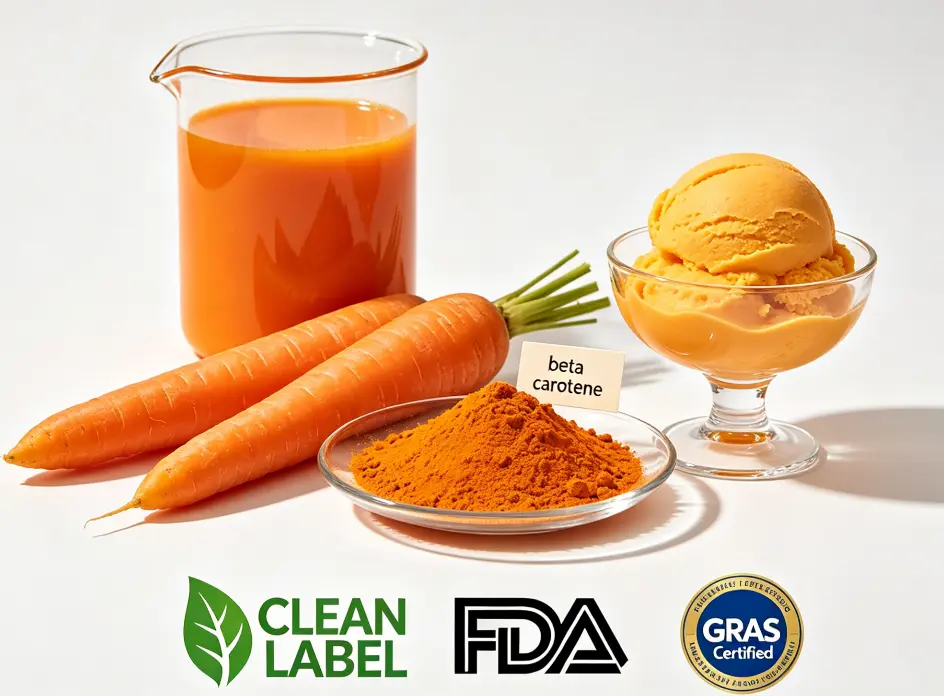
Beta-carotene is the most essential natural colorant and vitamin A precursor for global food, beverage, dietary supplement, and animal feed industries. However, most manufacturers are facing three major problems: unstable supply from plant extraction, safety concerns with chemically synthesized beta-carotene, and high cost from traditional fermentation production. Beta-carotene was originally derived from carrots and is valued today for its use as both a food colorant and as a nutritional supplement.
In order to utilize beta-carotene as both a food colorant and for its nutritional benefits, color measurement is imperative. Depending on the concentration of the derived product, beta-carotene can range in color from a light yellow to a deep red, and its nutritive properties are linked to color saturation as well. FDA regulations call for the proper measurement and monitoring of beta-carotene in food products to ensure that fortification requirements are met. Available in both powder and liquid form, beta-carotene is a versatile choice in food production and covers a wide range of food colorant needs.
The FDA is responding to consumer demands with new regulations on the use of artificial food colorants and manufactures must seek more natural food color. To solve these industry pain points, we have upgraded our self-developed microbial strain fermentation technology and optimized the whole production workflow. Now we provide GRAS certified natural beta-carotene, including full range beta carotene powder 1% to 30% and beta carotene oil 10% to 30%, with the most competitive factory price in the global market.
What is Beta-Carotene?
Beta carotene is a carotenoid pigment found in carrots, sweet potatoes, spinach, and various other plants. Its molecular configuration allows it to absorb light in the blue range of the visible spectrum, producing a deep yellow to orange hue.
Beyond its coloring properties, beta carotene is a provitamin A compound, which sets it apart from many other natural colors by offering both aesthetic and nutritional value.
In industrial use, beta carotene is available in multiple forms—such as oil suspensions, water-dispersible emulsions, and beadlet encapsulations—making it suitable for a wide range of applications from beverages to bakery fillings.
The Science of Beta Carotene as a Colorant
Beta carotene serves as a foundational pigment in the food industry, functioning as a highly pigmented hydrocarbon within the tetraterpenoid family. Its visual impact is not merely a surface property but a direct result of complex electron behavior at the molecular level.
Molecular Structure and Light Absorption
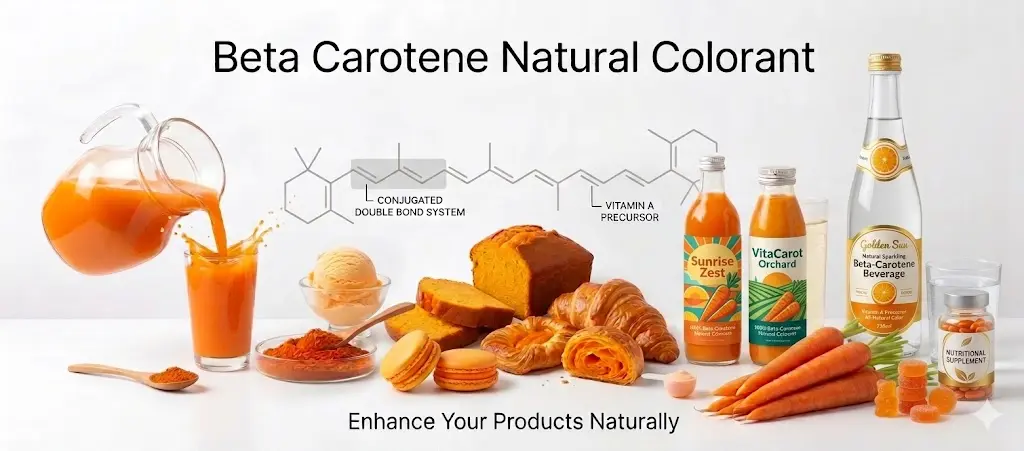
The molecule’s ability to produce vibrant hues stems from its system of conjugated double bonds. This specific chemical arrangement allows the molecule to absorb light energy specifically in the blue and violet wavelengths of the visible spectrum.
When these shorter wavelengths are absorbed, the remaining red and yellow light is reflected back to the observer. This chemical structure also dictates that beta carotene is fat-soluble, requiring advanced physical processing or emulsification for use in water-based beverage or confectionery applications.
Natural Sources and Extraction
Commercial production relies heavily on solvent extraction to isolate pigments from concentrated plant matter or biological biomass. This process ensures high purity and consistent color strength necessary for large-scale industrial food manufacturing.
Selection of source material significantly impacts the final shade and the secondary nutritional profile. Manufacturers prioritize specific organisms for their natural resilience and exceptionally high pigment yield to ensure economic viability.
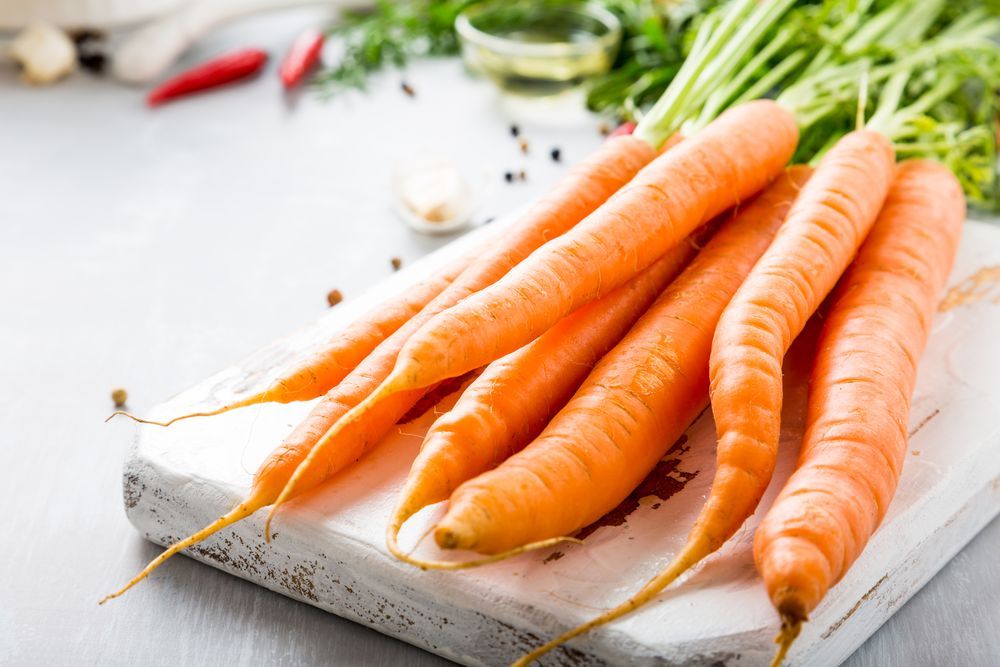
Carrots: The traditional botanical source known for providing a balanced orange hue and high consumer recognition.
Dunaliella salina: A specialized microalgae that produces massive concentrations of beta carotene to protect itself from intense UV radiation.
Palm oil: Provides a rich spectrum of mixed carotenes, often used for deep yellow or red-orange applications in fats and oils.
| Carotenoid Type | Coloring Intensity | Common Hue Range |
|---|---|---|
| Alpha Carotene | Moderate | Yellow-Gold |
| Beta Carotene | High | Deep Orange-Yellow |
| Gamma Carotene | Moderate to Low | Red-Orange |
Moving beyond the molecular level, formulation success depends on managing its inherent sensitivity.
The Shift Toward Natural Ingredients: Beta Carotene Color
The United States food industry is evolving rapidly as consumers increasingly prefer products made with recognizable, naturally derived ingredients. Concerns about artificial additives and state-level initiatives to restrict petroleum-based dyes are accelerating the transition to natural colorants.
For European food and beverage manufacturers exporting to the U.S., this shift presents both a challenge and an opportunity: aligning with American clean-label expectations while maintaining product quality and appearance.
Among the available natural pigments, beta carotene has become one of the most dependable options, offering a balance between vibrant color performance, nutritional functionality, and regulatory acceptance. Studies predict continued growth in demand for beta carotene and other natural pigments, particularly in the beverage and dairy sectors.
Regulatory Status and Safety in the USA
Beta carotene is a Food and Drug Administration (FDA) approved color additive in the United States. It can be used by manufacturers without FDA permission on a batch-by-batch basis, provided that it meets identity and purity requirements and is applied in compliance with Good Manufacturing Practice (GMP). It is also GRAS (Generally Recognized As Safe), further contributing to its safety profile
Principal Uses in USA Food Production
Beta carotene is valued for its stability to give yellow to orange shades that match consumers' best perception of natural color. Beta carotene is applied extensively in milk foods, where it gives the characteristic golden color. In liquids, beta carotene imparts an attractive orange color. Bakery and confectionery products also benefit from its warm hues to provide depth to cakes, coatings, and sugar confections. In addition, dietary supplements and nutraceuticals also use beta carotene both for color and vitamin A activity and thereby impart the twin benefits of color and nutrition.
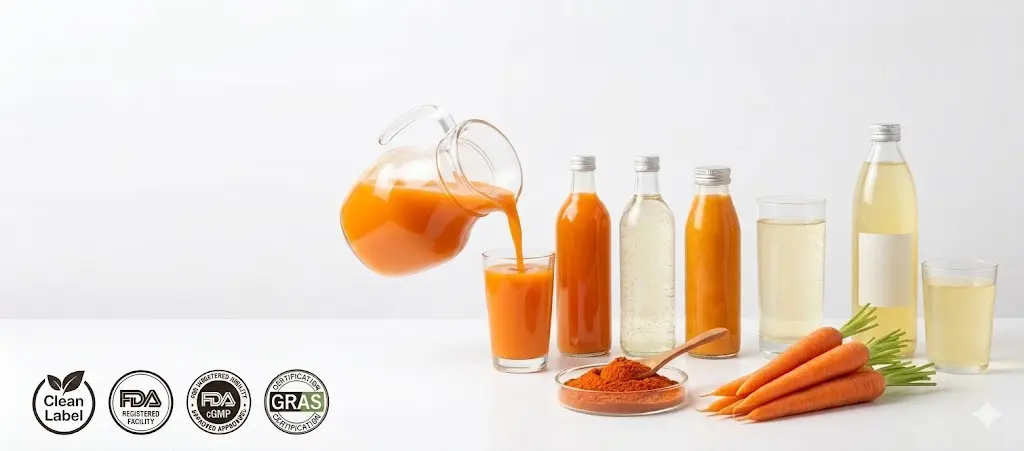
The Core Value of Beta-Carotene: A Premium Functional Ingredient
Beta-carotene is more than just a pigment; it is a high-performance, multi-functional ingredient that meets the modern demand for transparency and health. Here is a detailed look at its core values:
1. The Clean Label Standard for Natural Colouration
- Authentic Visual Appeal: It provides a range of natural orange-to-red hues that mimic the vibrant colours found in nature.
- Clean Label Friendly: As a plant-based, fermented ingredient, it allows manufacturers to replace synthetic dyes with a label-friendly alternative that consumers trust.
- Synthetic-Free Branding: By using natural beta-carotene, brands can confidently market their products as "free from artificial colours," a major driver in the premium food sector.
2. Proven Health and Wellness Benefits
- Powerful Antioxidant Properties: It acts as a robust antioxidant, helping to neutralise free radicals and protect cells from oxidative stress.
- Essential Eye Health Support: As a precursor to Vitamin A, it is a staple in dietary supplements designed to maintain healthy vision and long-term eye function.
- Immune System Support: It is widely used in wellness formulations to bolster immune response, making it a "value-added" ingredient for health-conscious consumers.
3. Versatility in Nutritional Fortification
- Dairy & Plant-Based Alternatives: It is the ideal choice for achieving a rich, golden hue in products like vegan butter, cheese, and yogurts.
- Functional Beverages: Its stability makes it perfect for juices and wellness shots that require consistent, light-fast colour.
- Bakery & Confectionery: It withstands high-heat processing, ensuring that baked goods maintain an appetizing, sun-kissed appearance.
- High-Quality Animal Feed: Beyond human consumption, it is a vital fortifier in animal feed, particularly for canine nutrition and enhancing the natural quality of livestock products.
Beta Carotene vs. Synthetic Yellow 5 & 6
The global shift toward clean label formulations has placed synthetic coal-tar dyes like Tartrazine (Yellow 5) and Sunset Yellow (Yellow 6) under intense scrutiny. While these synthetics offer high stability at a low cost, they lack the multi-functional benefits of plant-derived alternatives.
Modern consumers actively scan ingredient lists for recognizable terms. Beta carotene satisfies this demand by replacing chemical identifiers with a source that sounds like real food, bridging the gap between aesthetics and health.
Manufacturers choosing natural pigments often see a direct correlation with brand loyalty. Using Sunset Yellow can trigger consumer anxiety, whereas beta carotene is viewed as a premium, value-added ingredient.
- Consumer Perception: Recent metrics suggest that 70% of shoppers perceive "plant-derived color" as safer and higher quality than artificial counterparts.
- Labeling Differences: Synthetic dyes require specific numbering per the FDA Color Additive Guidelines, while beta carotene is often listed simply as a natural colorant.
Nutritional Fortification (Provitamin A)
Beta carotene offers a unique nutrient density that synthetic dyes cannot replicate. Beyond its pigmenting power, it undergoes provitamin A conversion within the human body, transforming a simple additive into a functional ingredient.
This biological conversion allows manufacturers to market products with added health value. By choosing beta carotene over Tartrazine, brands move from "chemically dyed" to "nutritiously enhanced," appealing to the wellness-conscious demographic.
| Feature | Beta Carotene | Tartrazine (Yellow 5) |
|---|---|---|
| Origin | Plant-derived / Nature-identical | Petroleum-based synthesis |
| Health Impact | Antioxidant & Provitamin A | Potential hyperactivity links |
| Consumer Appeal | High (Clean Label) | Low (Artificial Label) |
Formulating with beta carotene provides an insurance policy for brand reputation. It avoids the "warning label" culture associated with azo dyes while contributing to the total antioxidant profile of the final product.
Transitioning to these natural hues requires strict adherence to US regulatory frameworks.
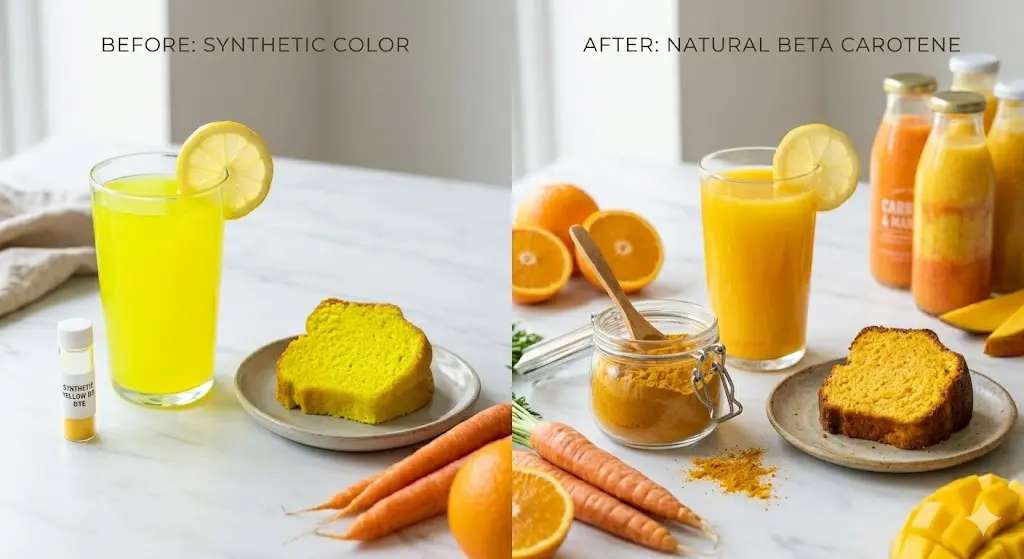
Traditional Methods Disadvantages
To appreciate the future of food science, we must first look at the challenges of the past. Traditional methods of producing beta-carotene often force manufacturers to choose between cost, purity, and sustainability:
Chemical Synthesis: While offering a low entry price, this method leaves behind harsh chemical residues. High-end brands increasingly reject synthetic dyes as they fail to meet clean label standards.
Plant Extraction: This "natural" route is often inefficient. It remains highly susceptible to weather patterns, resulting in low yields, unstable batch-to-batch differences, and an extremely high market cost.
Ordinary Fermentation: Early-stage fermentation often suffers from limited strain activity and low production efficiency, making it impossible to support large-scale, stable delivery for global partners.
The Industry Verdict: There is an urgent need for a new generation of fermentation solutions that are natural, safe, stable, and cost-effective.
Natural Beta Carotene US FDA GRAS (Generally Recognized as Safe)
We have pioneered a sophisticated manufacturing framework that elevates fermented beta-carotene to a professional, industrial grade. Our competitiveness is built upon four technical pillars:
- Fermentation Technology: Brands are increasingly choosing natural fermented beta-carotene over chemical synthesis because it offers high purity and stable quality.
- Meeting Consumer Demand: Modern shoppers are scrutinizing labels more than ever, leading to a surge in demand for ingredients that are "nature-identical" and sustainably produced.
- Regulatory Alignment: As global food standards tighten around synthetic dyes, fermented beta-carotene provides a safe, GRAS-certified solution for international markets.
Our natural fermented beta-carotene has officially obtained US FDA GRAS (Generally Recognized as Safe) certification.
- Global Compliance: Fully compliant with regulations in the USA, Europe, and all mainstream global markets.
- Versatile Safety: Proven safe for use in beverages, dietary supplements, dairy, and animal feed.
- Verified Quality: Every shipment comes with complete safety test reports and is guaranteed free from allergen risks, ensuring your brand passes third-party inspections with ease.
Natural Beta Carotene Options for Your Products
We provide a comprehensive range of specifications designed to fit your specific formulation needs:
Beta-Carotene Powder Specifications
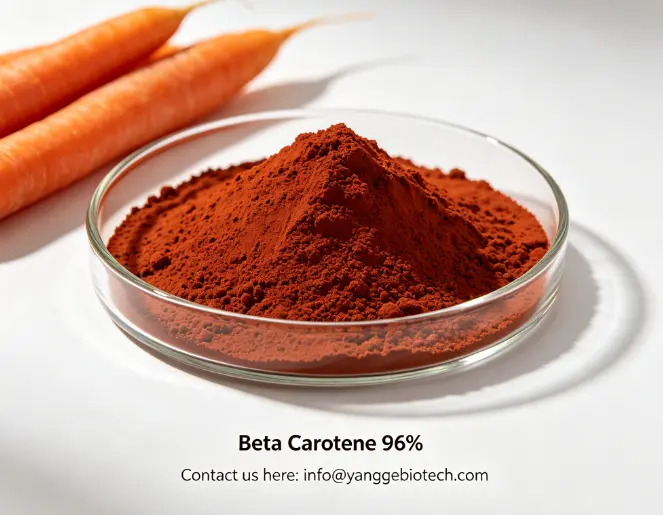
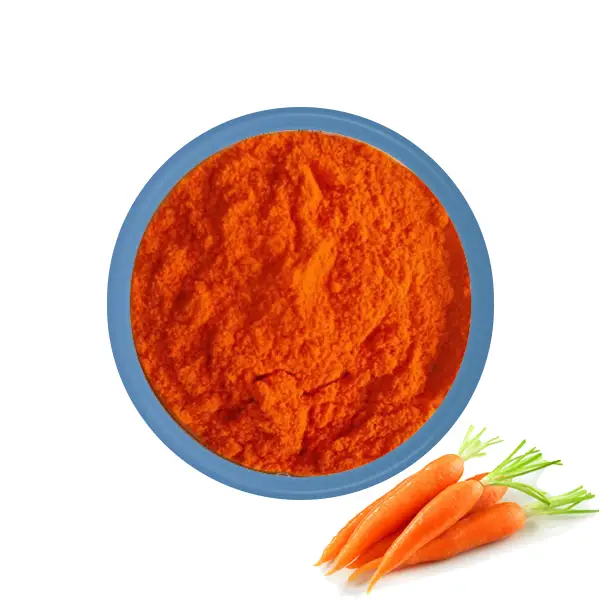
- 1% / 10% / 30% 96% Concentrations: Fine, free-flowing powder that is easy to mix and store
Beta-Carotene Oil Specifications
- 10% / 20% / 30% Oil Suspensions: Excellent lipophilicity, making it the perfect choice for soft capsules and liquid formulas.
All products feature a long shelf life, uniform color, and high stability, with large stock available year-round for immediate dispatch.

Simple Ways To Use Beta-carotene At Home
Here are the simple ways to use beta-carotene for food at home:
1. Natural Food Coloring for Baking: Add a small amount of powder to bread, cakes, or cookies to achieve a professional golden hue. This pigment is heat-stable and serves as a clean-label alternative to synthetic dyes.
2. Nutritional Smoothie Boost: Stir beta-carotene into juices or smoothies to gain powerful antioxidant benefits. It acts as a precursor to Vitamin A, supporting eye health and immune function.
3. Healthy Pet Treats: Mix the ingredient into homemade dog biscuits to enhance canine nutrition. It is a safe fortifier that supports vision and skin health for pets.
4. Enhanced Absorption: Always consume beta-carotene with a healthy fat like olive oil or avocado, as it is fat-soluble and requires oil for the body to absorb it effectively.

Conclusion
The global food and beverage industry is undergoing a significant transition toward clean-label ingredients, driven by both tightening FDA regulations and consumer demand for natural, health-promoting additives. Beta-carotene stands at the forefront of this shift, offering a unique dual benefit as a vibrant, heat-stable colorant and a critical vitamin A precursor. While traditional methods—such as chemical synthesis and plant extraction—have historically struggled with chemical residues, high costs, and weather-dependent supply instabilities, modern advancements in fermentation technology have bridged the gap. By utilizing optimized microbial strains and high-density closed fermentation, it is now possible to produce high-purity, GRAS-certified natural beta-carotene that is both cost-effective and sustainably sourced.
Ultimately, choosing natural fermented beta-carotene allows manufacturers to move beyond simple "chemical dyeing" to "nutritional enhancement". Whether applied in dairy, functional beverages, or animal feed, this versatile ingredient provides the stability and safety required for global market compliance. By partnering with a supplier that offers full-range specifications—from 1% to 30% powder and 10% to 30% oil—brands can secure a stable, factory-direct supply that meets the highest international food safety standards while maintaining a competitive edge in the global marketplace.
Yangge Biotech manufactured, GRAS certified beta-carotene supplier that offers factory-direct competitive pricing and full specifications (1%–30% powder, 10%–30% oil), we are ready to assist.
Contact us today to receive free samples, full TDS and COA documentation, or a customized bulk quotation for your next project. Let's bring natural, stable, and cost-effective color to your product line. Email us for inquiry: info@yanggebiotech.com
References
https://www.efsa.europa.eu/en/efsajournal/pub/2910
FDA Color Additive Status List: https://www.fda.gov/food/food-additives-petitions/color-additive-status-list
FDA Generally Recognized as Safe (GRAS): https://www.fda.gov/food/food-ingredients-packaging/generally-recognized-safe-gras
21 CFR § 73.95 - Beta-carotene Identity and Purity: https://www.ecfr.gov/current/title-21/chapter-I/subchapter-A/part-73/subpart-A/section-73.95
NIH Vitamin A and Carotenoids Health Professional Fact Sheet: https://ods.od.nih.gov/factsheets/VitaminA-HealthProfessional/
Codex Alimentarius International Food Standards: https://www.fao.org/fao-who-codexalimentarius/en/
EFSA Scientific Opinion on Beta-carotene Safety: https://www.efsa.europa.eu/en/efsajournal/pub/2910
WHO/JECFA Beta-Carotene Specifications: https://www.fao.org/fileadmin/user_upload/jecfa/adm/Beta-carotene.pdf
ScienceDirect - Carotenoids as Functional Ingredients: https://www.sciencedirect.com/science/article/pii/B9781782420118000044
USDA FoodData Central: https://fdc.nal.usda.gov/
Linus Pauling Institute - Carotenoids and Health: https://lpi.oregonstate.edu/mic/dietary-factors/phytochemicals/carotenoids
IFT - Clean Label Trends in Food Manufacturing: https://www.ift.org/news-and-publications/food-technology-magazine/issues/2021/june/features/clean-label-2-0