Why New-Form Astaxanthin Is Gaining Attention for Immune Health Supplements
Introduction
In the fast-growing world of dietary supplements, few ingredients have gained as much scientific and consumer attention as astaxanthin. It is widely recognized as one of the most powerful natural antioxidants, and it has been extensively studied for its potential benefits in skin health, eye health, exercise recovery, and now increasingly, immune system support.
Traditionally, astaxanthin has been used for its antioxidant properties, but recent developments in formulation science have introduced a new-form or advanced version of astaxanthin. This upgraded form is gaining significant attention in the supplement industry due to improvements in bioavailability, stability, absorption efficiency, and biological activity.
These improvements make it more suitable for modern functional nutrition products, especially those targeting immune health, where consistency and effectiveness are essential.
What Is Astaxanthin?
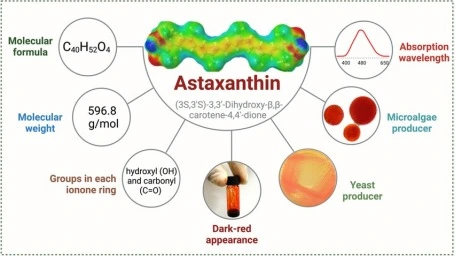
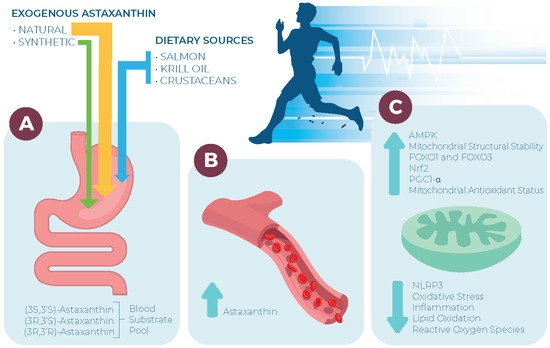
Astaxanthin is a naturally occurring carotenoid pigment found in microalgae, yeast, and marine organisms such as salmon, krill, and shrimp. It is responsible for the red-orange color seen in these organisms and is highly valued for its strong antioxidant properties.
What makes astaxanthin unique compared to many other antioxidants is its molecular structure and behavior in the body, which allows it to interact with cells in a more complete and protective way.
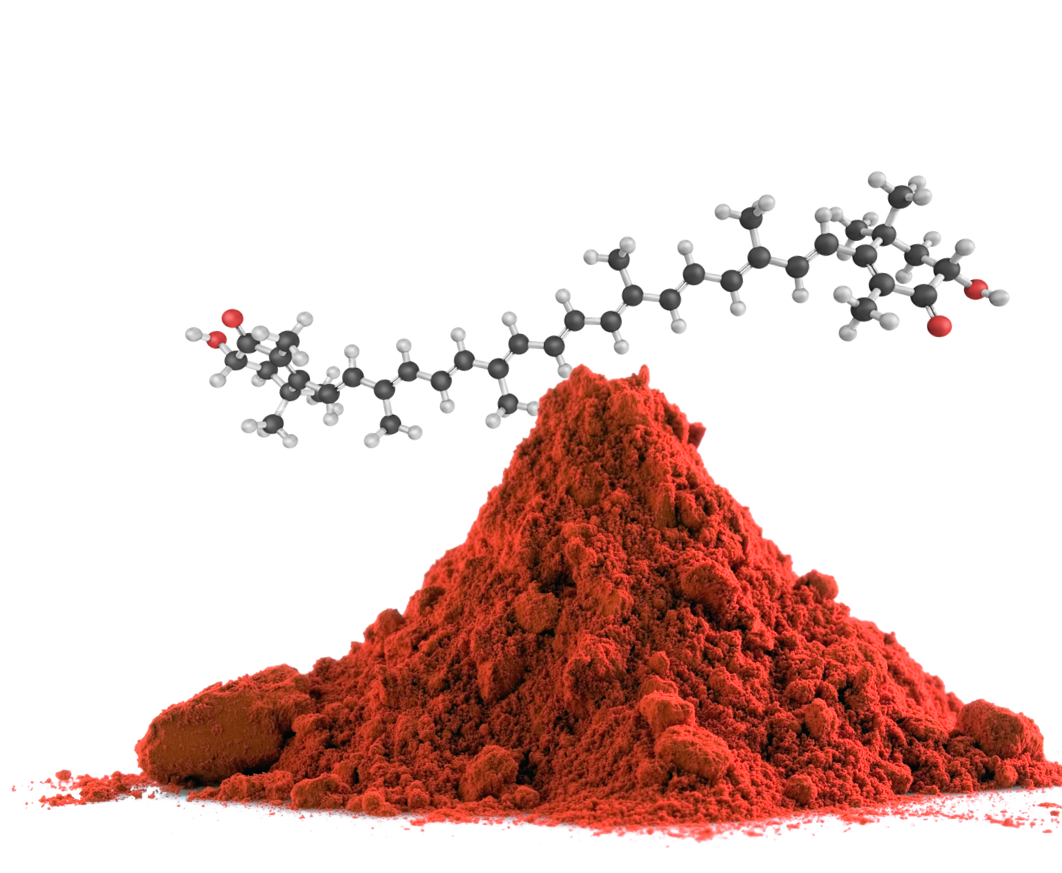
Key Functional Properties of Astaxanthin:
l Crosses cell membranes efficiently
Astaxanthin has both water-soluble and fat-soluble properties, allowing it to pass through cell membranes easily. This means it can protect cells from both inside and outside environments, offering broader cellular defense compared to many other antioxidants.
l Protects multiple cellular structures
Unlike some antioxidants that act only in specific areas, astaxanthin can support the protection of cell membranes, mitochondria, and DNA structures. This multi-level protection is important for maintaining overall cellular health.
l Neutralizes free radicals effectively
Astaxanthin is highly efficient at scavenging free radicals, which are unstable molecules that contribute to oxidative stress, aging, and immune system decline.
Because of these characteristics, astaxanthin has been widely studied in relation to oxidative stress reduction, inflammation balance, and immune system support.
Immune Health Benefits of Astaxanthin
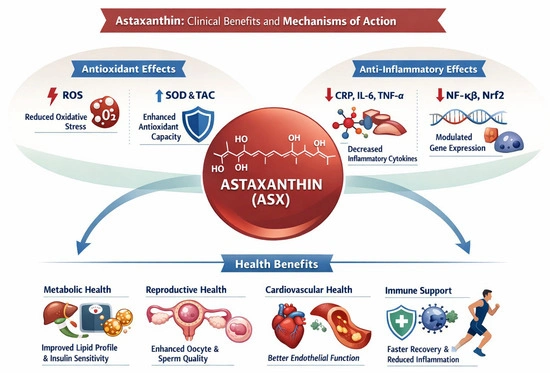
Astaxanthin is increasingly being recognized for its potential role in supporting immune function. Its benefits are not limited to one pathway but instead involve multiple biological mechanisms that work together to strengthen immune resilience.
��️ 1. Enhancing Immune Cell Activity
Astaxanthin may help support the activity and efficiency of key immune cells that are responsible for defending the body against infections.
l T-cells: These cells help identify and destroy infected or abnormal cells in the body.
l B-cells: These cells are responsible for producing antibodies that neutralize harmful pathogens.
l Natural killer (NK) cells: These are part of the body’s first line of defense and help eliminate infected or damaged cells quickly.
By supporting these immune cells, astaxanthin may help improve the body’s natural defense response and maintain immune balance, especially during periods of stress or exposure to environmental challenges.
�� 2. Reducing Oxidative Stress
Oxidative stress occurs when there is an imbalance between free radicals and antioxidants in the body. Over time, this can weaken immune function and contribute to cellular damage.
Astaxanthin plays an important role in addressing this issue by acting as a strong free radical scavenger.
l It helps neutralize unstable molecules that damage cells
l It protects immune cells from oxidative injury
l It supports the long-term stability and function of cellular systems
By reducing oxidative stress, astaxanthin helps create a healthier internal environment where the immune system can function more effectively.
3. Supporting Inflammatory Balance
Inflammation is a natural immune response, but when it becomes chronic or uncontrolled, it can negatively affect immune health.
Astaxanthin may help support a balanced inflammatory response by influencing key biological pathways involved in inflammation regulation.
l It may help modulate inflammatory markers in the body
l It supports a more controlled immune response during stress
l It helps maintain balance between activation and recovery phases of immunity
This balancing effect is important for maintaining long-term immune health and preventing excessive immune system strain.
Advanced Innovation: Fermentation-Based Astaxanthin by Yangge Biotech
One of the most important developments in astaxanthin production is the use of advanced fermentation technology.
Yangge Biotech has developed innovative manufacturing methods that produce astaxanthin through a controlled fermentation process, offering a more modern and efficient alternative to traditional extraction methods.
Instead of relying solely on environmental cultivation of microalgae, fermentation uses precisely controlled biotechnological systems. These systems regulate factors such as temperature, nutrients, and microbial conditions to produce astaxanthin in a stable and optimized environment.
This approach improves production efficiency while maintaining high quality and consistency, making it highly suitable for large-scale supplement manufacturing.
Advantages of Fermentation-Derived Astaxanthin
1. Higher Production Stability
Fermentation technology allows astaxanthin to be produced in highly controlled environments, which significantly improves stability.
l Ensures consistent production conditions
l Reduces variability between production batches
l Improves reliability for industrial-scale manufacturing
This stability is essential for supplement brands that require uniform product quality across global markets.
2. Improved Purity and Standardization
Fermentation-based production provides better control over the entire manufacturing process, resulting in higher-quality output.
l Produces more consistent astaxanthin profiles
l Reduces unwanted impurities
l Ensures standardized potency across batches
This is especially important for dietary supplements that must meet strict quality and regulatory standards.
3. Sustainable Production Method
Fermentation is considered a more environmentally friendly production method compared to traditional extraction processes.
l Reduces dependence on natural harvesting of microalgae
l Minimizes environmental disruption
l Supports more sustainable and scalable production systems
This aligns with the global shift toward clean-label and eco-conscious ingredient sourcing.
4. Reliable Supply Chain
Because fermentation is not dependent on seasonal conditions or environmental fluctuations, it offers a more stable supply chain.
l Enables year-round production
l Reduces supply shortages
l Supports consistent global distribution
This reliability is critical for meeting increasing demand in the dietary supplement industry.
5. Ideal for Supplement Applications
Fermentation-derived astaxanthin is highly versatile and suitable for a wide range of supplement formats.
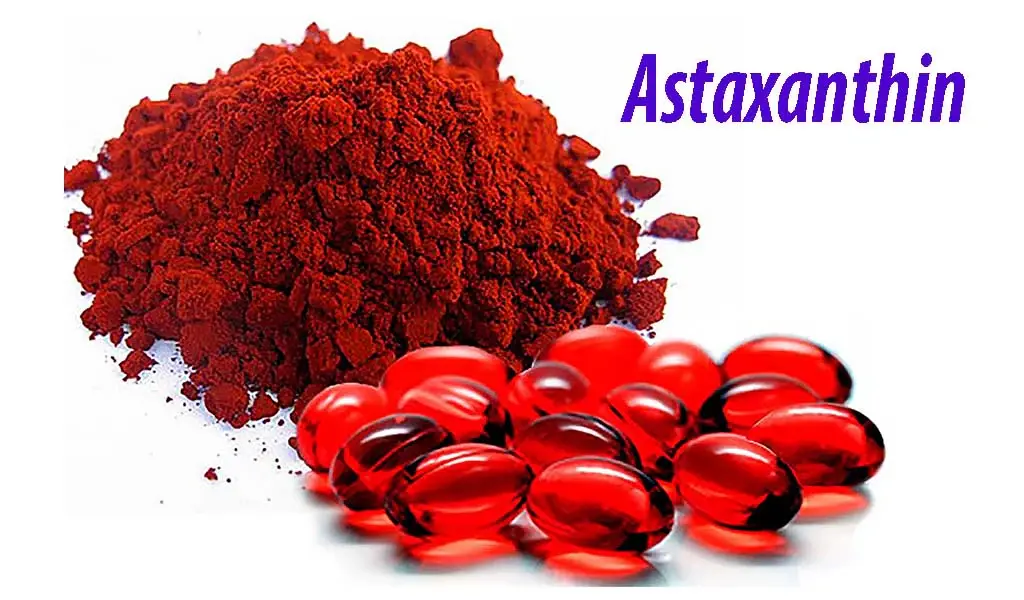
l Capsules and softgels for easy consumption
l Powder formulations for functional blends
l Beverage applications for modern nutrition products
l Immune health supplements requiring stable actives
This flexibility makes it a valuable ingredient for product developers.
Why This Matters for Immune Health Supplements
The effectiveness of immune health supplements depends heavily on ingredient quality and consistency. Fermentation-derived astaxanthin enhances this by ensuring stable antioxidant activity across every batch.
l Provides consistent immune-support performance
l Ensures reliable antioxidant strength
l Improves formulation stability in finished products
l Supports large-scale commercial manufacturing needs
These advantages make it highly suitable for modern immune-focused supplement development.
Scientific Evidence Supporting Immune Effects
Research has shown that astaxanthin may support immune health through multiple biological mechanisms.
l It may enhance immune cell proliferation, supporting stronger immune responses
l It may support natural killer cell activity, which plays a key role in immune defense
l It may help regulate inflammatory responses, maintaining immune balance
l It may reduce oxidative stress biomarkers, protecting immune function over time
Although research is ongoing, current findings support its potential as a functional ingredient in immune health nutrition.
Why Supplement Brands Are Paying Attention
The dietary supplement industry is rapidly evolving, with strong demand for ingredients that are both scientifically supported and naturally derived.
Astaxanthin meets these expectations because it offers:
Strong antioxidant performance
Potential immune system support
Cellular protection benefits
Natural origin with clean-label appeal
When combined with fermentation-based production, it becomes even more attractive due to improved consistency and scalability.
Applications in Dietary Supplements
New-form astaxanthin is widely used in modern supplement formulations, including:
Immune support supplements for daily wellness
Antioxidant formulations for cellular protection
Skin health products for beauty-from-within benefits
Sports recovery supplements for oxidative stress reduction
Anti-aging blends for long-term wellness support
Its versatility makes it a core ingredient in many nutraceutical product lines.
The Future of Astaxanthin in Immune Health
The role of astaxanthin in dietary supplements is expected to expand as research continues to explore its full biological potential.
Future applications may include:
· Preventive immune nutrition products
· Functional food and beverage innovations
· Advanced anti-inflammatory formulations
· Next-generation antioxidant systems
With ongoing technological improvements such as fermentation-based production, astaxanthin is becoming more accessible, stable, and effective for global use.
Conclusion
New-form astaxanthin is gaining strong attention in the immune health supplement industry due to its powerful antioxidant activity, potential immune-supporting effects, and improved production technologies.
With innovations from companies like Yangge Biotech, which utilize fermentation-based production methods, astaxanthin is now more consistent, sustainable, and scalable than ever before.
These combined advantages—scientific benefits, advanced biotechnology, improved bioavailability, and sustainable manufacturing—position astaxanthin as a next-generation core ingredient in immune health and functional nutrition.
As global demand for effective natural immune support continues to grow, fermentation-derived astaxanthin is expected to play a key role in shaping the future of dietary supplements.
References
1. Yuan, J. P., Chen, F. (1999).
Purification and identification of astaxanthin from the green alga Haematococcus pluvialis.
Journal of Agricultural and Food Chemistry.
2. Hussein, G., et al. (2006).
Astaxanthin as a nutraceutical for human health and nutrition.
Journal of Natural Products.
3. Ambati, R. R., et al. (2014).
Astaxanthin: Sources, extraction, stability, biological activities and its commercial applications.
Marine Drugs.
4. Fassett, R. G., Coombes, J. S. (2011).
Astaxanthin: A potential therapeutic agent in cardiovascular disease.
Marine Drugs.
5. Nakano, M., et al. (2008).
Effects of astaxanthin supplementation on immune response and oxidative stress.
Biological & Pharmaceutical Bulletin.
6. Park, J. S., et al. (2010).
Astaxanthin modulates immune response and inflammation.
Journal of Clinical Biochemistry and Nutrition.
7. Guerin, M., Huntley, M. E., Olaizola, M. (2003).
Haematococcus astaxanthin: applications for human health and nutrition.
Trends in Biotechnology.
8. Lorenz, R. T., Cysewski, G. R. (2000).
Commercial potential for Haematococcus microalgae as a natural source of astaxanthin.
Trends in Biotechnology.
9. Pan, C. H., et al. (2015).
Astaxanthin supplementation enhances immune response and reduces oxidative stress.
Journal of Food Science.

Send Inquiry
Related Industry Knowledge
Recommended Products