How Astaxanthin Powers Your Cells
Have you ever wondered why some people seem to have boundless energy while others feel perpetually drained? Or why our skin loses its "glow" and our muscles take longer to recover as we age? The answer isn't just about how much sleep we get or how much caffeine we drink. It goes much deeper—all the way down to our cells.
Every second of every day, trillions of tiny "power plants" inside your cells are working to keep you alive. These power plants are called mitochondria. They are responsible for creating the energy that allows your heart to beat, your brain to think, and your muscles to move.
However, these power plants are fragile. When they become damaged, our energy levels drop, and our bodies begin to show signs of aging. This is where Natural Astaxanthin 10% Oil comes in. Known as the world’s most powerful antioxidant, it acts like a high-tech shield and a battery charger for your cells, ensuring your "internal engines" run at peak performance.
1. Understanding Mitochondria: The Engines of Life
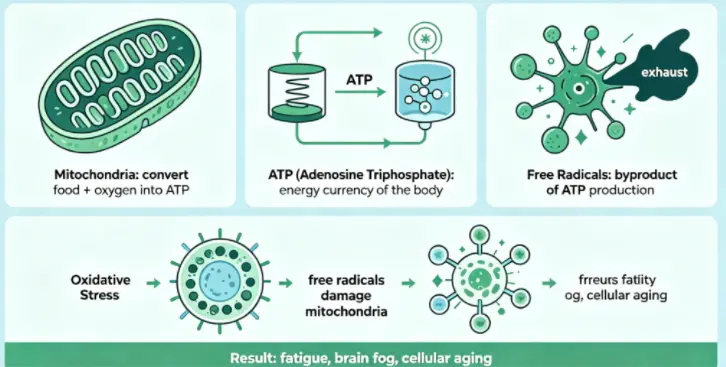
To understand how Astaxanthin powers your cells, you first need to understand the process of energy production. Inside the mitochondria, the food you eat and the oxygen you breathe are converted into a molecule called ATP (Adenosine Triphosphate). ATP is the "energy currency" of the body.
But there is a catch. The process of creating ATP is very "messy." Much like a coal-burning power plant creates smoke and pollution, your mitochondria create "exhaust" in the form of Free Radicals.
If these free radicals aren't neutralized, they begin to damage the mitochondria themselves. This is known as Oxidative Stress. When your mitochondria are damaged, they produce less energy and more "pollution," leading to a downward spiral of fatigue, brain fog, and cellular aging.
2. Astaxanthin: The Ultimate Mitochondrial Shield
Most antioxidants, like Vitamin C or Vitamin E, struggle to get inside the mitochondria where they are needed most. Natural Astaxanthin is different.
Because Natural Astaxanthin 10% Oil is lipid-soluble (fat-loving), it has a unique ability to bond with the fatty membranes that protect your mitochondria.
-
The Transmembrane Advantage: Astaxanthin is a long, flexible molecule. It actually spans the entire width of the cell membrane. This allows it to protect the inside, the outside, and the middle of the cell all at once.
-
Superior Strength: It is 6,000 times stronger than Vitamin C and 800 times stronger than CoQ10 at neutralizing the free radicals produced during energy creation.
By sitting directly inside the mitochondrial membrane, Astaxanthin catches the "sparks" of energy production before they can cause any damage. This keeps the "engines" clean and efficient.

3. Boosting ATP: More Energy, Less Effort
When your mitochondria are protected by Astaxanthin 10% Oil, they can do their job more effectively. Research has shown that Astaxanthin helps the body use oxygen more efficiently, which leads to a higher production of ATP.
This has a ripple effect throughout the entire body:
-
For Athletes: It means more power in the muscles and a higher "fat-burning" capacity during exercise.
-
For the Brain: It means neurons have the energy they need to process information faster and maintain focus.
-
For the Skin: It means skin cells have the energy to repair themselves and produce the collagen needed for a youthful appearance.
By improving the efficiency of your cellular power plants, Astaxanthin doesn't just give you a temporary "jolt" of energy like caffeine; it improves your body’s fundamental ability to power itself.

4. The Salmon Secret: A Lesson from Nature
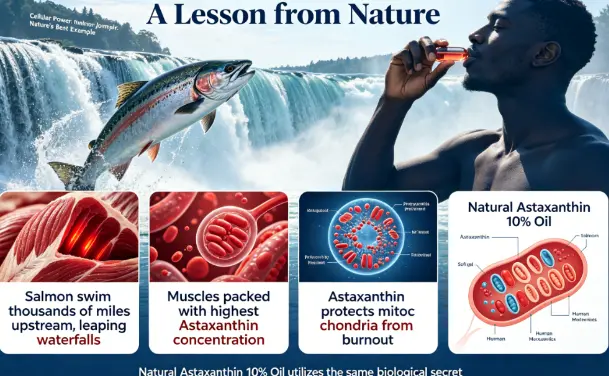
The best example of "Cellular Power" in nature is the Pacific Salmon. Salmon swim thousands of miles upstream, leaping up waterfalls in a feat of incredible physical endurance.
How do they do it? Their muscles are packed with the highest concentration of Astaxanthin in the world. This red pigment protects their mitochondria from being "burned out" by the extreme physical stress of their journey. When we take Natural Astaxanthin 10% Oil, we are essentially utilizing the same biological secret that allows the salmon to perform one of the greatest athletic feats in the animal kingdom.
5. Why the "10% Oil" Format is the Gold Standard
If you want to power your cells, the form of Astaxanthin you choose is critical. The 10% Oil (Oleoresin) format is widely considered the best for cellular energy:
-
High Bioavailability: Since mitochondria are made of fatty membranes, they require a fat-soluble nutrient. The 10% oil format ensures the Astaxanthin is ready to be absorbed and transported straight to your cells.
-
Pure Extraction: High-quality 10% oil is usually extracted using Supercritical CO2, a "green" process that uses no harsh chemicals, ensuring the antioxidant remains pure and potent.
-
Optimal Concentration: A 10% concentration allows for a small, easy-to-digest dose that provides maximum cellular protection without the need for large, bulky pills.
Conclusion: Investing in Your Cellular Future
We often think of energy as something we get from food or drinks, but true energy starts at the cellular level. By protecting and powering your mitochondria with Natural Astaxanthin 10% Oil, you are protecting the very foundation of your health.
Whether you want to improve your athletic performance, clear away brain fog, or simply protect your body from the effects of aging, the secret lies in your mitochondria. Give your cells the "red shield" they need to stay powerful, resilient, and young.
References and Clinical Literature
-
Wolf, A. M., et al. (2010). Astaxanthin ameliorates mitochondrial dysfunction and biogenesis. Journal of Nutritional Biochemistry. This study showed that astaxanthin significantly improves the health and "re-growth" of mitochondria in living cells.
-
Aoi, W., et al. (2003). Astaxanthin limits exercise-induced skeletal muscle injury in mice. Antioxidants & Redox Signaling. Research demonstrating how astaxanthin protects the cellular "power plants" during intense physical activity.
-
Kuroki, T., et al. (2013). Astaxanthin ameliorates mitochondrial insulin resistance. ISRN Endocrinology. A look at how astaxanthin helps mitochondria process energy more efficiently, particularly in the muscles.
-
Park, J. S., et al. (2010). Astaxanthin decreased oxidative stress and inflammation and enhanced immune response in humans. Nutrition & Metabolism. A human trial proving that astaxanthin reduces the "exhaust" (oxidative stress) that damages our cells.
-
Nishida, Y., et al. (2007). Quenching Activities of Common Hydrophilic and Lipophilic Antioxidants against Singlet Oxygen. Carotenoid Science. This technical paper ranks astaxanthin as the #1 antioxidant for protecting lipid-based cellular structures like the mitochondrial membrane.

Send Inquiry
Related Industry Knowledge
Recommended Products