Blue spirulina powder for smoothies vs phycocyanin extract
Yangge Biotech Co., Ltd. is a trusted manufacturer and global supplier of Blue Spirulina Powder and Phycocyanin Extract, serving the food, beverage, nutraceutical, dietary supplement, and functional nutrition industries. Produced under strict quality management systems, our natural blue ingredients deliver outstanding color performance, high purity, excellent stability, and consistent batch-to-batch quality. With stable production capacity, reliable bulk supply, multiple specifications, and complete technical documentations.
What Is Blue Spirulina?
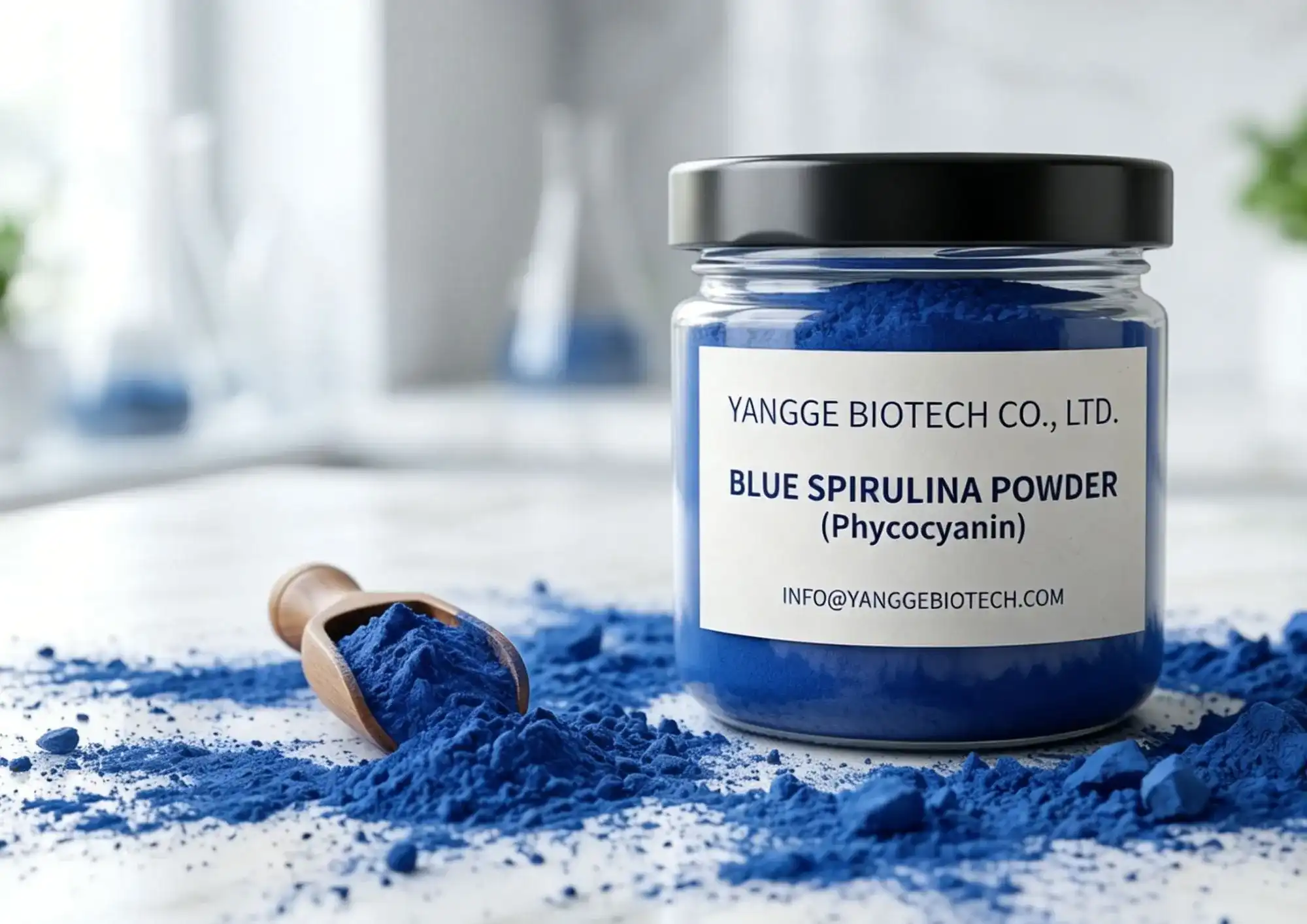
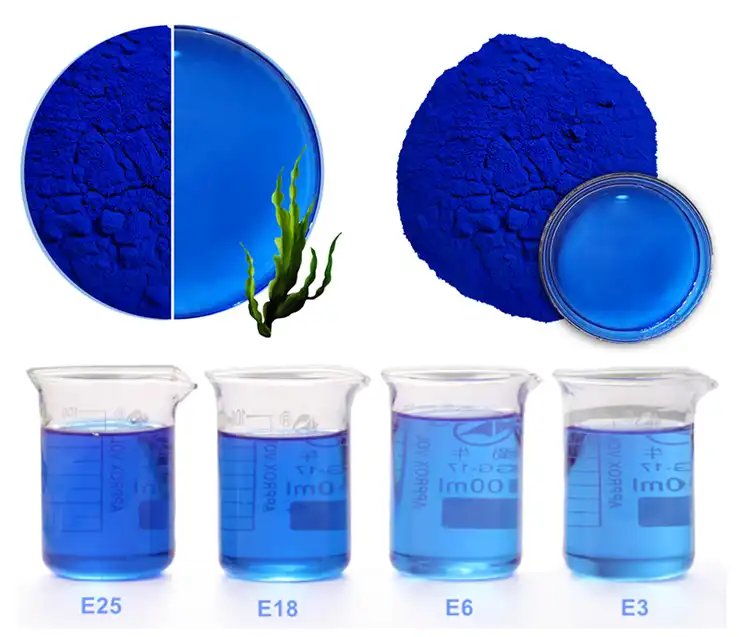
Blue Spirulina is a natural blue pigment extracted from the freshwater microalga Spirulina (Arthrospira platensis). Unlike whole green spirulina powder, Blue Spirulina contains concentrated phycocyanin, the water-soluble protein responsible for spirulina's vibrant blue color. Through advanced extraction and purification processes, chlorophyll and other green pigments are removed, resulting in a bright blue ingredient with excellent visual appeal.
Due to its vibrant color and clean-label appeal, Blue Spirulina Powder is widely used as a natural blue food coloring in beverages, smoothies, dairy products, confectionery, bakery products, ice cream, gummies, functional foods, and dietary supplements. It is also valued for its antioxidant properties and compatibility with plant-based and vegan formulations.
What are the applications of blue spirulina and phycocyanin in food and supplements?
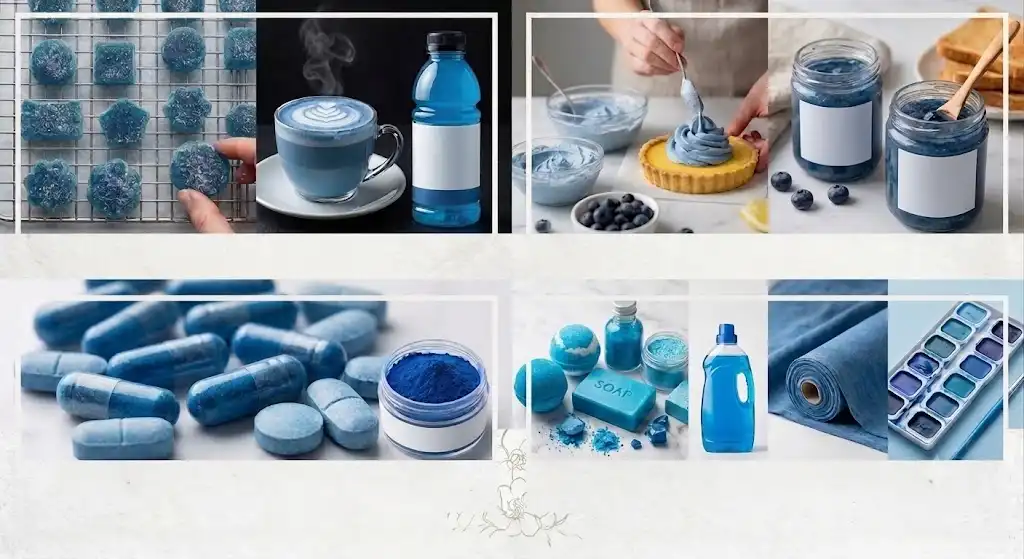
Blue Spirulina and phycocyanin extract are used in many finished goods, from the popular blue coffee on Instagram to sports nutrition mixes and dietary supplement pills. This is because they both give a bright natural blue color without using artificial dyes. Most of the time, the choice comes down to which use would benefit more from a full-spectrum powder mix versus a more concentrated, protein-rich extract.
Blue lattes and specialty beverages
The key element in the popular blue latte is blue spirulina, which is known for its ability to transform a plant-based milk base into a visually stunning beverage without the use of fake colors. Blue Spirulina E18 is used by beverage companies to make menus that are good for social media because it dissolves easily and keeps its color when steamed or mixed.
Sports drinks and functional beverages
Phycocyanin extract is used to add color to sports drinks while also providing protein and antioxidants. This is because it keeps more of spirulina's natural beneficial chemicals per gram than a powder mix that has been watered down. Phycocyanin is often found in high-end recovery and hydration products because it can be used as both a coloring agent and a functional ingredient.
Frozen desserts and ice cream
Black-and-blue novelty ice creams and frozen desserts need a colorant that doesn't fade when mixed with air or when stored at very low temperatures. Blue Spirulina E18 works well in these frozen mixtures, so dessert brands have a stable choice for both limited-edition blue product lines and year-round blue product lines.
Dietary supplements built on phycocyanin
When supplement companies make capsules, tablets, or powder blends based on spirulina's health benefits, they usually choose phycocyanin extract because it has a higher concentration of the bioactive pigment-protein complex per dose. This means that a smaller capsule size can still deliver a meaningful active ingredient level.
Which is more suitable for beverages: blue spirulina or phycocyanin?
When it comes to drinks, choosing between Blue Spirulina powder and phycocyanin extract usually comes down to how well the ingredient dissolves, how much to use, and how it works when mixed into a cold or slightly warm liquid. Blue Spirulina E18 is a water-soluble powder that can be added directly to drink bases. This makes it the better choice for most soda and drink production lines.
Dissolution behavior in cold and hot applications
Blue Spirulina E18 mixes easily into cold-pressed juices, plant-based milks, and lightly heated lattes, leaving no visible sediment. This is very important for beverage brands whose customers care about how their products look. When phycocyanin extract is more concentrated, it may need to be mixed more carefully so that it doesn't clump, especially when mixed with dairy or nut milk bases that are higher in fat.
Dosage economics for large-batch production
Because Blue Spirulina E18 is made with a standard color value, beverage makers can figure out the amount per liter in a way that is consistent across production runs. This makes it easier to scale up recipes from a test batch to a full commercial volume. This reliability cuts down on the trial-and-error that comes with moving colorant sources in the middle of a production run.
Flavor neutrality in finished drinks
A colorant that still smells like algae or fish can throw off the balance of a drink mix that is otherwise perfect. Yangge's Blue Spirulina E18 goes through special processing to get rid of the fishy smell that comes with untreated spirulina extracts. This lets beverage makers add bright color without adding an off-flavor that needs extra flavor masking.
|
Beverage Factor |
Blue Spirulina E18 Powder |
Phycocyanin Extract |
|
Water solubility |
Formulated for clean dissolution |
Can require careful mixing at high concentration |
|
Off-flavor control |
Fishy-odor removal processing applied |
Varies by extraction purity |
|
Dosage predictability |
Standardized color value |
Depends on protein concentration grade |
|
Best-fit use case |
Blue lattes, smoothies, frozen drinks |
Sports drinks with functional protein claims |
What is the difference between blue spirulina powder and phycocyanin extract?
Both ingredients come from the same source—a blue-green algae called spirulina platensis—but they are used in very different ways and in different amounts. Blue Spirulina powder usually has a binder like trehalose in it to keep the color stable for use in food and drinks. Phycocyanin extract, on the other hand, is a purer, more concentrated form of the same active blue pigment-protein complex.
Concentration and carrier composition
Blue Spirulina E18 is usually made with a small amount of trehalose and sodium citrate to keep it stable. This is a standard in the natural colorant industry for finding the right balance between color strength and handling stability. Phycocyanin extract, on the other hand, is usually sold at a higher relative purity and with less or no container material. This makes it more concentrated but also more sensitive to how it is handled.
Protein and bioactive content
Phycocyanin extract usually has a higher percentage of the phycocyanin protein itself per gram because it is less watered down. This is important for supplement makers who care more about bioactive content than color intensity alone. While still high in phycocyanin, Blue Spirulina powder is better suited for coloring food and drinks consistently.
Certification and origin sourcing
Yangge sells two types of ingredients that come from spirulina that was grown and processed in controlled, tracable conditions. Blue Spirulina E18 can be certified as organic to meet the growing demand from natural colorant solution providers that work with certified-organic finished product lines.
How do color intensity and stability compare between blue spirulina and phycocyanin?
For buying teams, color performance is often the deciding factor. This is because a pigment that looks bright in the sample bottle but fades in the finished product can lead to expensive problems with re-mixing later on. Blue Spirulina E18 has a high purity color value, which means it can tint strongly at a dose that is easy to handle. Its heat and light stability profile determines how well that color stays true during processing and storage.
Color value and tinting strength
The high-purity extraction process of Blue Spirulina E18 focuses the phycocyanin pigment to a strong, uniform color value. This lets formulators get a true-blue color that is bright and vivid without having to use an unusually high inclusion rate, which could change the texture or cost per unit.
Heat sensitivity considerations
Phycocyanin naturally reacts more negatively to heat than many man-made or mineral-based blue colorants. Because of this, Blue Spirulina powder and phycocyanin extract work best when they are cold or only slightly warmed, not when they are baked at high temperatures or boiled for a long time. Before finishing a recipe, formulators who work with hot drinks should test how well the color stays true at the serving temperature.
Shelf-life and storage stability
The right carrier formulation and packaging have a big impact on how well Blue Spirulina E18 keeps its color over time, especially when it comes into contact with light. Yangge's patented extraction process is meant to provide better long-term stability compared to spirulina extracts that aren't as polished. This helps finished goods keep their shelf appeal from the time they are made until they are sold.
How do solubility and off-flavor control impact formulation choice?
Buyers who compare protein content, water solubility, and odor control often find that the practical effects of each factor are greater than the color value alone. People may not like a colorant as much if it doesn't dissolve well or has a strong algae smell, even if the color looks great.
Solubility across different liquid bases
Blue Spirulina E18 is designed to dissolve reliably in water in a variety of beverage bases, from plant-based milks to fruit juices. This means that it doesn't cause the sediment and clumping problems that lower-quality spirulina extracts can.
Fishy-odor removal as a formulation advantage
Colorants made from untreated spirulina often have a marine or fishy smell that can clash with the flavors of some drinks or supplements. Yangge's special handling to get rid of this off-taste gives Blue Spirulina E18 a big advantage for brands that need bright color without giving up taste.
Balancing protein content with clean labeling
When making natural colorant solutions for supplement companies, they often have to balance the amount of protein they use with the need for a clean, simple ingredient list. When formulators choose between Blue Spirulina powder and a more concentrated phycocyanin extract, they can find the best balance of color, protein content, and label simplicity for each product.
|
Formulation Factor |
Priority Consideration |
Blue Spirulina E18 Advantage |
|
Water solubility |
Sediment-free mixing |
Formulated for clean dissolution |
|
Odor control |
No fishy or marine notes |
Dedicated deodorizing processing |
|
Heat stability |
Color retention under warmth |
Best performance in cold/warm, not high-heat |
|
Protein content |
Functional contribution |
Available in higher-concentration extract form |
How do production methods affect the quality of blue spirulina vs phycocyanin extract?
The way used to separate phycocyanin from raw spirulina biomass has a direct effect on how pure, colored, and consistent each batch is. When buyers are comparing suppliers, they shouldn't just look at how the powders are extracted or how they are checked for quality; two blue powders that look the same when they are delivered can perform very differently when they are mixed into a finished product.
Patented extraction technology
Yangge's Blue Spirulina E18 is made with a patented extraction method that separates the phycocyanin pigment-protein complex while reducing degradation that can happen with less controlled extraction methods. This makes the product more pure and ensures that the color value stays the same across production batches.
Purification and carrier standardization
Standardizing the carrier ratio, which is usually made up of trehalose and sodium citrate, makes sure that every batch of Blue Spirulina E18 has the same color value. This is very important for vitamin and drink brands that need the same results every time they reorder.
Organic certification and traceable sourcing
Yangge's Blue Spirulina line has organic certification, which gives natural colorant solution providers a documented and verifiable sourcing story they can share with their own retail and brand clients. This is becoming an increasingly important requirement as consumer demand for verified clean-label ingredients continues to grow.
Blue Spirulina Product Specifications
|
Product Name |
Organic Blue Spirulina Powder, Organic Spirulina Extract, Organic Phycocyanin |
|
Other Name |
Organic Blue Spirulina, Organic Phycocyanin |
|
Character |
Blue Powder, With Red Fluorescence |
|
Ingredient |
Organic Spirulina Extract, Organic Maltodextrin, Sodium Citrate |
|
Color Value |
≥180 |
|
Solubility |
Soluble in water, insoluble in alcohol and grease |
|
Certification |
FSSC22000, HALAL, KOSHER, NOP&EOS |
|
Manufacturer |
YANGGEBIOTECH |
Certificate of Analysis
|
Number |
Test Items |
Unit |
Requirement |
Test Results |
Item Conclusion |
|
|
1 |
Sense Organ |
Color and Lustre |
/ |
Blue green or dark blue |
Conforms |
Conforms |
|
Form |
/ |
Uniform powder |
Conforms |
|||
|
Taste and odor |
/ |
Has a unique taste and odor of the product, with no odor |
Conforms |
|||
|
Impurity |
/ |
No visible foreign impurities |
Conforms |
|||
|
2 |
Water Content |
% |
≤7.0 |
6.2 |
Conforms |
|
|
3 |
Protein |
% |
≥40 |
55 |
Conforms |
|
|
4 |
Phycocyanin |
% |
≥30 |
49 |
Conforms |
|
|
5 |
Total arsenic (Calculated as As) |
mg/kg |
≤0.5 |
0.42 |
Conforms |
|
|
6 |
Total mercury (Measured in Hg) |
mg/kg |
≤0.05 |
<0.01 |
Conforms |
|
|
7 |
Cadmium (Calculated as Cd) |
mg/kg |
≤0.2 |
0.03 |
Conforms |
|
|
8 |
Lead (Calculated as Pd) |
mg/kg |
≤0.9 |
0.38 |
Conforms |
|
|
9 |
Total Plate Count |
CFU/g |
at least 3 out of 5 results ≤ 30000; Other ≤ 100000 |
1900 |
Conforms |
|
|
CFU/g |
at least 3 out of 5 results ≤ 30000; Other ≤ 100000 |
1800 |
||||
|
CFU/g |
at least 3 out of 5 results ≤ 30000; Other ≤ 100000 |
1900 |
||||
|
CFU/g |
at least 3 out of 5 results ≤ 30000; Other ≤ 100000 |
1900 |
||||
|
CFU/g |
at least 3 out of 5 results ≤ 30000; Other ≤ 100000 |
1800 |
||||
|
10 |
Coliform Group |
CFU/g |
at least 4 out of 5 results ≤ 20; Other ≤ 30 |
All 5 sample test results are<10 |
Conforms |
|
|
11 |
Mould |
CFU/g |
≤ 300 |
<10 |
Conforms |
|
|
12 |
Pathogenic Bacteria |
Salmonella |
/25g |
none of the 5 results can be detected |
None of the 5 sample test results were detected |
Conforms |
|
Staphylococcus aureus |
CFU/g |
at least 4 out of 5 results ≤100; Other ≤1000 |
All 5 sample test results are<10 |
Conforms |
||
|
Vibrio parahaemolyticus |
MPN/g |
at least 4 out of 5 results ≤100; Other ≤1000 |
All 5 sample test results are<3.0 |
Conforms |
||
|
13 |
Ansemi |
g/kg |
Do not add |
Not detected (detection limit: 0.004g/kg) |
Conform |
|
Yangge Biotech Third-Party Test Report for Every Batch
Quality assurance is one of Yangge Biotech's highest priorities. Every batch of Blue Spirulina Powder is accompanied by a third-party test report that verifies product purity, active ingredient content, heavy metals, pesticide residues, microbiological safety, and other critical quality parameters. Independent laboratory testing ensures that every shipment meets international quality standards and provides customers with confidence in product consistency and safety.
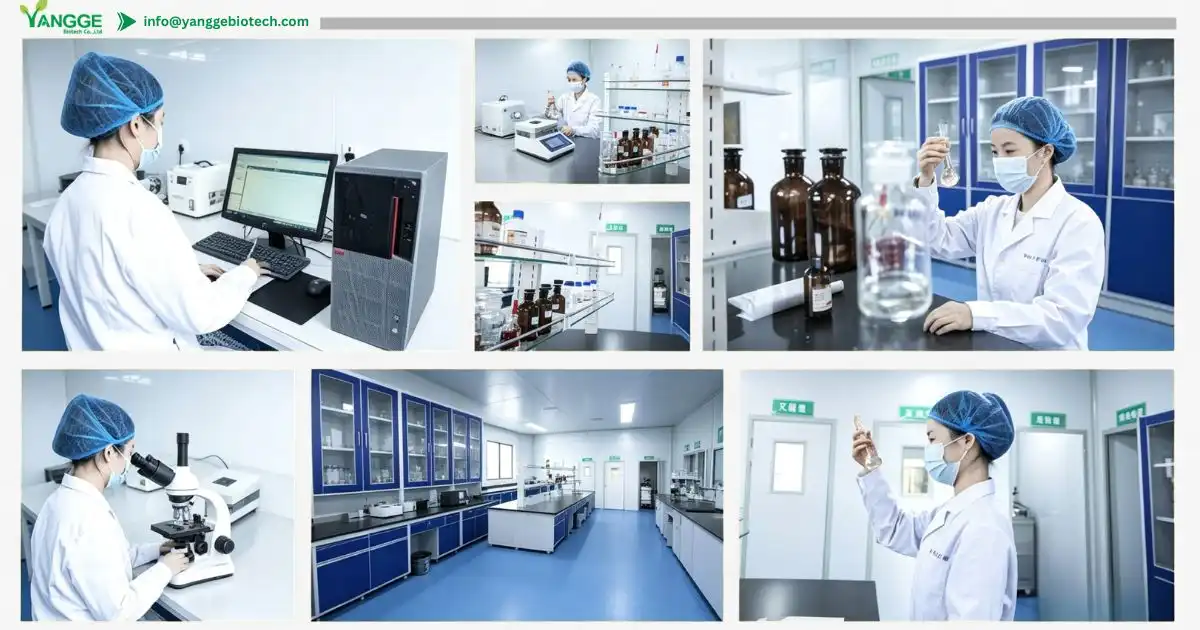
R&D Capacity
Yangge Biotech has a professional research and development team dedicated to botanical extracts and nutraceutical ingredients. Our R&D department continuously optimizes extraction techniques, purification processes, formulation development, and quality control methods. Equipped with advanced analytical instruments and experienced scientists, we are capable of developing customized berberine specifications and providing technical support for new product development, helping customers create innovative and competitive health products.
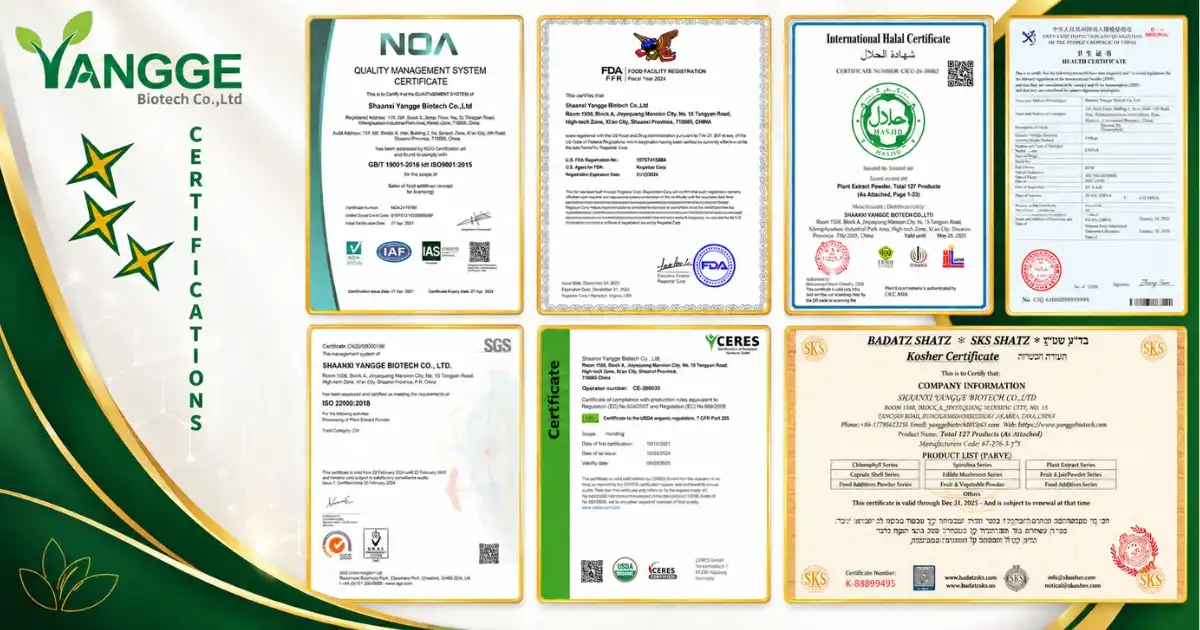
Certificates
Yangge Biotech operates under internationally recognized quality management systems to ensure consistent product quality and safety. Depending on customer requirements and market regulations, our products can be supplied with certifications such as GMP, ISO, HACCP, Halal, Kosher, and other relevant documentation. These certifications demonstrate our commitment to manufacturing excellence, regulatory compliance, and global market acceptance.
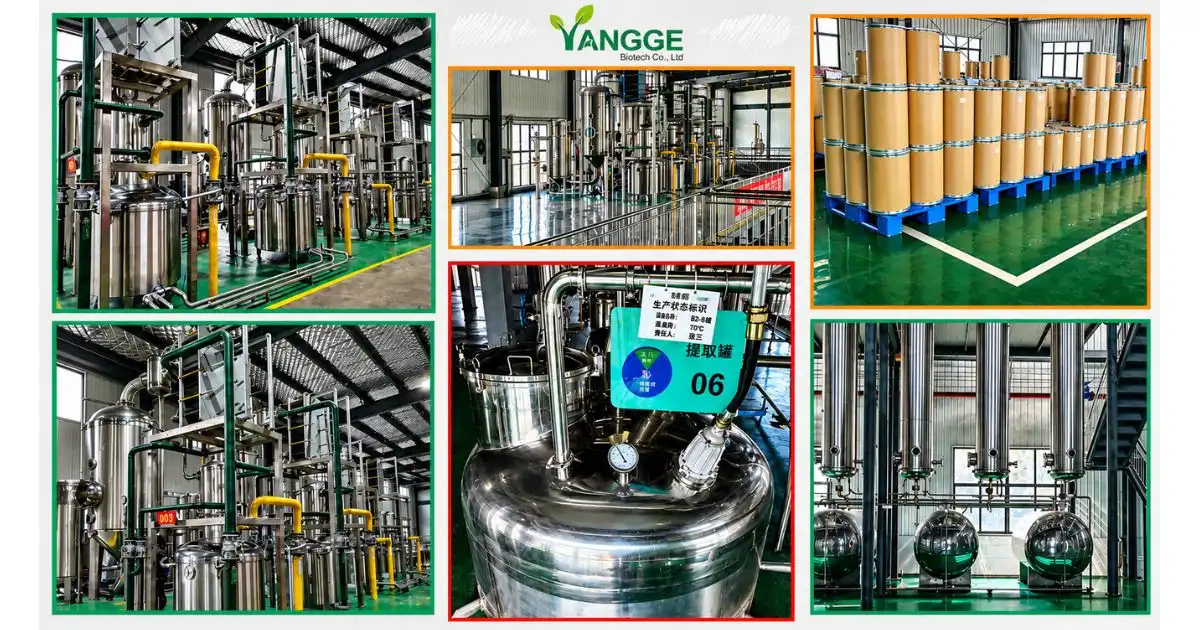
OEM Packing
Yangge Biotech offers comprehensive OEM and private-label packaging services tailored to customer needs. We provide bulk packaging for industrial users as well as customized retail packaging options, including bottles, pouches, cartons, labels, and branded packaging solutions. Our experienced team assists with package design, labeling, and product customization, enabling customers to launch their own berberine products efficiently and professionally.
Why Choose Yangge Biotech?
Yangge Biotech is a trusted supplier of premium botanical extracts with years of manufacturing experience. We offer high-purity Blue Spirulina Powder, strict quality control throughout production, third-party testing for every batch, competitive pricing, stable global supply, customized product specifications, professional technical support, fast delivery, and reliable OEM services. Our commitment to quality, innovation, and customer satisfaction makes us a dependable partner for businesses worldwide.
Conclusion
Blue Spirulina powder and phycocyanin extract are both bright, natural blues that come from the same algae, but they are not the same in terms of quantity, stability, or the best use. With its patented extraction, high purity color value, fishy-odor removal, and organic certification, Yangge's Blue Spirulina E18 is a reliable and well-documented choice for consistent blue formulations. It is used by supplement and beverage brands.
FAQs
Q1: Is Blue Spirulina E18 water-soluble for beverage use?
Yes, it is formulated for clean dissolution in cold and gently warmed beverage bases without leaving sediment.
Q2: Does Blue Spirulina E18 have a fishy odor?
No, it undergoes dedicated processing specifically to remove the marine off-notes common in untreated spirulina extracts.
Q3: Which is better for supplements, Blue Spirulina powder or phycocyanin extract?
Phycocyanin extract typically offers higher protein concentration per dose, making it preferable for supplement formulations.
Q4: Is Blue Spirulina E18 heat stable?
It performs best in cold or gently warmed applications; prolonged high heat can affect color retention.
Q5: Is Blue Spirulina E18 available in organic-certified grade?
Yes, organic certification is available to meet clean-label and certified-organic formulation requirements.
Formulating Your Next Blue Product with Yangge
If your brand is ready to move from concept to production, Yangge Biotech Co., Ltd. is ready to support your beverage, supplement, or natural colorant program with Blue Spirulina E18 built on patented extraction technology, high purity color value, dedicated fishy-odor removal, and organic certification. Backed by ISO, HACCP, Kosher, and Halal certification, GMP-standard production, and a dedicated R&D team available around the clock, Yangge delivers the consistency your recipe needs from first sample to full wholesale order. Whether you're developing a blue latte menu item, a phycocyanin-based sports supplement, or a full natural colorant program for multiple clients, our team is ready to help. Request your free sample, certificate of analysis, or specification sheet today by contacting us at info@yanggebiotech.com — let's bring your blue product vision to life.
References
1. Johnson, M. & Alvarez, R. — The Rise of Blue Superfoods: A Review of Blue Spirulina Applications
2. Smith, A. & Park, J. — Comparative Purity and Color Value Analysis of Phycocyanin Extracts
3. Chen, L. & Bergström, K. — Consumer Trends in Natural Blue Food Colorants
4. Brown, K. & Osei, D. — Formulation Techniques for Phycocyanin in Modern Beverage Design
5. Taylor, R. & Nakamura, S. — Thermal Stability of Spirulina-Derived Pigments in Food Systems
6. Ferreira, P. & Lindgren, A. — Extraction Technology and Quality Control in Natural Blue Pigment Production

Send Inquiry
Related Industry Knowledge
Recommended Products
_1732787363962.webp "Fish Collagen Peptide Powder")