The Natural Green Colorant and Its Role in Modern Applications of Chlorophyll (E140)
What is Chlorophyll (E140)?
Chlorophyll is a green pigment found in plants, algae, and cyanobacteria. It is essential for photosynthesis the process by which plants convert sunlight into energy.
When used as a food additive, chlorophyll is labeled as E140, a natural colorant extracted primarily from leafy green plants such as:
Spinach
Alfalfa
Nettle
Grass varieties
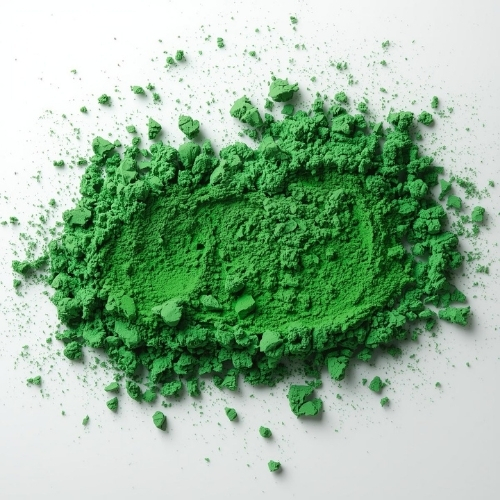
There are two main types of chlorophyll used in food:
Chlorophyll a is a specific form of chlorophyll that serves as the primary pigment involved in photosynthesis. It is found in all organisms that perform oxygen-evolving photosynthesis, including plants, algae, and cyanobacteria.
While there are several types of chlorophyll (such as b, c, and d), Chlorophyll a is unique because it acts as the "master" pigment, essential for the conversion of solar energy into chemical energy.
Chlorophyll b is an accessory photosynthetic pigment found primarily in land plants and green algae. While it is similar to chlorophyll a, its specific role is to broaden the spectrum of light a plant can use for energy.
Think of chlorophyll $b$ as a specialized solar panel that catches the "leftover" light waves that chlorophyll $a$ can't efficiently absorb.
These forms are often processed into more stable derivatives for commercial use.
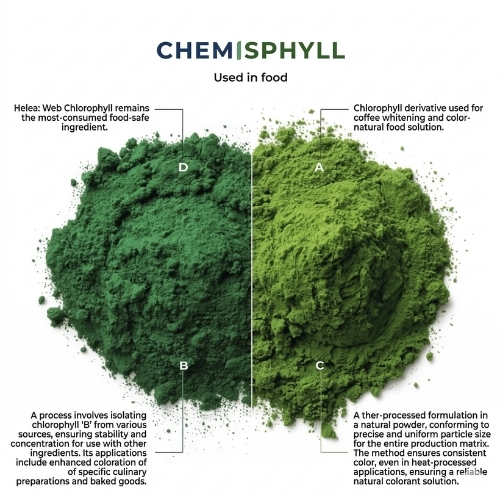
Applications of Chlorophyll (E140)
Chlorophyll (E140) is widely used across industries:
1. Food and Beverage Industry
Green candies and chewing gum
Ice cream and desserts
Sauces and soups
Beverages like green juices and herbal drinks
2. Cosmetics
Natural green tint in skincare products
Deodorizing properties in creams and lotions
3. Pharmaceuticals
Used in supplements for detoxification
Incorporated in wound healing products
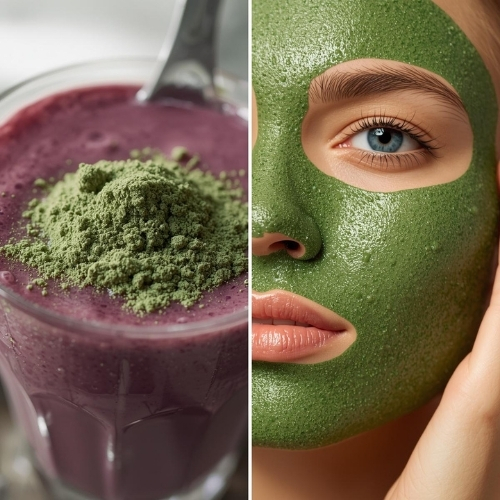
Health Benefits of Chlorophyll
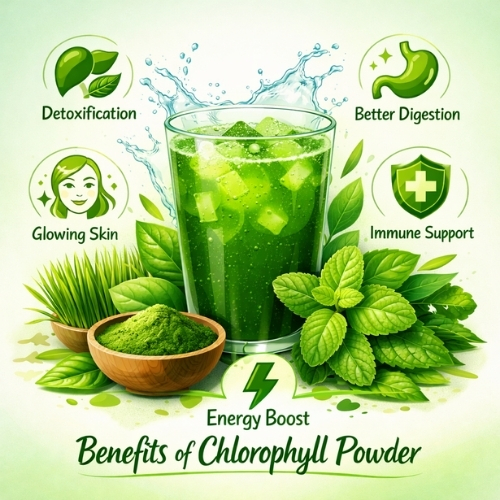
Although primarily used as a colorant, chlorophyll may provide additional benefits:
1. Detoxification Support
Chlorophyll is believed to help bind toxins and support liver detox processes.
2. Antioxidant Properties
It helps neutralize free radicals, potentially reducing oxidative stress.
3. Odor Control
Chlorophyll has natural deodorizing effects, useful in both internal and external applications.
4. Skin Health
Some studies suggest chlorophyll may improve skin healing and reduce acne.
Challenges and Limitations
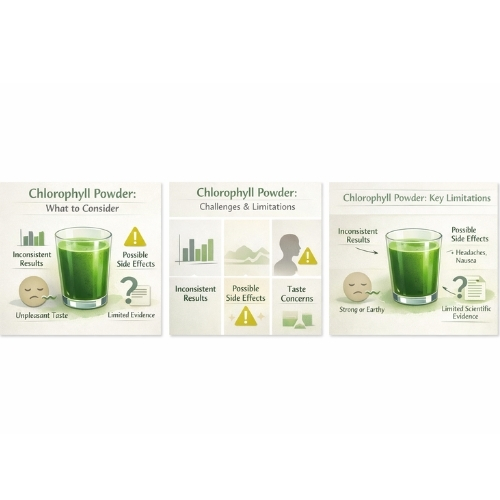
Despite its benefits, chlorophyll (E140) has certain limitations:
1. Stability Issues
Sensitive to heat and light
Can lose its green color and turn brown
2. pH Sensitivity
Acidic environments degrade chlorophyll quickly
3. Shelf Life Concerns
Requires proper storage conditions to maintain quality
Solutions for Using Chlorophyll (E140)
To maximize the effectiveness of chlorophyll in products, here are practical solutions:
1. Use Stabilized Forms
Switch to chlorophyllin (E141) for better stability in processed foods.
2. Control Processing Conditions
Avoid excessive heat
Minimize exposure to light
Maintain neutral pH where possible
3. Encapsulation Technology
Encapsulation helps protect chlorophyll from environmental factors and improves shelf life.
4. Proper Packaging
Use UV-protected containers to prevent degradation.
Safety and Regulations of Chlorophyll (E140)
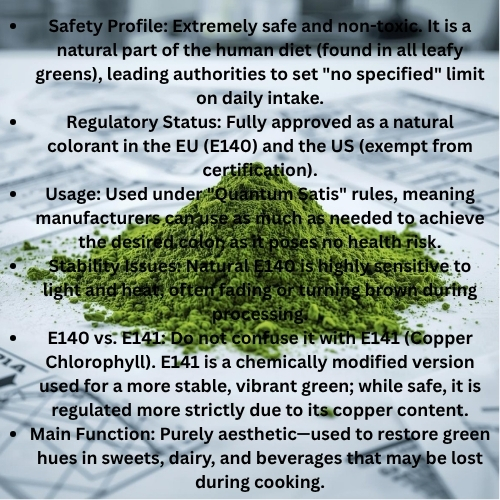
Chlorophyll (E140) is generally recognized as safe (GRAS) and approved by major regulatory bodies such as:
European Food Safety Authority (EFSA)
U.S. Food and Drug Administration (FDA)
However, like any additive, it should be used within recommended limits.
Natural vs Synthetic Debate
Chlorophyll stands out as a natural alternative to synthetic green dyes. As consumers shift toward clean-label products, E140 is becoming increasingly popular.
Advantages over synthetic dyes:
Plant-based origin
Better consumer perception
Potential added health benefits
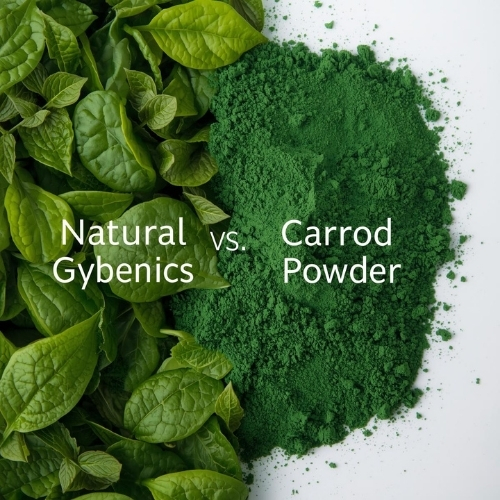
Growing demand for natural, plant-based additives Future Trends
The demand for natural food colorants is expected to grow significantly. Chlorophyll (E140) will likely play a key role in:
Plant-based food innovation
Organic product development
Functional beverages
Advancements in food technology may further improve its stability and usability.
Conclusion
Chlorophyll (E140) is more than just a green pigment it is a versatile, natural ingredient with applications in food, cosmetics, and health industries. While it presents some challenges in terms of stability, modern solutions such as chlorophyllin derivatives, encapsulation, and controlled processing make it highly usable in commercial products.
As consumers continue to prioritize natural and sustainable ingredients, chlorophyll (E140) is poised to remain an important component in the future of clean-label products. Its combination of visual appeal and potential health benefits makes it a valuable asset in both traditional and innovative formulations.
In summary, chlorophyll (E140) represents a perfect blend of nature and science offering not just color, but also functionality and promise for a greener future.
Partner with Yangge for chlorophyll (E140)
With our excellent chlorophyll (E140), Yangge Biotech Co., Ltd. is prepared to assist you in developing cardiovascular health products. powder formulations. Our USP-grade, 100% water-soluble powder offers concentrated SCOBY advantages in a stable, brown-yellow powder structure while retaining unique kombucha flavor characteristics. Our goods satisfy a variety of market demands and guarantee 12-month shelf stability thanks to extensive certifications including Kosher, Halal, and non-GMO status.
Our experienced team provides technical support throughout your product development journey, from initial formulation guidance to scale-up assistance. With 1-ton inventory availability and 25KG packaging options, we accommodate both prototype development and commercial production needs. Contact our specialists at info@yanggebiotech.com to discuss your specific requirements and discover why leading manufacturers choose Yangge as their trusted kombucha powder supplier for innovative health product solutions.
FAQ
Q: Can we get some samples to test before purchasing?
A: Of course, we can provide free samples of 20 to 100 grams, but the shipping cost is at the customer's expense. The shipping cost can be deducted from the next order, or the samples can be sent through your courier account.
Q: Do your products have relevant certifications?
A: Yes, our products are certified for HALAL, ISO, HACCP, Kosher, and other certifications.
Q: What is the minimum order quantity (MOQ)?
A: Small batches of samples can be customized according to your requirements.
Q: Do you offer OEM and ODM services? Can the formula be customized based on our own?
A: Of course, we provide ODM and OEM services to many customers. Our product range includes softgels, capsules, tablets, sachets, granules, and private label services. Simply contact us and let us know your requirements. Our experienced R&D team can also develop new products with specific formulas.
Please contact us to design your own branded products.
Q: How do you handle quality complaints?
A: First, we have a comprehensive quality control SOP. We provide authoritative third-party inspection reports for almost all products before shipment to minimize the possibility of quality issues. Second, we have a comprehensive return and exchange procedure. If there is a genuine quality dispute, we will strictly follow the SOP.
Q: How do you ship? How long does delivery take?
A: For small orders, we typically use DHL, UPS, EMS, FedEx, or TNT. Delivery typically takes 3-7 days. We also offer air and sea freight services. We have a strong freight forwarding team and can provide you with a one-stop service, including DDP and DDU.
Q: What are your payment terms?
A: 100% prepayment, payable by T/T, Western Union, MoneyGram, or PayPal.
Q: What is the shelf life of your products?
A: 2 years with proper storage.
Q: Is the packaging environmentally friendly?
A: We attach great importance to environmental protection and are constantly improving our product packaging. Some products are packaged in recyclable paper. Packaging materials are carefully selected to ensure product safety during transportation and storage, and to minimize environmental impact. We are committed to achieving a balance between environmental friendliness and practicality in our product packaging, and to contributing to sustainable development.

.webp "Chlorella (Broken Cell Wall)")