Lion's Mane Fruiting Body vs Mycelium Extract Powder
Before deciding on a Lion's Mane provider, biohackers, functional coffee brands, and neuroprotective supplement formulators often ask about the fruiting body vs. mycelium argument. This is because it directly affects how well a finished product will meet a label promise. Yangge Biotech's Lion's Mane extract powder gives a scientific answer to that question instead of just marketing claims. Each batch is checked for actual erinacine content instead of just assumed potency, grown and processed in a way that follows organic standards, and can come from fruiting body, mycelium, or a mix of the two, depending on the compound profile that a formulation needs. Figuring out the difference between fruiting body and mycelium Lion's Mane extract powder is important for Silicon Valley biohacker brands that want to measure nootropic performance, functional coffee companies that want to balance flavor with effectiveness, and neuroprotective supplement companies that need proof that can stand up to clinical scrutiny.
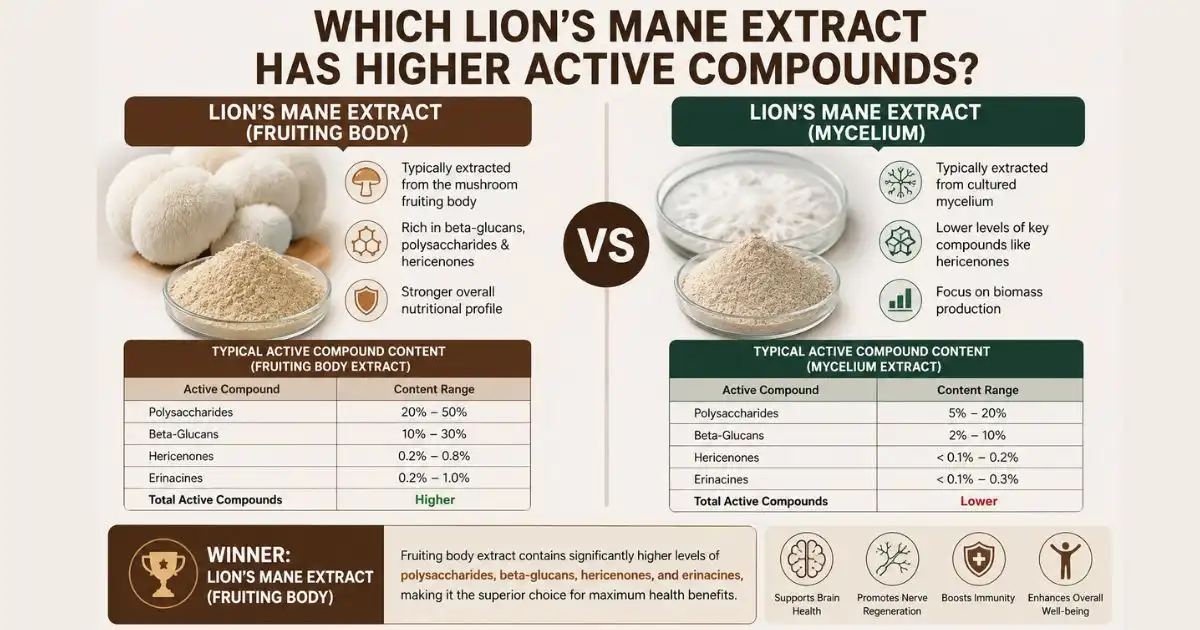
Which lion's mane extract has higher active compounds?
Hericenones Concentrate in the Fruiting Body
Hericenones are one of the two main groups of bioactive compounds linked to Lion's Mane's nerve growth factor action. They are mostly found in the fruiting body of Hericium erinaceus, not in the mycelium or the grain medium that mycelium is often grown on. This is a very important difference for people who are making nootropic or cognitive-support goods, because an extract of mycelium alone might not have any hericenones at all, even if the label says it does. If someone wants to buy Lion's Mane extract powder for brain benefits, they need to make sure that the raw material came from the right part of the mushroom, not just the species name on the certificate of analysis.
Erinacines Are Concentrated Differently and Require Verification
Erinacines are the second main group of compounds linked to Lion's Mane's neuroprotective and NGF-stimulating properties. They are usually found in mycelium rather than fruiting body tissue, which makes it hard for brands that want to use fruiting-body-based extracts because they are cleaner and don't contain any grains. This is why Yangge Biotech tests its Lion's Mane extract powder directly for erinacine content instead of assuming a fixed value based on which part of the plant was used. This way, formulators can get accurate information about how effective their chosen material is, whether it comes from the fruiting body, the mycelium, or a mixed extraction meant to include both types of compounds.
Why Direct Lab Testing Beats Assumed Potency
A lot of companies that sell Lion's Mane extract powder base their ads on guesses about the fruiting body or mycelium composition instead of testing each batch individually. This means that formulators don't know how much erinacine or hericenone is actually in the powder. By testing each batch directly for these compounds, as well as polysaccharide and beta-glucan content, Yangge provides neuroprotective supplement brands and biohacker-focused companies with the kind of proof that backs up real potency claims instead of category-level generalizations. This is very important when a product's marketing depends on measurable Lion's Mane bioactivity.
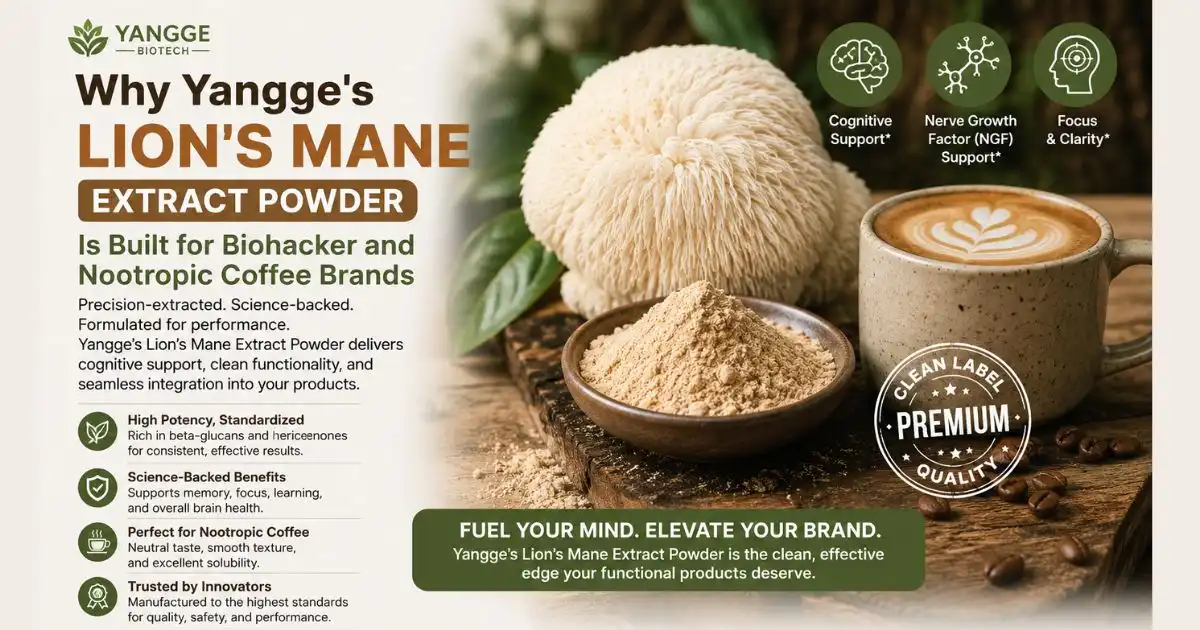
Why Yangge's Lion's Mane Extract Powder Is Built for Biohacker and Nootropic Coffee Brands
Verified Erinacine Content as a Core Differentiator
Because the amount of erinacine in plants changes a lot depending on how they are grown, what they grow on, and how they are extracted, Yangge Biotech tests its Lion's Mane extract powder batch by batch to make sure it has the right amount of erinacine. They don't just guess at the species level like most companies do. Because erinacines are one of the most commonly linked compounds in Lion's Mane research to nerve growth factor stimulation and long-term cognitive support, this gives biohacker brands and neuroprotective supplement companies the specific data point their research and marketing teams need to back up their nootropic claims.
Organic Certification for Clean-Label Positioning
More and more Silicon Valley biohacker audiences and high-end nootropic buyers expect organic-certified raw materials as standard, not as an extra. To meet this demand, Yangge's Lion's Mane extract powder is grown and processed in a way that is in line with organic standards. With non-irradiation and allergen-free processing, this certification profile lets brands market their Lion's Mane extract powder under a clean label without having to answer questions about where the powder comes from. This is especially important for supplement companies that sell to people who are careful about what they put in their products and do a lot of research.
Flavor Masking Capability for Functional Coffee Formats
Functional coffee brands have a unique recipe challenge that supplement companies that focus on capsules don't have to deal with: the Lion's Mane extract has to blend in with the coffee's current flavor profile instead of adding an earthy, mushroom-forward taste that makes the drink less enjoyable. Yangge's extraction method is meant to tone down the harsh, bitter notes that come with lower-quality Lion's Mane powders. This gives functional coffee formulators a Lion's Mane extract powder that blends well with roasted coffee flavors without the need for heavy masking agents or sweeteners that take away from the product's clean-label positioning.
|
Yangge Lion's Mane Extract Powder Specification |
Detail |
|
Botanical name |
Hericium erinaceus |
|
Part used |
Fruiting body, mycelium, or blended, by specification |
|
Available potency |
10%–50% polysaccharides |
|
Appearance |
Yellow-brown fine powder |
|
Processing |
Non-irradiated, allergen-free |
|
Certifications |
ISO, HACCP, Kosher, Halal; organic-compliant sourcing available |
|
Packaging |
1 kg aluminum foil bag or 25 kg fibre drum |
|
Active compound testing |
Batch-verified erinacine and polysaccharide content |
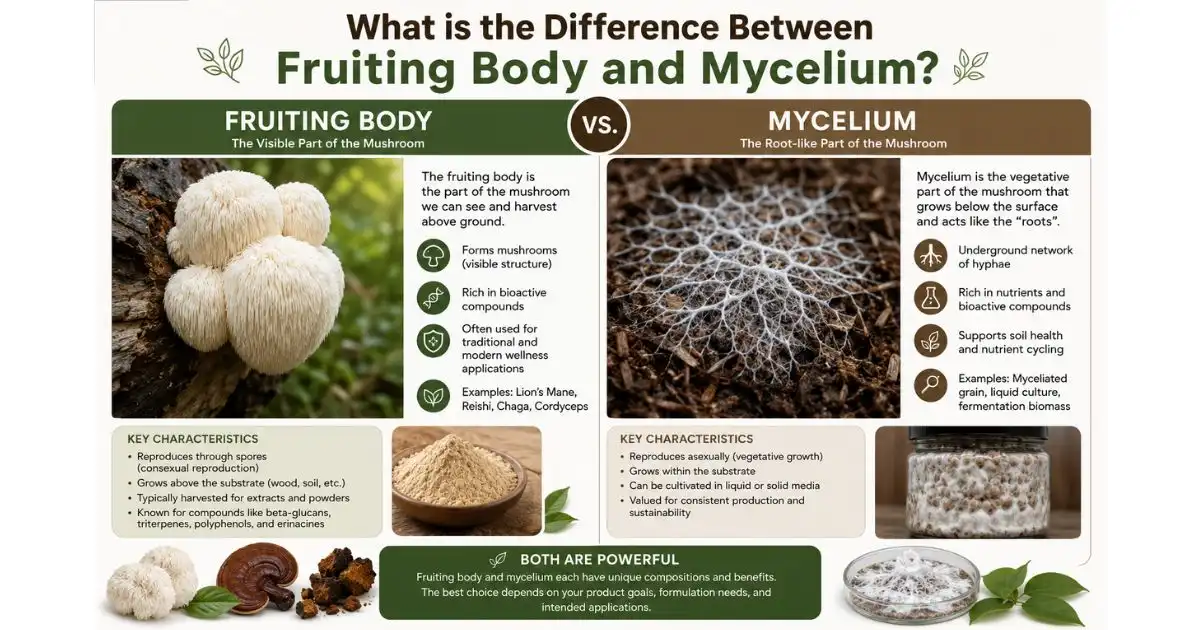
What is the difference between fruiting body and mycelium?
Structural and Biological Differences
The common name for this type of mushroom is "Lion's Mane," because it has white spines that hang down over its body. The mycelium, on the other hand, is the mushroom's root-like network of fungal threads that grows underground and is usually grown on a grain substrate for commercial production. These two structures are biologically and chemically different. This means that a Lion's Mane extract powder made from one will not automatically have the same compound profile as an extract made from the other, even though they both come from the same organism and have the same species name on the label.
Cultivation and Production Differences
For fruiting body extracts, the mushroom has to be fully grown before it can be harvested. This takes a lot longer and needs more controlled weather conditions than mycelium growth, which can be done quickly on grain base in a fermentation-style setting. There is a direct cost and supply chain difference between the two types of production: fruiting body material takes more time and resources to make, while mycelium-on-grain products can be made faster and for less money. This is one reason why price alone is not a good indicator of a Lion's Mane extract powder's quality or compound content.
Why Labeling Transparency Matters for Buyers
Mycelium-on-grain products can legally be labeled as "Lion's Mane" without making it clear what part of the plant was used or how much grain was used. So, procurement teams looking for a Lion's Mane extract powder should ask for clear documentation on the part used, the extraction method, and the starch or grain content instead of just relying on the species name. Yangge directly addresses this issue by stating the part-used on its certificates of analysis and providing fruiting body, mycelium, or blended material, depending on the formulator's desired compound profile. This clears up the confusion that has become a common issue in the Lion's Mane supplement category as a whole.
How do fruiting body and mycelium extracts compare?
Compound Profile Comparison
Fruiting body extracts usually have higher amounts of hericenones and beta-glucans, which are polysaccharides that have immune-modulating properties. On the other hand, mycelium extracts usually have more erinacine, especially when they are grown in conditions that are designed to increase erinacine expression. It's not always possible to tell which source is "better" on its own; the right choice depends on the compound family that the formulation is based on. That's why Yangge can supply fruiting body, mycelium, or blended Lion's Mane extract powder, so formulators don't have to stick to a single source type.
Purity and Substrate Considerations
One of the most consistent quality issues in the Lion's Mane area is mycelium goods that still have a lot of the grain base in them. This means that the mushroom content is diluted with starch that doesn't add much biological value. Fruiting body extracts don't have this problem at all because they aren't made from grains. This is one reason why high-end neuroprotective supplement brands often ask for fruiting-body-derived Lion's Mane extract powder when starch dilution and ingredient purity are the most important issues in the formulation.
Functional Performance in Finished Products
In practical terms, fruiting body extracts work best in brain- and memory-boosting products that focus on hericenone activity and beta-glucan-driven immune support. On the other hand, mycelium-derived material may be better for products that focus on erinacine-related benefits, as long as the grain content and erinacine levels are checked properly. This is why Yangge tells formulators to be clear about the product they want to make and the use they want it for before choosing a Lion's Mane extract powder grade. They shouldn't just assume that any source will give them the results they want.
|
Comparison Point |
Fruiting Body Extract |
Mycelium Extract |
|
Hericenone content |
Higher; primary natural source |
Minimal to absent |
|
Erinacine content |
Variable; requires batch testing |
Typically higher, especially under specialized cultivation |
|
Grain substrate content |
None |
Present unless substrate-separated |
|
Beta-glucan / polysaccharide content |
Generally higher |
Lower, variable by cultivation method |
|
Typical formulation use |
Cognitive support, immune formulas, functional coffee |
Erinacine-targeted neuroprotective formulas |
Why choose lion's mane fruiting body over mycelium?
Avoiding Grain Dilution in Finished Formulations
For biohacker and nootropic brands that care about ingredient purity, fruiting body Lion's Mane extract powder has a clear benefit: there is no grain substrate to dilute the concentration of the active compound. This means that every gram of finished powder contains real mushroom material instead of partially inert starch that was left over from growing mycelium on grains. More and more knowledgeable supplement buyers are paying close attention to this difference in purity. They often ask sellers directly if a Lion's Mane extract powder comes from growing bodies to avoid this problem of dilution.
Higher Hericenone Availability for Cognitive Claims
Hericenones are mostly found in the fruiting body. This means that companies that want to make products that help with brain health or nerve health can only get material from the fruiting body. No matter how it is processed, mycelium extracts can't deliver the same amount of hericenones. Yangge's fruiting body Lion's Mane extract powder is designed to be used in this way. It gives neuroprotective supplement makers a raw material whose chemical profile matches the study that is most often used in Lion's Mane marketing for brain health.
Consumer and Regulatory Trust Considerations
Fruiting body sourcing has also become a trust signal in and of itself, as more knowledgeable customers and stricter international markets connect mycelium-on-grain products with cheaper, lower-quality production methods. This is because the industry has been closely watching mislabeled mushroom supplements for several years. Brands can avoid this scrutiny by using a fruiting body Lion's Mane extract powder that comes with clear part-used paperwork. This way, they can market their product with a source story that stands up to both customer research and tighter retail or regulatory review.
What factors affect lion's mane extract quality?
Extraction Ratio and Method
The way the compounds in Lion's Mane are extracted whether it's hot water extraction, dual extraction using both water and alcohol, or more complex multi-stage processes—hugely impacts which compounds are concentrated in the final Lion's Mane extract powder. This is because polysaccharides that dissolve in water and terpenoids that dissolve in alcohol need different extraction conditions to be captured effectively. When formulators are looking at different suppliers, they should ask which extraction method was used and how well it fits with the compound profile they are trying to achieve. If the extraction method doesn't match, the finished extract might technically match what the label says it does but won't work as well as expected.
Polysaccharide and Beta-Glucan Standardization
Yangge's Lion's Mane extract powder comes in a range of 10% to 50% polysaccharides. This gives formulators the freedom to choose a concentration that fits their target dose and budget, while still making sure that all batches are the same, which has been proven by lab tests. Standardization is very important for functional coffee and stress-management supplement brands because they need to keep the same level of potency across production runs to keep customers happy and avoid batch variations that can make people not trust the functional beverage or supplement line enough to buy from them again.
Heavy Metal and Contaminant Screening
Heavy metal screening is a must for any Lion's Mane extract powder that is meant to protect neurons or be used as a daily supplement. This is because mushrooms are known to bioaccumulate heavy metals from the material they grow on. In addition to ISO, HACCP, Kosher, and Halal certification, Yangge's Lion's Mane extract powder goes through contaminant testing. This gives procurement teams the proof they need to make sure that the product's claims of potency and purity are backed up by a rigorous safety profile. This is especially important for medical-channel and premium supplement buyers who have to follow strict compliance review.
Flavor Profile and Sensory Quality
In the Lion's Mane area, taste quality has become a real difference, especially for functional coffee and beverage uses where a sharp, earthy flavor can make people not want to buy it, no matter how strong the underlying strength data looks on paper. Yangge's method of processing is meant to reduce the bitter and mushroom-forward notes that lower-grade Lion's Mane extract powders usually have. This gives people who make functional drinks a raw material that works on both the chemical content and taste experience fronts at the same time.
Formulating Lion's Mane Into Cognitive, Stress, and Functional Coffee Products
Neuroprotective Supplement Applications
Neuroprotective supplement makers usually use a fruiting body-forward or mixed Lion's Mane extract powder that has been standardized to a certain polysaccharide percentage. They often mix this with other nootropic herbs to make a product that works on more than one level to support brain health. Yangge's Lion's Mane extract powder comes with verified erinacine and polysaccharide data. This gives formulators the proof they need to back up claims about nerve growth factor support and long-term cognitive resilience, instead of relying on general mushroom-category marketing language.
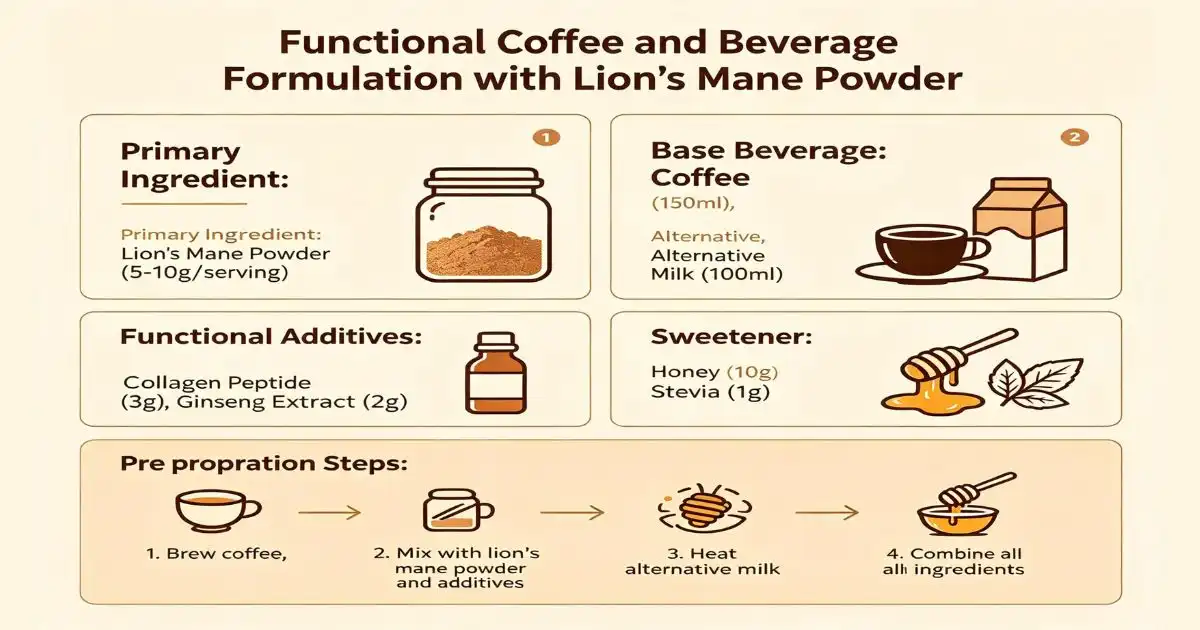
Functional Coffee and Beverage Formulation
To meet the needs of functional coffee brands, Lion's Mane extract powder should dissolve easily, mix well with hot or cold brew, and not overpower the coffee's natural flavor. These are all signs of a well-processed, flavor-optimized extract, not a raw, unrefined mushroom powder. Yangge's method for extracting and processing is designed to meet the needs of these beverage formulations. This makes its Lion's Mane extract powder a useful raw material for companies making mushroom coffee, functional lattes, or adaptogenic beverage lines for the growing biohacker and wellness-coffee consumer segment.
Stress Management and Adaptogenic Blends
More and more stress-management supplement brands combine Lion's Mane with other adaptogenic botanicals, using its known effects on mood balance and nervous system support along with its cognitive benefits. This makes combination formulas that appeal to people who want a product that helps with a lot of different functions instead of just one. Yangge Biotech Co., Ltd. specializes in natural plant extracts for use in food and drinks, dietary supplements, and superfoods. The company is ISO, HACCP, Kosher, and Halal certified, and has dedicated R&D and production teams as well as a 24-hour online service to help brands make these kinds of multi-ingredient adaptogenic formulations on an international scale.
A Supplier Built for Long-Term, Multi-Format Sourcing
Yangge uses a sustainable, farm-to-table, traceable sourcing model for more than just one ingredient transaction. It exports to markets on multiple continents and strictly controls the quality of all of its botanical, herb, vitamin, and mineral ingredients according to GMP standards. This creates a single, regularly checked source that can support a Lion's Mane extract powder product line today and add related functional ingredients as a brand's formulation needs change. This is good for biohacker brands, functional coffee companies, and neuroprotective supplement makers.
|
Application |
Recommended Format |
Formulation Note |
|
Neuroprotective / cognitive-support capsules |
Fruiting body or blended, 30%–50% polysaccharides |
Standardized for hericenone and verified erinacine content |
|
Functional mushroom coffee and lattes |
Fine powder, flavor-optimized extraction |
Dissolves cleanly; minimal bitterness for beverage integration |
|
Stress-management / adaptogenic blends |
10%–30% polysaccharides, blended with other botanicals |
Balanced potency for multi-ingredient formulas |
Conclusion
Choosing between fruiting body and mycelium Lion's Mane extract powder ultimately comes down to which compounds a formulation depends on and how rigorously those compounds are verified. Yangge's approach, batch-tested erinacine content, organic-compliant sourcing, and flavor-optimized processing, gives biohacker, functional coffee, and neuroprotective supplement brands a Lion's Mane raw material backed by documentation rather than assumption, suitable for building credible, clinically informed cognitive and stress-support products.
FAQ
Q1: Does Yangge's Lion's Mane extract powder use fruiting body or mycelium?
Yangge supplies fruiting body, mycelium, and blended Lion's Mane extract powder, allowing formulators to match the compound profile to their specific product goals.
Q2: Is Yangge's Lion's Mane extract powder tested for erinacine content?
Yes. Each batch is tested for erinacine and polysaccharide levels rather than relying on assumed potency based on plant part alone.
Q3: What polysaccharide range is available in Yangge's Lion's Mane extract powder?
Yangge offers a 10% to 50% polysaccharide range, giving formulators flexibility for different dosing and application needs.
Q4: Is Yangge's Lion's Mane extract powder suitable for functional coffee applications?
Yes. It is processed to minimize bitterness and dissolve cleanly, making it well suited for mushroom coffee and functional beverage formats.
Q5: What certifications does Yangge's Lion's Mane extract powder carry?
It carries ISO, HACCP, Kosher, and Halal certification, is non-irradiated and allergen-free, with organic-compliant sourcing available.
Ready to Source a Lion's Mane Extract Backed by Real Data?
If your brand is building the next cognitive-support supplement, functional coffee line, or stress-management formula, the fruiting body versus mycelium decision shouldn't be left to guesswork. Yangge delivers Lion's Mane extract powder with batch-verified erinacine content, organic-compliant sourcing, and a flavor-optimized profile built for beverage and capsule formats alike, giving biohacker, nootropic, and neuroprotective brands the documentation needed to make defensible claims. Whether you need fruiting body material for hericenone-driven formulas or a blended extract for broader compound coverage, Yangge's technical team can help match specification to application. Contact us or email us at info@yanggebiotech.com to request samples, certificates of analysis, or a formulation consultation, and build your next Lion's Mane product on an ingredient that holds up under real scientific scrutiny.
References
1. Mori, K., Inatomi, S., Ouchi, K., Azumi, Y., and Tuchida, T. "Improving Effects of the Mushroom Yamabushitake (Hericium erinaceus) on Mild Cognitive Impairment: A Double-Blind Placebo-Controlled Clinical Trial." Phytotherapy Research, vol. 23, no. 3, 2009, pp. 367–372.
2. Lai, P. L., Naidu, M., Sabaratnam, V., et al. "Neurotrophic Properties of the Lion's Mane Medicinal Mushroom, Hericium erinaceus (Higher Basidiomycetes) from Malaysia." International Journal of Medicinal Mushrooms, vol. 15, no. 6, 2013, pp. 539–554.
3. Kawagishi, H., Ando, M., Sakamoto, H., et al. "Hericenones C, D and E, Stimulators of Nerve Growth Factor (NGF)-Synthesis, from the Mushroom Hericium erinaceus." Tetrahedron Letters, vol. 32, no. 35, 1991, pp. 4561–4564.
4. Lee, K. F., Chen, J. H., Teng, C. C., et al. "Protective Effects of Hericium erinaceus Mycelium and Its Isolated Erinacine A against Ischemia-Injury-Induced Neuronal Cell Death." International Journal of Molecular Sciences, vol. 15, no. 9, 2014, pp. 15073–15089.
5. Friedman, M. "Chemistry, Nutrition, and Health-Promoting Properties of Hericium erinaceus (Lion's Mane) Mushroom Fruiting Bodies and Mycelia and Their Bioactive Compounds." Journal of Agricultural and Food Chemistry, vol. 63, no. 32, 2015, pp. 7108–7123.
6. Docherty, S., Doughty, F. L., and Smith, E. F. "The Acute and Chronic Effects of Lion's Mane Mushroom Supplementation on Cognitive Function, Stress and Mood in Young Adults." Nutrients, vol. 15, no. 22, 2023, article 4842.

Send Inquiry
Related Industry Knowledge
Recommended Products