How Does Activated Charcoal Differ from Food Grade Vegetable Carbon?
Businesses that want to make chocolate, candy, or ingredients for pet food often end up with two very different types of black: activated charcoal and food grade vegetable carbon. People sometimes get them mixed up because they look alike, but only one of them is built and approved for food use. Yangge Biotech's vegetable carbon, which is sold as e153 food coloring, was created to give food manufacturers very high coloring strength, very low PAHs (polycyclic aromatic hydrocarbons) residue, and great dispersion stability across a wide range of demanding product matrices, from baked goods to pet food. This piece talks about the differences between food grade vegetable carbon and activated charcoal, why officials handle them in such different ways, and when the food-grade form is truly needed.
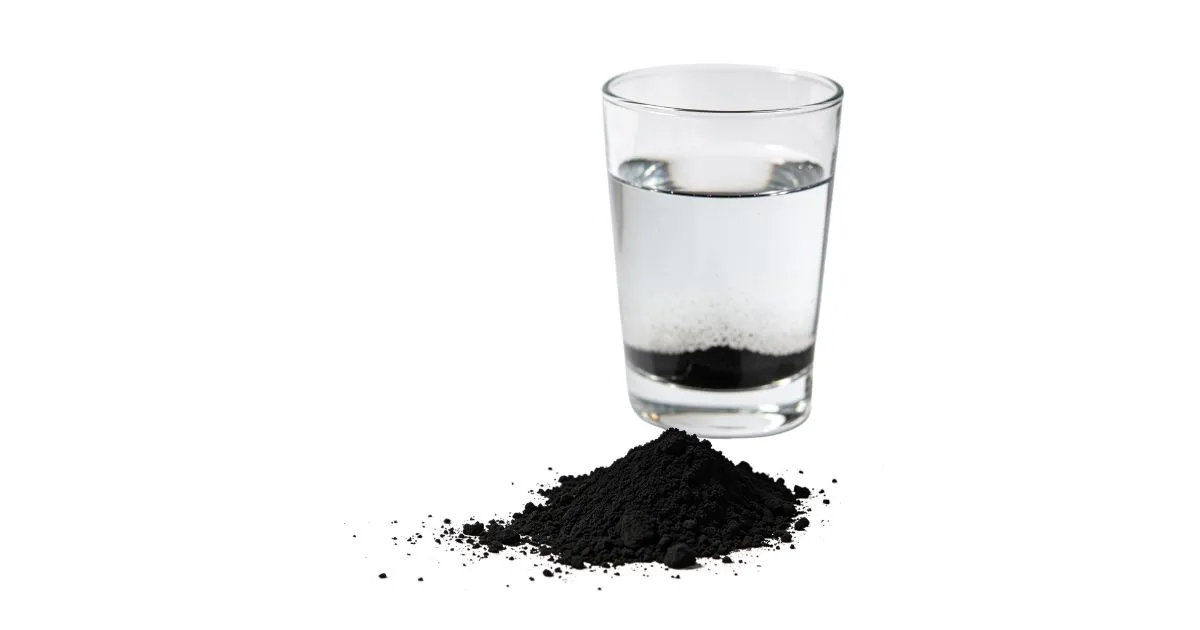
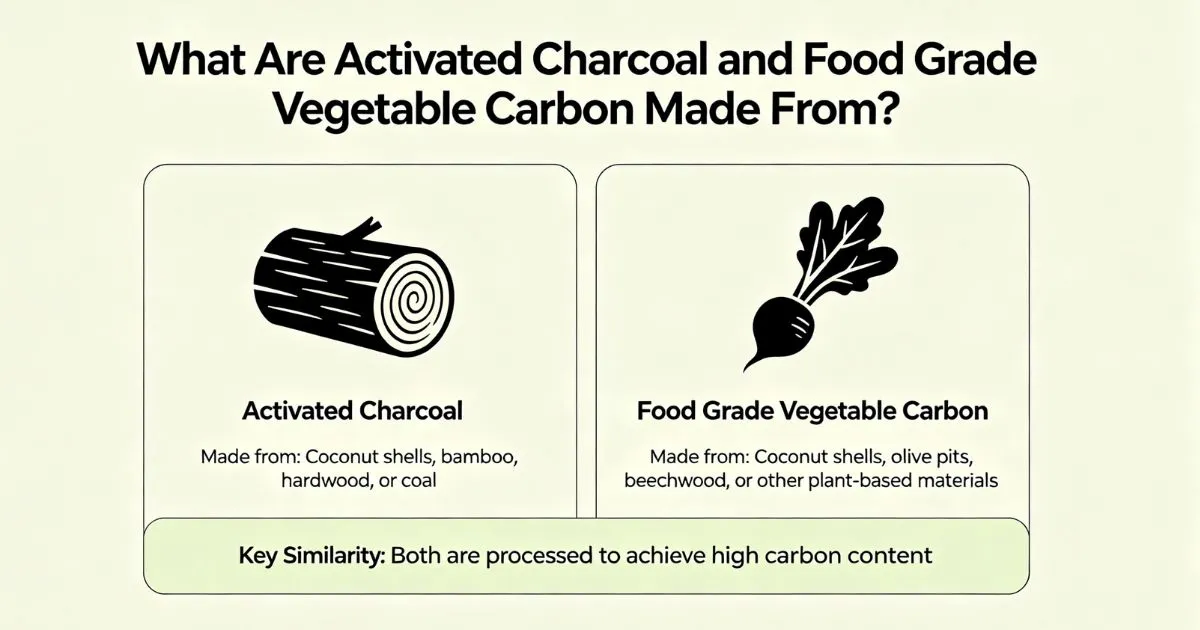
What Are Activated Charcoal and Food Grade Vegetable Carbon Made From?
Food grade vegetable carbon and activated charcoal both come from plants that are high in carbon, but that's about all they have in common. Activated charcoal can be made from a lot of different things, like coconut shells, wood, or peat. Its main goals are to have a lot of surfaces that can absorb things, not to be as pure as food-grade charcoal. Food grade vegetable carbon, on the other hand, is made under controlled conditions from certain plant materials and is processed with food applications in mind from the very first step of production. This is one of the main reasons it is labeled as e153 food coloring instead of being an industrial or pharmaceutical-grade material.
Raw material sourcing differences between the two products
When making activated charcoal, companies often choose the carbon-rich source that works best for adsorption. On the other hand, food grade vegetable carbon is made from plants that have been carefully chosen and monitored to make sure they can be processed safely for food.
Why source material purity matters more for food-grade production
When it comes to food grade vegetable carbon, controlling pollution and making sure the raw materials are pure are much more important than when it comes to activated charcoal, which is usually used for filtering or absorbing things outside of the food chain.
Structural and compositional differences at the carbon level
Both materials are made from carbon, but the particles are different because of the different pyrolysis conditions and post-processing steps. These differences affect how each material works when it is added to a finished product.
How sourcing decisions carry through to finished ingredient quality
Food grade vegetable carbon makers can keep track of the raw materials they use, which gives them a written record of quality. This is something that isn't always possible or useful for normal activated charcoal production.
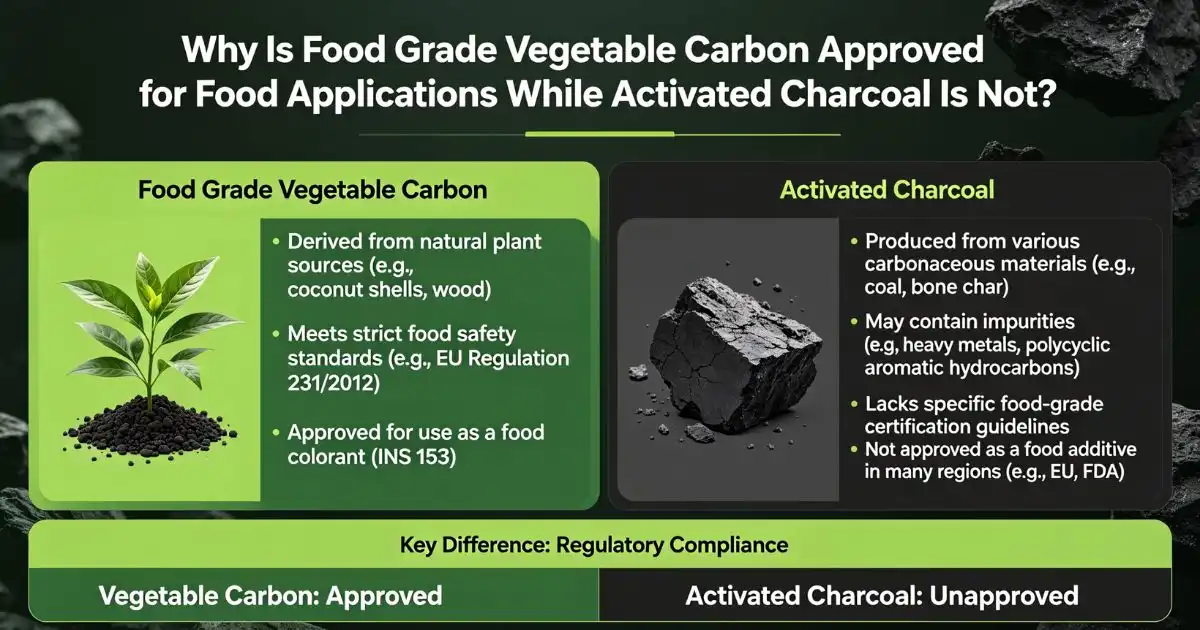
Why Is Food Grade Vegetable Carbon Approved for Food Applications While Activated Charcoal Is Not?
Activated charcoal and food-grade vegetable carbon are very different from each other. This is because of the risk of contamination, especially with PAHs, which are potentially harmful compounds that can form during high-heat carbonization processes. Food grade vegetable carbon made to e153 food coloring specs is made and tested to make sure that PAH levels stay below strict food safety limits. Standard activated charcoal, on the other hand, isn't made with any food safety-specific testing or processing controls built in.
The role of PAH formation in regulatory classification
PAHs can form during carbonization at high temperatures, and their presence above certain thresholds is a recognized food safety concern, which is why regulators require documented control specifically for food-use carbon products.
Testing and documentation requirements for food-grade approval
Food grade vegetable carbon suppliers must maintain testing records demonstrating PAH levels remain within approved limits, a requirement that standard activated charcoal production is not designed or tested to meet.
Why activated charcoal was never intended for food coloring use
Activated charcoal's entire production process is optimized around adsorption capacity for filtration, medical, or industrial applications, not around the purity and consistency standards required for a food colorant.
Consequences of using non-food-grade carbon in food products
Using activated charcoal instead of properly certified food grade vegetable carbon in a food product exposes manufacturers to regulatory risk, since the material has not been produced or tested against food safety thresholds.
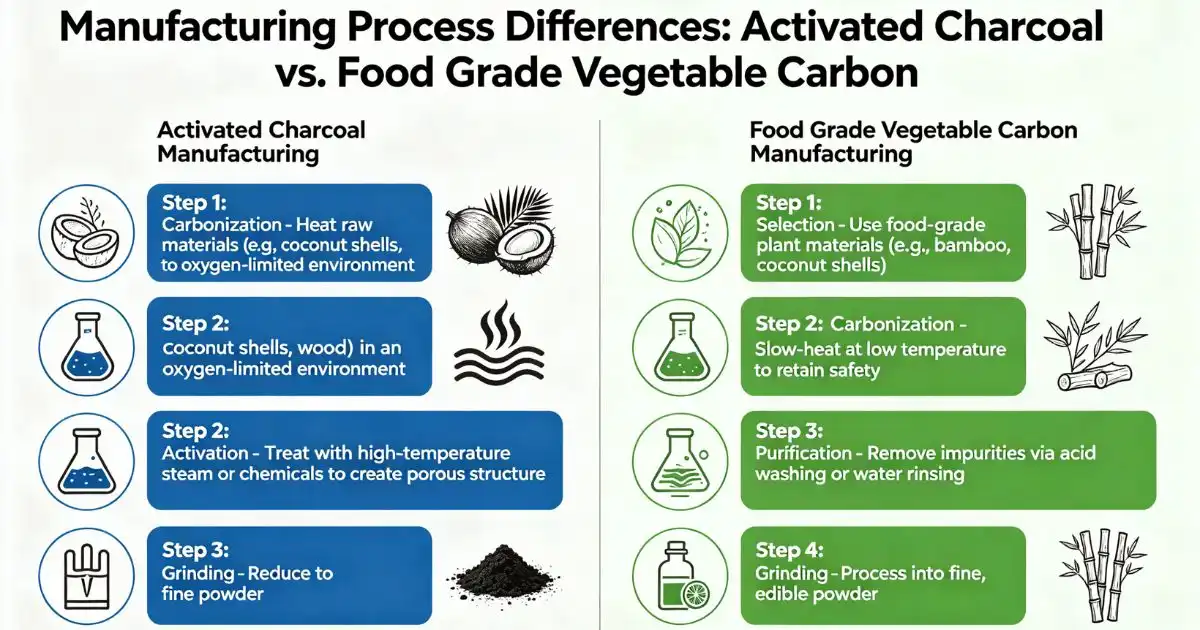
How Do the Manufacturing Processes Differ Between Activated Charcoal and Food Grade Vegetable Carbon?
The production pathway for food grade vegetable carbon involves carbonization and purification steps specifically calibrated to minimize PAH formation and maximize consistency for food applications, whereas activated charcoal manufacturing focuses on developing maximum porosity and surface area for adsorption performance. Yangge Biotech's vegetable carbon production process is designed around this food-specific priority, resulting in an e153 food coloring ingredient with both high purity and the extremely fine, uniform particle characteristics needed for reliable coloring performance.
|
Manufacturing Factor |
Food Grade Vegetable Carbon (E153) |
Standard Activated Charcoal |
|
Primary process goal |
Food-safe coloring performance, low PAHs |
Maximum surface area, adsorption capacity |
|
Temperature/carbonization control |
Calibrated to minimize PAH formation |
Optimized for porosity, not PAH minimization |
|
Purity testing |
PAH and heavy metal testing per food regulations |
Not typically food-safety tested |
|
Typical particle size range |
Fine, uniform micron-level particles for dispersion |
Variable, often coarser for adsorption surface area |
Carbonization temperature control and its effect on final purity
Food grade vegetable carbon production carefully controls carbonization temperature specifically to limit PAH formation, a step that activated charcoal production does not prioritize since its goal is different.
Post-processing purification steps unique to food-grade production
Additional purification and testing stages are built into food grade vegetable carbon manufacturing to bring PAH and heavy metal levels within food-safety limits before the material ever reaches a customer.
Particle size engineering for coloring versus adsorption performance
Food grade vegetable carbon is engineered toward a fine, uniform particle size that supports smooth dispersion and strong tinting performance, while activated charcoal's particle structure is optimized for surface area rather than color uniformity.
Quality control checkpoints throughout each production pathway
Food grade vegetable carbon production includes quality checkpoints tied specifically to food safety and coloring performance metrics, checkpoints that simply do not exist in standard activated charcoal manufacturing.
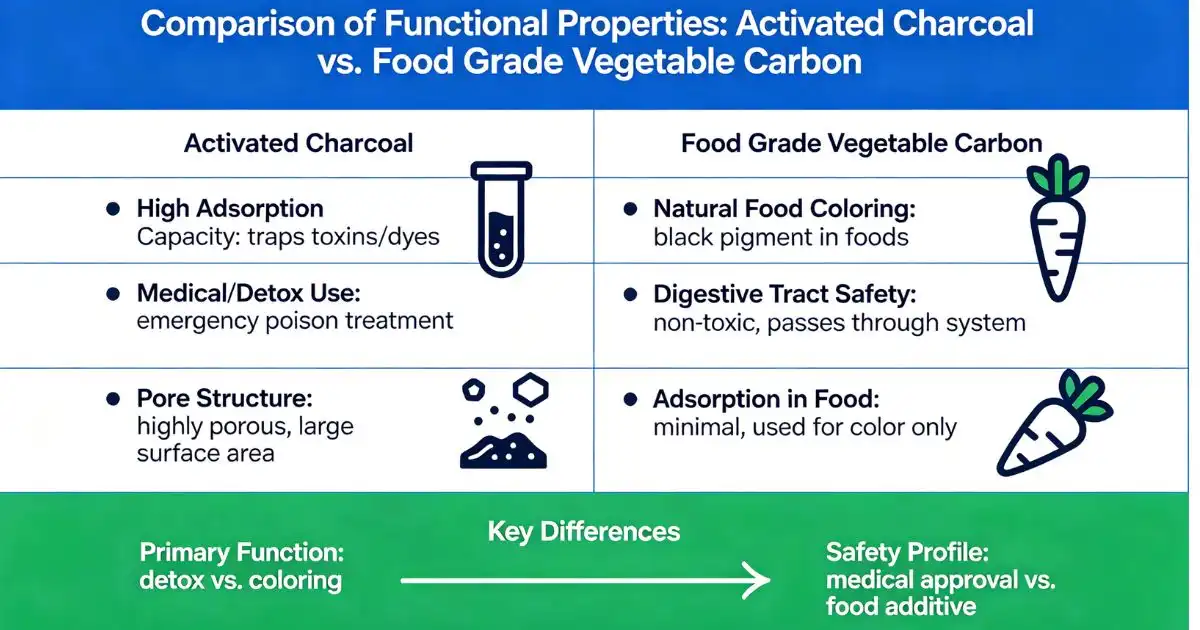
How Do the Functional Properties of Activated Charcoal and Food Grade Vegetable Carbon Compare?
Food grade vegetable carbon works much better than activated charcoal for flavoring because it has specially designed particles and a better ability to spread out in a food product. Yangge Biotech's e153 food coloring grade has a very high coloring strength and great dispersion stability. This means that manufacturers of bakery goods, candies, and pet food can get a consistent, even black color without the grainy texture or uneven distribution that can come with lower-quality or non-food-grade carbon materials.
Coloring strength and tinting power differences
Food grade vegetable carbon's fine particle size and controlled production process give it substantially higher tinting strength than standard activated charcoal, meaning lower dosage is needed to achieve the same visual intensity.
Dispersion behavior in different product matrices
Excellent dispersion stability allows food grade vegetable carbon to distribute evenly through both wet and dry formulation systems, avoiding the clumping or streaking that can occur with poorly dispersing carbon materials.
Texture and mouthfeel implications in finished products
Because food grade vegetable carbon has smaller, more regular particles, it keeps finished foods from having the gritty feel that comes from using bigger pieces of activated charcoal.
Stability under different processing and storage conditions
Food-grade vegetable carbon keeps its color intensity and dispersion quality even after baking, freezing, and long-term storage, so it can be used reliably in a lot of different types of finished goods.
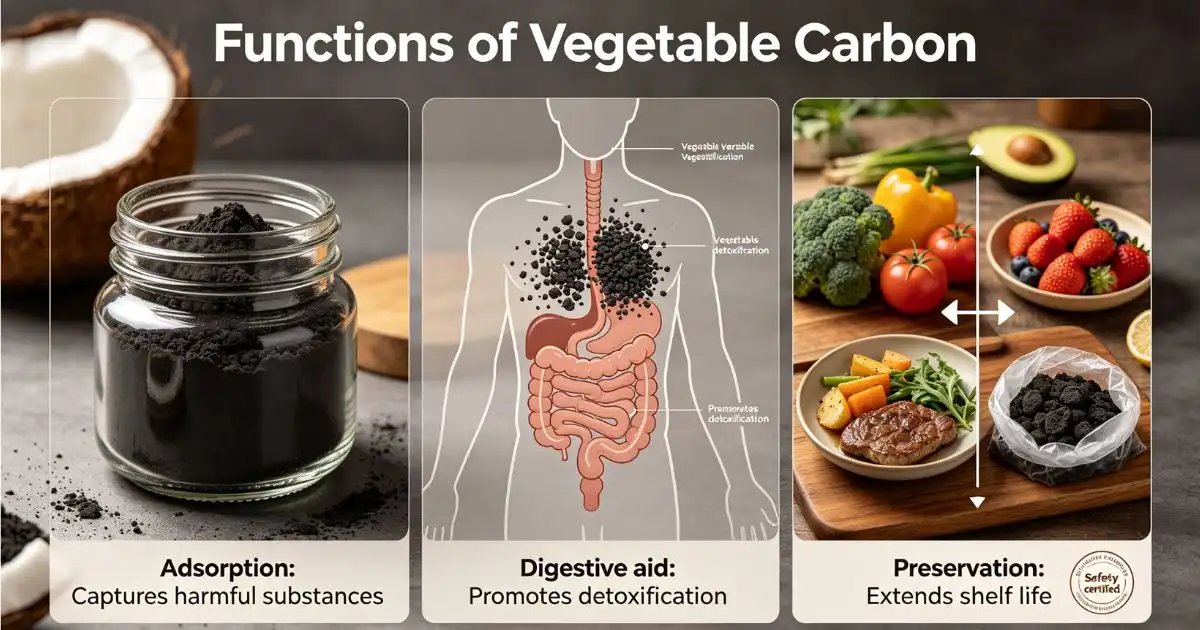
vegetable carbo functions
Dispersion stability is one of the most commercially important properties of food grade vegetable carbon, since it determines whether a product achieves an even, uniform black color or an inconsistent, speckled appearance. This matters across very different product types, from a dry baked good to a frozen dessert to a wet pet food formulation, and Yangge's e153 food coloring grade is specifically engineered to disperse reliably across this range of matrices without requiring extensive formulation adjustments.
Dry versus wet formulation dispersion challenges
Dry applications like baked goods require even powder distribution throughout a dough or batter, while wet applications like ice cream or pet food wet mixes require the carbon to disperse smoothly into a liquid or semi-liquid base without settling or clumping.
Achieving uniform color in high-fat or high-sugar matrices
Products with high fat or sugar content, such as candy and ice cream, present unique dispersion challenges, and food grade vegetable carbon's engineered particle characteristics help maintain uniform color distribution even in these more complex formulation environments.
Preventing settling and streaking during extended processing
Poor dispersion stability can cause visible streaking or settling during mixing and holding times, an issue that well-engineered food grade vegetable carbon is specifically designed to minimize.
Dispersion consistency across production batch sizes
When manufacturers go from small test runs to full commercial production, they need a colorant that spreads out the same way every time. This is where uniform particle engineering really shines as a business benefit.
Which Food Applications Are Best Suited for Food Grade Vegetable Carbon?
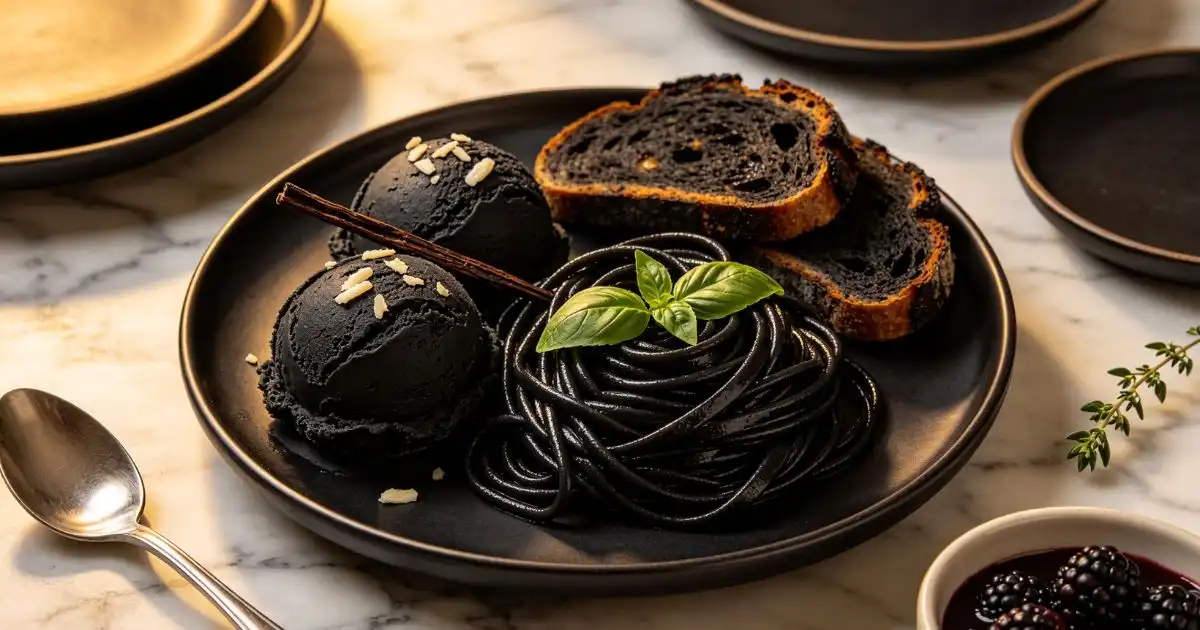
There are many black food uses for food grade vegetable carbon that work well. Bakery chains, candy makers, and pet food sources all depend on it for different but related reasons. Foods like baked goods, candy, cheese, black ice cream, and pet food can all use vegetable carbon because it is strong at coloring and stable when mixed. This makes the e153 food coloring grade a good choice for many types of products rather than just one niche use.
Baked goods requiring dramatic black or charcoal aesthetics
Charcoal bread, black bagels, and other unique baked goods are made by bakery chains that use vegetable carbon to keep the color bright and even while baking.
Candy and confectionery black coloring applications
Candy makers use vegetable carbon to make bright black hard candies, sweets that look like licorice, and unusual treats where the strength of the color is an important part of the look of the product.
Specialty cheese and frozen dessert applications
Black cheese and ice cream with charcoal in it have become popular as novelty and high-end goods. Both rely on the safety of vegetable carbon, which is maintained by cold storage and, in the case of cheese, aging.
Pet food coloring and ingredient sourcing considerations
Pet food ingredient suppliers use food-grade vegetable carbon in functional and specialty pet foods and treats. These meet the same standards for purity and dispersion as premium human food lines.
What Should People Who Buy Vegetable Carbon (E153) for Bakeries, Candies, and Pet Food Check?
Before buying food grade vegetable carbon, people who make baked goods, candies, or pet food should make sure of three things: PAH test results that are written down, dispersion performance data that is specific to their product matrix, and tinting strengths that are the same across production batches.
|
Specification Area |
What Buyers Should Request |
Why It Matters |
|
PAH residue testing |
Certificate of analysis per batch |
Confirms food-safety compliance |
|
Tinting strength |
Standardized color value documentation |
Ensures dosage predictability |
|
Dispersion performance |
Matrix-specific dispersion test data |
Confirms suitability for intended application |
|
Particle size specification |
Documented particle size range |
Affects texture and dispersion uniformity |
Requesting PAH testing documentation for every batch
Buyers should request current certificates of analysis confirming PAH levels remain within accepted food safety limits for every production batch, not just an initial product sample.
Confirming tinting strength consistency across orders
Because coloring strength directly affects formulation dosage, buyers should verify that tinting strength remains consistent from order to order to avoid unexpected reformulation needs.
Evaluating dispersion performance for specific product matrices
Bakery, candy, and pet food applications each present different dispersion challenges, so buyers should request performance data relevant to their specific product type rather than relying on general claims.
Reviewing supplier certifications and quality management systems
Certifications such as ISO, HACCP, Kosher, and Halal provide additional assurance that a supplier maintains consistent quality management practices throughout vegetable carbon production.
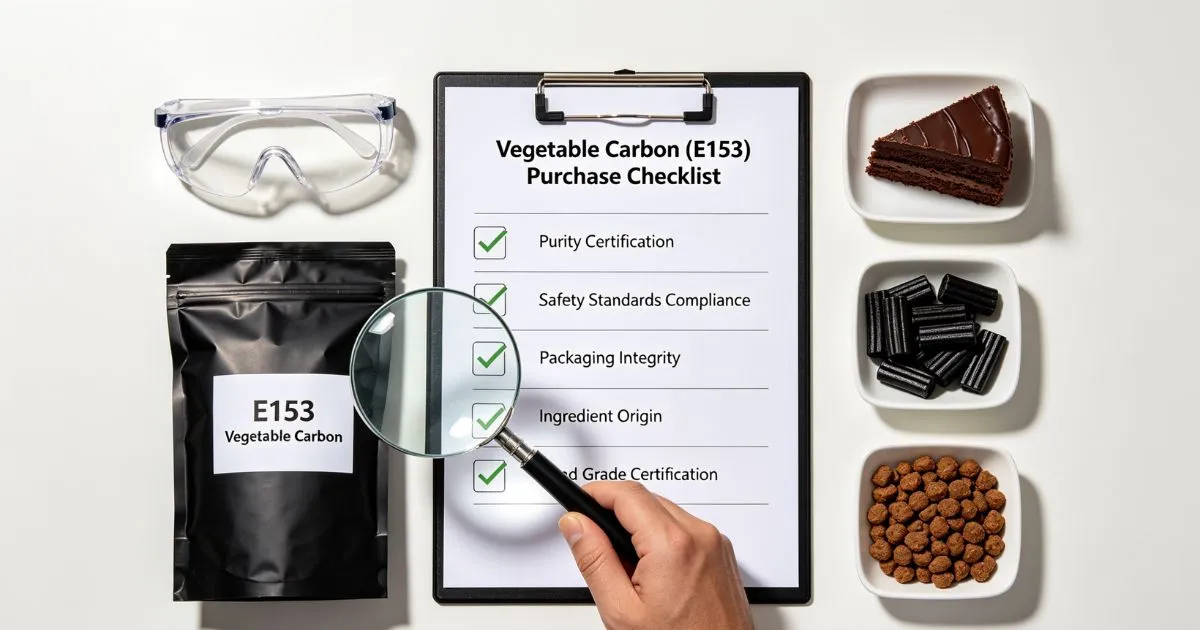
Third-Party Test Report
Yangge Biotech provides a third-party test report for every batch of Vegetable Carbon E153. Each production lot is independently tested by accredited laboratories to verify purity, food safety, heavy metals, microbiological limits, and overall product quality. This additional verification ensures customers receive consistent, safe, and reliable ingredients that meet international quality requirements and support global food manufacturing standards.
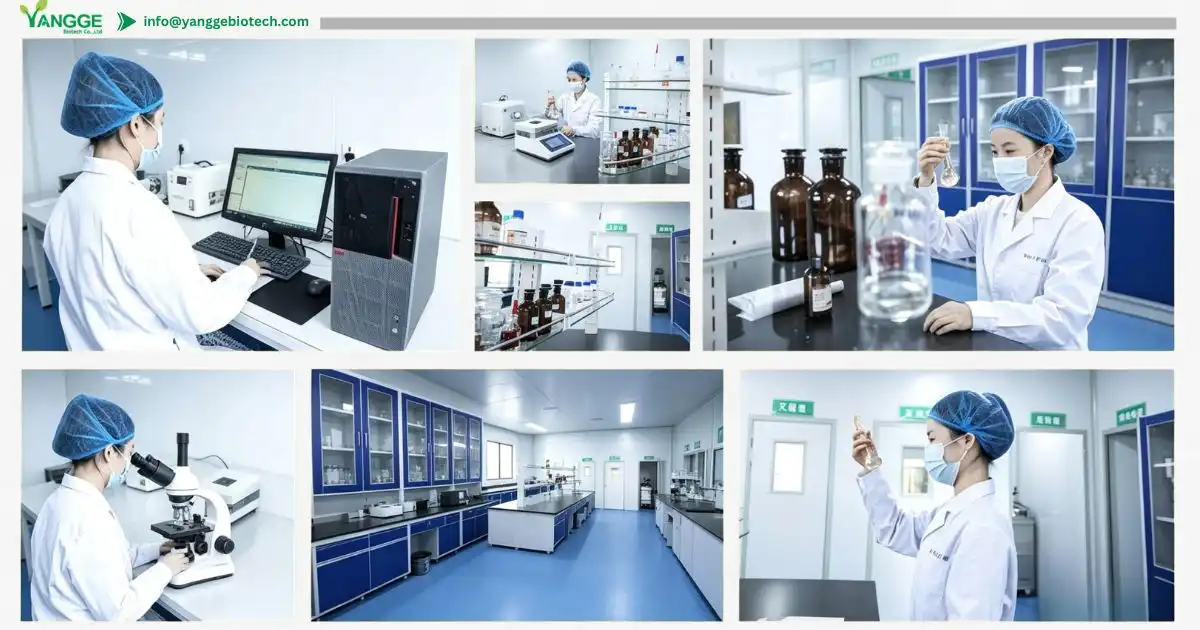
R&D Capacity
Yangge Biotech continuously invests in advanced research and development to improve product quality and manufacturing efficiency. Our experienced R&D team works with modern analytical instruments to optimize production processes, develop customized formulations, and support customers with technical solutions for food, beverage, and nutraceutical applications. This strong innovation capability enables us to meet diverse customer requirements while maintaining consistent quality.
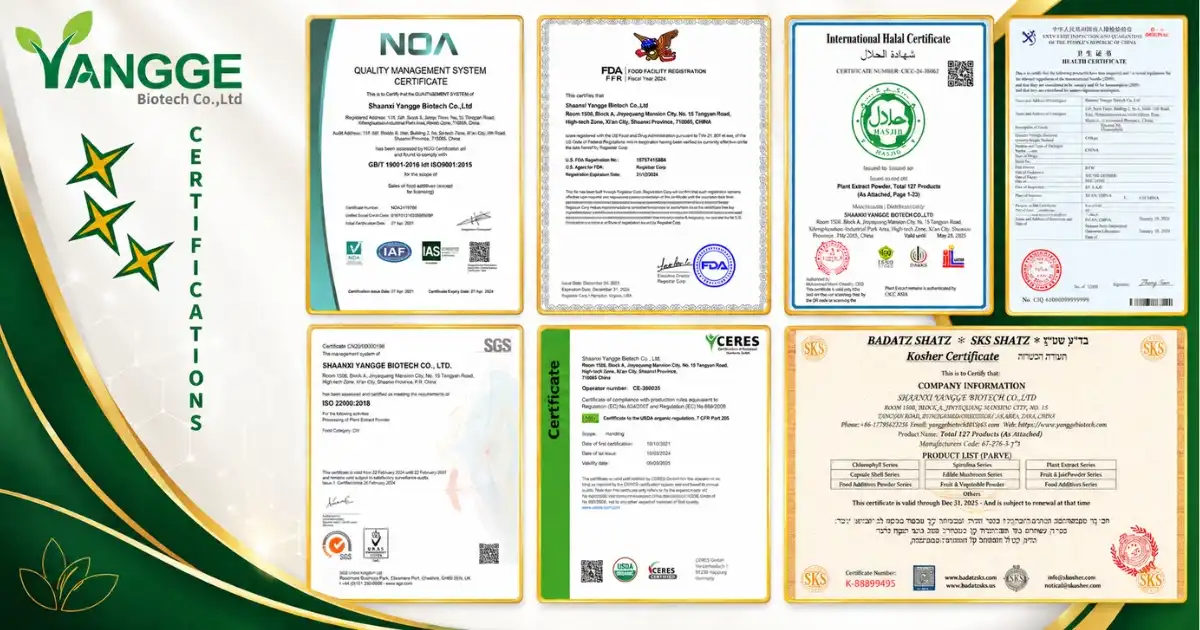
Certificates
Yangge Biotech follows internationally recognized quality management systems to ensure reliable product quality and food safety. Our manufacturing processes comply with strict production standards, and our products are supported by relevant certifications to satisfy the requirements of customers worldwide.
Our certifications may include:
ISO 9001
HACCP
GMP
Halal
Kosher
FDA Registration (where applicable)
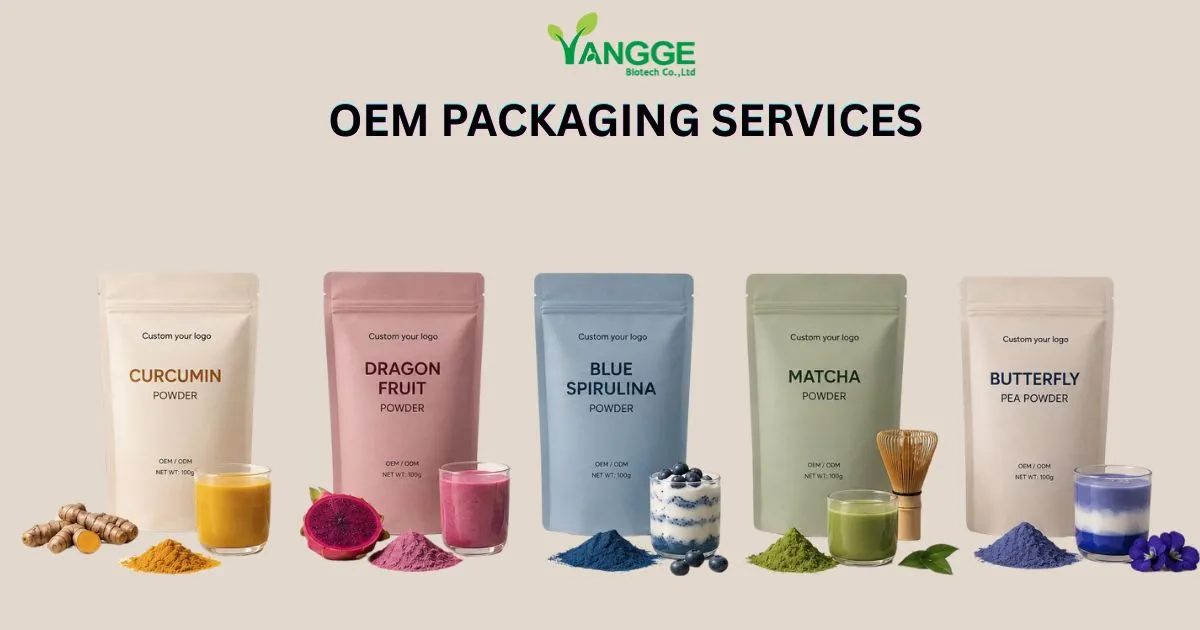
OEM Packing
Yangge Biotech offers flexible OEM and private label packaging services to meet different market demands. We provide customized packaging solutions, including retail bags, aluminum foil pouches, bottles, and industrial drums. Our professional packaging team ensures secure packing, clear labeling, and efficient shipping for customers worldwide.
OEM services include:
Private Label
Custom Logo Printing
Customized Packaging Design
Bulk Packaging
Retail Packaging
Export Packaging
Why Choose Yangge Biotech?
Yangge Biotech is committed to delivering premium-quality ingredients with dependable service and comprehensive technical support. We focus on long-term partnerships by providing stable supply, strict quality control, and customized solutions for customers around the world.
Why customers choose us:
Customers choose Yangge Biotech because we are committed to providing high-quality ingredients, reliable service, and consistent product performance. Every batch of our products is manufactured under strict quality control procedures and supported by a Certificate of Analysis (COA) and third-party test report to ensure purity, safety, and compliance with international standards. Our experienced R&D team continuously develops innovative solutions and provides technical support to help customers optimize their formulations and product applications.
High-quality food-grade ingredients
Competitive factory pricing
Strict quality control
Third-party test report for every batch
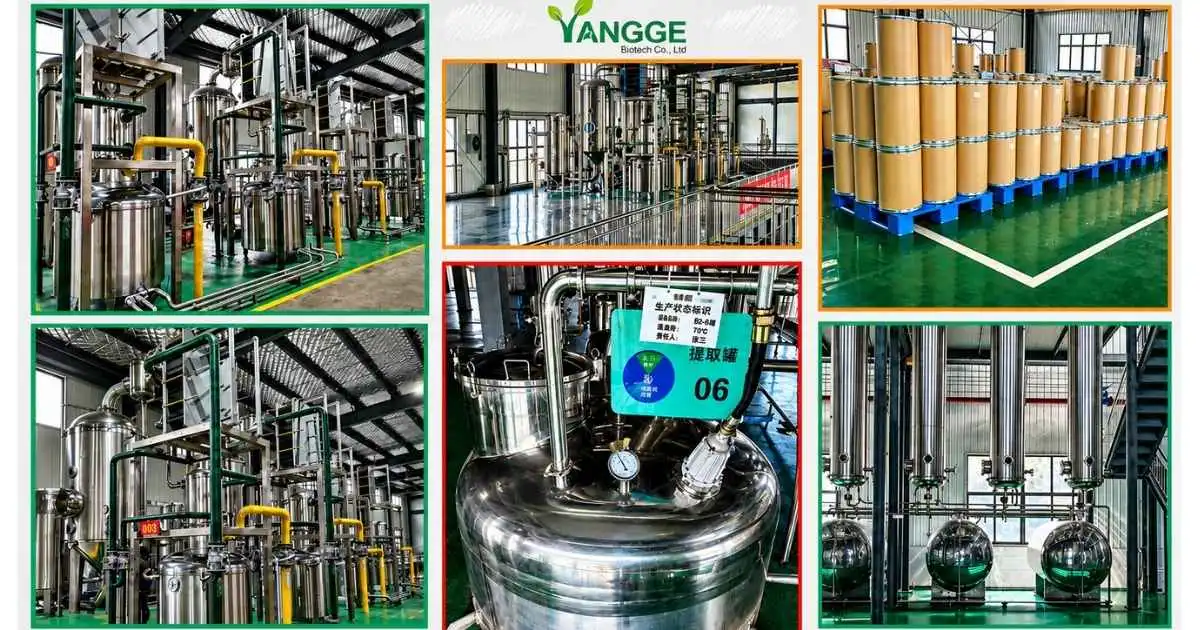
Modern production facilities
Professional R&D team
OEM & ODM services
Fast global shipping
Responsive technical support
Reliable long-term supply
Conclusion
Food grade vegetable carbon and activated charcoal may share a carbon-based origin, but only vegetable carbon is produced, tested, and regulated for food use. With extremely high coloring strength, low PAHs residue, and excellent dispersion stability, Yangge Biotech's e153 food coloring grade gives bakery chains, candy manufacturers, and pet food suppliers a reliable, compliant choice for black food coloring across baked goods, candy, cheese, ice cream, and pet food.
FAQ
Q1: Can activated charcoal be used as a food coloring?
No, standard activated charcoal is not produced or tested to food safety standards and should not be used as a food colorant.
Q2: Why does food grade vegetable carbon cost more than activated charcoal?
Food grade vegetable carbon undergoes additional purification and testing to meet food safety standards, which adds cost compared to standard activated charcoal.
Q3: Does vegetable carbon affect the taste of food products?
Properly processed food grade vegetable carbon typically contributes minimal flavor, making it suitable for flavor-sensitive applications like baked goods and candy.
Q4: Is vegetable carbon safe for use in pet food?
Yes, food grade vegetable carbon meeting appropriate purity and testing standards is used in specialty pet food and treat formulations.
Q5: What should I check before switching suppliers for vegetable carbon?
Always request current PAH testing documentation, tinting strength data, and dispersion performance information specific to your product application.
Work With Yangge for Certified Food Grade Vegetable Carbon
Choosing between activated charcoal and true food grade vegetable carbon isn't just a technical detail, it's a compliance and quality decision. Yangge Biotech Co., Ltd. is ISO, HACCP, Kosher, and Halal certified, with dedicated R&D and production teams supporting bakery chains, candy manufacturers, and pet food suppliers worldwide. Our e153 food coloring grade delivers extremely high coloring strength, low PAHs residue, and excellent dispersion stability across baked goods, candy, cheese, black ice cream, and pet food applications. Backed by traceable sourcing and a stable global supply chain, Yangge is ready to support your next black coloring formulation. Contact our team at info@yanggebiotech.com to request samples, specification sheets, or a formulation consultation today.
References
1. European Food Safety Authority (EFSA), "Scientific Opinion on the Re-evaluation of Vegetable Carbon (E 153) as a Food Additive," EFSA Journal.
2. Joint FAO/WHO Expert Committee on Food Additives (JECFA), "Vegetable Carbon: Specifications and Evaluation Reports."
3. Simko, P., "Determination of Polycyclic Aromatic Hydrocarbons in Smoked Meat Products and Smoke Flavouring Food Additives," Journal of Chromatography B.
4. Martins, N., et al., "Food Colorants: Challenges, Opportunities and Current Desires of Agro-Industries to Ensure Consumer Expectations and Regulatory Practices," Trends in Food Science and Technology.
5. Marsh, H., and Reinoso, F.R., "Activated Carbon," Elsevier Science.
6. Downes, F.P., and Ito, K. (Eds.), "Compendium of Methods for the Microbiological Examination of Foods," American Public Health Association.

_1755072855694.webp "blue spirulina organic")